
Training

Training

Training

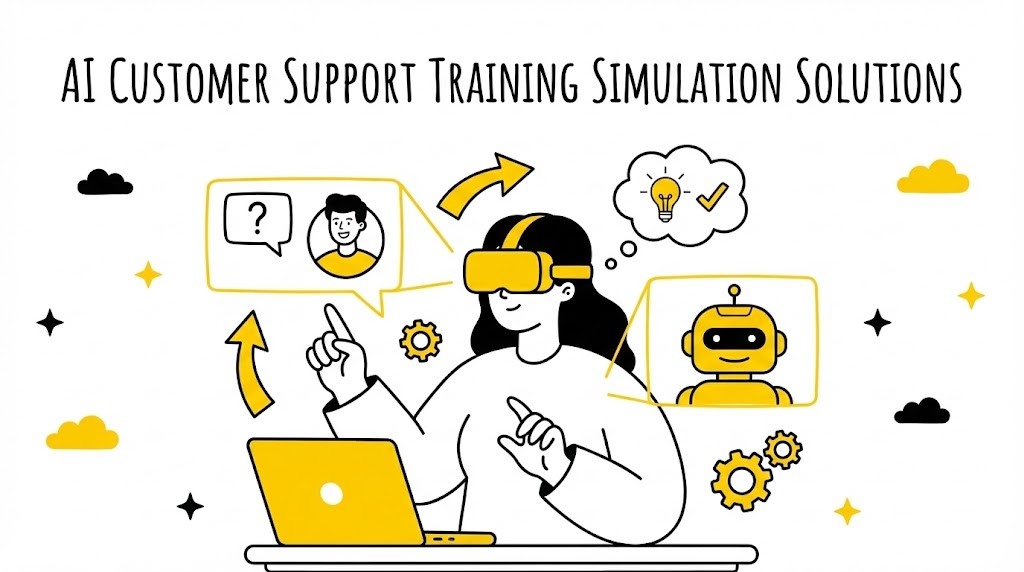
AI Customer Support Training Simulation Solutions

Dec 2, 2025

Dec 2, 2025

12 min read

12 min read

/ / / / / / / /

Key Takeaways

  • The answer is: Leading customer support training simulation platforms like Coursera's IBM specialization and Google Cloud's AI solutions offer comprehensive virtual customer bot experiences that prepare agents for real-world interactions while reducing training costs by up to 70%.

  • Virtual customer bots create unlimited practice scenarios that adapt in real-time, letting support teams build confidence without risking actual customer relationships.

  • Smart Role stands out with personalized learning paths and emotional intelligence training that goes beyond basic chatbot interactions.

  • Implementation success depends on realistic scenario design, proper integration with existing tools, and continuous performance measurement.

  • Future trends point toward VR-powered immersive training and AI systems that learn from each agent's actual customer conversations.

Why Do Support Teams Need AI Training Simulations?

The Challenge of Scaling Agent Training

Training customer service agents traditionally doesn't work anymore. Modern support teams face overwhelming ticket volumes. Customers expect instant, perfect responses across all channels. Every new hire means starting from scratch. Traditional training takes weeks of time from your best performers. They mentor newbies while customers get frustrated with unprepared agents.

Virtual customer bots solve this problem. They create consistent, scalable training. Your experienced team stays productive. New agents learn faster without draining resources. The training scales infinitely without additional overhead. As of 2025, companies using AI simulations report dramatic improvements in onboarding efficiency.

Benefits of Virtual Customer Interactions

Virtual customer interactions transform agent training completely. These chatbots create safe practice environments. Agents can make mistakes without losing customers. They practice handling angry customers and complex issues. Sensitive situations become learning opportunities. The risk-free environment builds confidence rapidly.

These systems adapt to each agent's responses dynamically. Static training materials bore agents quickly. Virtual bots adjust difficulty based on performance. Basic troubleshooting mastery triggers advanced scenarios automatically. Agents stay engaged through personalized challenges. The adaptive learning keeps training relevant and challenging. In 2025, this technology has become essential for competitive support teams.

Measuring Training Effectiveness

Virtual training simulations track everything precisely. Response times get measured automatically. Resolution rates show improvement patterns. Empathy scores reveal soft skill development. Technical accuracy gets quantified objectively. Hard data replaces guesswork about training effectiveness.

You can measure improvement over time accurately. Agents progress from basic to complex situations visibly. These metrics justify training investments clearly. Leadership sees concrete ROI from training programs. Struggling agents get identified before customer interactions. The data-driven approach transforms training from cost to investment. December 2025 marks a turning point where measurement becomes standard practice.

Leading Companies Offering Virtual Customer Bot Solutions

Enterprise-Level Platforms

Large organizations need robust training solutions. IBM's AI Academy delivers comprehensive programs effectively. Their content covers chatbot fundamentals through advanced automation. Virtual scenarios mirror real enterprise complexity perfectly. Multi-department escalations get practiced repeatedly. Compliance requirements integrate seamlessly. CRM system interactions become second nature.

Google Cloud's Customer Experience platform offers sophisticated capabilities. Their virtual bots use millions of real conversations. Agents practice with incredibly realistic scenarios. The preparation matches actual customer interactions precisely. Security features satisfy strict IT requirements. Enterprise teams get the scale they need. As we enter 2025, these platforms dominate the enterprise market.

Mid-Market Solutions

Mid-sized companies need affordable yet powerful training. Coursera's Generative AI specialization costs $39-79 monthly. IBM-quality content becomes accessible to smaller teams. Virtual customer bots focus on practical skills. Theoretical knowledge takes a backseat to application. Teams see results quickly without breaking budgets.

LinkedIn Learning simplifies the training process significantly. Support managers complete courses in hours. Virtual scenarios cover common situations effectively. Edge cases don't distract from core skills. These platforms deliver enterprise capabilities affordably. Simply put: you get maximum value at minimum cost. In 2025, mid-market solutions have matured considerably.

Specialized Training Providers

Some companies focus on specific support challenges. DeepLearning.AI partners with OpenAI for free ChatGPT training. Technical support teams benefit from API troubleshooting simulations. Developer-focused conversations get proper attention. General platforms miss these specialized needs.

Healthcare and financial services require unique approaches. Specialized providers embed compliance training directly. Virtual interactions include regulatory requirements naturally. Agents learn HIPAA or financial rules through practice. The integrated approach saves time and improves retention. December 2025 sees more specialization emerging across industries.

How to Choose the Right AI Simulation Platform?

Assessing Your Team's Needs

Identify your support team's actual struggles first. Technical questions might stump your agents. Angry customers could trigger poor responses. Simple issues might take too long. Your biggest pain points guide platform selection. Fancy features won't help if they're irrelevant.

Consider technical comfort levels carefully. Some agents embrace sophisticated AI tools. Others need simpler, intuitive interfaces. Match platforms to current capabilities. Leave room for growth and advancement. The best platform gets used consistently. Team adoption determines training success. As of 2025, user experience drives platform selection increasingly.

Integration Requirements

Training platforms must integrate with existing tools. Virtual bots should access your CRM data. Knowledge base references need to work seamlessly. Support workflows should mirror reality exactly. Poor integration creates more problems than solutions.

Future integrations matter equally. New support channels will emerge. Systems will get upgraded regularly. Training platforms need flexibility to adapt. Open APIs provide essential connectivity. Extensive integration libraries offer options. Planning ahead prevents costly platform switches. In 2025, integration capabilities define platform viability.

Budget and Scalability Factors

Financial considerations drive many decisions. Amazon AWS Skill Builder offers free entry points. Small teams can test concepts affordably. Sophisticated features come with higher costs. Per-agent pricing adds up quickly. Setup fees impact initial investments. Content updates require ongoing budgets.

Scalability extends beyond agent numbers. Scenario complexity must increase over time. Multiple language support enables global expansion. Platforms should grow with your ambitions. Limitations become expensive bottlenecks later. Choose platforms that scale smoothly. December 2025 pricing models favor scalable solutions.

Real-World Implementation Examples

E-commerce Success Stories

Online retailers achieve impressive results with virtual training. One fashion retailer reduced holiday chaos by 40%. AI simulations prepared agents for order inquiries. Return policy arguments became routine conversations. Virtual bots created every shipping disaster imaginable. Black Friday held no surprises for prepared agents.

Product launches benefit from chatbot preparation too. Virtual customers ask detailed feature questions. Compatibility issues get explored thoroughly. Pricing discussions become second nature. Support teams handle launch day confidently. Hundreds of practice conversations pay off immediately. E-commerce success in 2025 requires this preparation level.

Healthcare Support Transformations

Healthcare support faces unique emotional challenges. Hospital networks prepare agents for anxious patient calls. Test result conversations require delicate handling. Virtual bots balance empathy with compliance requirements. HIPAA rules get practiced until automatic. The preparation improves patient experiences significantly.

Mental health platforms see breakthrough results particularly. Crisis situation training saves lives literally. Agents practice de-escalation with various emotional states. Virtual preparation ensures appropriate real responses. Patient safety improves through better agent training. Healthcare in 2025 embraces simulation training widely.

Financial Services Case Studies

Banks navigate regulatory minefields using virtual training. One regional bank reduced violations by 60%. Agents practiced disclosure requirements with chatbots. Virtual customers tested regulatory knowledge constantly. Tricky questions revealed knowledge gaps safely.

Investment firms prepare for market volatility effectively. Historical scenarios train agents for downturns. Virtual customers panic about portfolio losses. Immediate trade demands get handled appropriately. Agents learn what guarantees they can't provide. Emotional preparation proves invaluable during crises. Financial services in 2025 require this sophisticated training.

What Makes Smart Role Stand Out?

Unique Training Methodology

Smart Role understands customer support deeply. Knowledge alone doesn't create great agents. Emotional intelligence matters equally. Their virtual bots evaluate emotional recognition. Frustration, confusion, and urgency get identified. Agents learn to read between the lines. This focus transforms good agents into exceptional ones.

Adaptive learning paths personalize development uniquely. Every agent follows a customized journey. Technical experts might focus on empathy. Naturally empathetic agents drill product knowledge. Individual strengths get leveraged effectively. Weaknesses receive targeted attention. The personalized approach accelerates skill development. As of December 2025, Smart Role leads in personalization.

Customization Capabilities

Every support team faces unique challenges. Smart Role embraces this diversity fully. Actual customer conversations become training scenarios. Virtual customers mirror real communication styles. Common issues get practiced repeatedly. The realism prepares agents perfectly.

Performance metrics get customized too. Success definitions vary by team. Faster resolutions might matter most. Satisfaction scores could take priority. Upselling improvements might be crucial. Smart Role optimizes for specific targets. Generic benchmarks don't limit progress. Customization in 2025 has become table stakes.

Performance Analytics and Insights

Smart Role's analytics reveal deep insights. Agents' struggles get analyzed comprehensively. Time pressure responses get evaluated. Technical accuracy gets measured precisely. Emotional intelligence scores track progress. Pattern identification enables targeted coaching.

Real-time feedback accelerates learning dramatically. Mistakes get corrected immediately. Different approaches get tested instantly. Muscle memory develops through repetition. Excellence becomes habitual through practice. The immediate correction loop works brilliantly. December 2025 analytics capabilities exceed expectations significantly.

Frequently Asked Questions

Question: How long does it take to see results from virtual customer bot training? Teams see improvements within 2-3 weeks typically. Consistent training drives measurable changes quickly. First-contact resolution rates jump 15-20% monthly. Customer satisfaction improves more gradually. Skills need time to internalize fully. Most organizations report significant improvements by month two.

Question: Can virtual bots really replicate angry or emotional customers effectively? Modern AI simulations excel at emotional replication. Sentiment analysis creates realistic responses. Natural language processing adds authenticity. Emotional escalation follows agent responses logically. De-escalation happens when agents respond appropriately. The practice feels remarkably real to agents. In 2025, emotional simulation has become incredibly sophisticated.

Question: What's the typical cost for implementing customer support training simulation? Costs vary based on needs and scale. Basic solutions start at $39 per agent monthly. Enterprise platforms cost $200+ per agent. Mid-sized teams spend $75-100 typically. Customization increases costs significantly. ROI justifies the investment quickly. December 2025 pricing reflects market maturation.

Question: Do agents actually enjoy training with virtual customers? Skeptical agents become believers quickly. Quality simulations change minds fast. Gamification makes training engaging. Immediate feedback motivates improvement. Safe practice reduces anxiety. Skill-building feels like gameplay. Agents request more training time often. The enjoyment factor surprises managers regularly.

Question: How do virtual training bots stay updated with new products and policies? Content management systems enable regular updates. Product information gets refreshed easily. Policies and procedures stay current. Advanced systems update automatically. Knowledge base changes trigger scenario updates. Training always reflects current reality. The maintenance burden remains manageable. 2025 systems prioritize easy content updates.

Conclusion and Next Steps

Customer support has transformed fundamentally. Outdated training methods guarantee failure now. Virtual customer bots are essential tools. They build confident, capable support teams. Unlimited practice scenarios develop skills rapidly. Personalized learning paths maximize efficiency. Measurable results justify investments clearly. AI-powered training has become mandatory for success.

Smart Role exemplifies the future of training. Personalized, emotionally intelligent preparation works. Real-world application beats theoretical knowledge. Agents perform better from day one. Actual customer conversations improve immediately. The platform transforms average agents into stars. Their approach represents best practices in 2025.

Evaluate your training gaps immediately. Identify where virtual bots could help. Start with focused pilot programs. Measure results carefully and consistently. Scale successful approaches across teams. The future belongs to AI-embracing teams. December 2025 marks the perfect time to begin. Don't let competitors gain this advantage. Your customers deserve agents trained with the best tools available. Virtual customer training simulation delivers that excellence consistently.

Key Takeaways

  • The answer is: Leading customer support training simulation platforms like Coursera's IBM specialization and Google Cloud's AI solutions offer comprehensive virtual customer bot experiences that prepare agents for real-world interactions while reducing training costs by up to 70%.

  • Virtual customer bots create unlimited practice scenarios that adapt in real-time, letting support teams build confidence without risking actual customer relationships.

  • Smart Role stands out with personalized learning paths and emotional intelligence training that goes beyond basic chatbot interactions.

  • Implementation success depends on realistic scenario design, proper integration with existing tools, and continuous performance measurement.

  • Future trends point toward VR-powered immersive training and AI systems that learn from each agent's actual customer conversations.

Why Do Support Teams Need AI Training Simulations?

The Challenge of Scaling Agent Training

Training customer service agents traditionally doesn't work anymore. Modern support teams face overwhelming ticket volumes. Customers expect instant, perfect responses across all channels. Every new hire means starting from scratch. Traditional training takes weeks of time from your best performers. They mentor newbies while customers get frustrated with unprepared agents.

Virtual customer bots solve this problem. They create consistent, scalable training. Your experienced team stays productive. New agents learn faster without draining resources. The training scales infinitely without additional overhead. As of 2025, companies using AI simulations report dramatic improvements in onboarding efficiency.

Benefits of Virtual Customer Interactions

Virtual customer interactions transform agent training completely. These chatbots create safe practice environments. Agents can make mistakes without losing customers. They practice handling angry customers and complex issues. Sensitive situations become learning opportunities. The risk-free environment builds confidence rapidly.

These systems adapt to each agent's responses dynamically. Static training materials bore agents quickly. Virtual bots adjust difficulty based on performance. Basic troubleshooting mastery triggers advanced scenarios automatically. Agents stay engaged through personalized challenges. The adaptive learning keeps training relevant and challenging. In 2025, this technology has become essential for competitive support teams.

Measuring Training Effectiveness

Virtual training simulations track everything precisely. Response times get measured automatically. Resolution rates show improvement patterns. Empathy scores reveal soft skill development. Technical accuracy gets quantified objectively. Hard data replaces guesswork about training effectiveness.

You can measure improvement over time accurately. Agents progress from basic to complex situations visibly. These metrics justify training investments clearly. Leadership sees concrete ROI from training programs. Struggling agents get identified before customer interactions. The data-driven approach transforms training from cost to investment. December 2025 marks a turning point where measurement becomes standard practice.

Leading Companies Offering Virtual Customer Bot Solutions

Enterprise-Level Platforms

Large organizations need robust training solutions. IBM's AI Academy delivers comprehensive programs effectively. Their content covers chatbot fundamentals through advanced automation. Virtual scenarios mirror real enterprise complexity perfectly. Multi-department escalations get practiced repeatedly. Compliance requirements integrate seamlessly. CRM system interactions become second nature.

Google Cloud's Customer Experience platform offers sophisticated capabilities. Their virtual bots use millions of real conversations. Agents practice with incredibly realistic scenarios. The preparation matches actual customer interactions precisely. Security features satisfy strict IT requirements. Enterprise teams get the scale they need. As we enter 2025, these platforms dominate the enterprise market.

Mid-Market Solutions

Mid-sized companies need affordable yet powerful training. Coursera's Generative AI specialization costs $39-79 monthly. IBM-quality content becomes accessible to smaller teams. Virtual customer bots focus on practical skills. Theoretical knowledge takes a backseat to application. Teams see results quickly without breaking budgets.

LinkedIn Learning simplifies the training process significantly. Support managers complete courses in hours. Virtual scenarios cover common situations effectively. Edge cases don't distract from core skills. These platforms deliver enterprise capabilities affordably. Simply put: you get maximum value at minimum cost. In 2025, mid-market solutions have matured considerably.

Specialized Training Providers

Some companies focus on specific support challenges. DeepLearning.AI partners with OpenAI for free ChatGPT training. Technical support teams benefit from API troubleshooting simulations. Developer-focused conversations get proper attention. General platforms miss these specialized needs.

Healthcare and financial services require unique approaches. Specialized providers embed compliance training directly. Virtual interactions include regulatory requirements naturally. Agents learn HIPAA or financial rules through practice. The integrated approach saves time and improves retention. December 2025 sees more specialization emerging across industries.

How to Choose the Right AI Simulation Platform?

Assessing Your Team's Needs

Identify your support team's actual struggles first. Technical questions might stump your agents. Angry customers could trigger poor responses. Simple issues might take too long. Your biggest pain points guide platform selection. Fancy features won't help if they're irrelevant.

Consider technical comfort levels carefully. Some agents embrace sophisticated AI tools. Others need simpler, intuitive interfaces. Match platforms to current capabilities. Leave room for growth and advancement. The best platform gets used consistently. Team adoption determines training success. As of 2025, user experience drives platform selection increasingly.

Integration Requirements

Training platforms must integrate with existing tools. Virtual bots should access your CRM data. Knowledge base references need to work seamlessly. Support workflows should mirror reality exactly. Poor integration creates more problems than solutions.

Future integrations matter equally. New support channels will emerge. Systems will get upgraded regularly. Training platforms need flexibility to adapt. Open APIs provide essential connectivity. Extensive integration libraries offer options. Planning ahead prevents costly platform switches. In 2025, integration capabilities define platform viability.

Budget and Scalability Factors

Financial considerations drive many decisions. Amazon AWS Skill Builder offers free entry points. Small teams can test concepts affordably. Sophisticated features come with higher costs. Per-agent pricing adds up quickly. Setup fees impact initial investments. Content updates require ongoing budgets.

Scalability extends beyond agent numbers. Scenario complexity must increase over time. Multiple language support enables global expansion. Platforms should grow with your ambitions. Limitations become expensive bottlenecks later. Choose platforms that scale smoothly. December 2025 pricing models favor scalable solutions.

Real-World Implementation Examples

E-commerce Success Stories

Online retailers achieve impressive results with virtual training. One fashion retailer reduced holiday chaos by 40%. AI simulations prepared agents for order inquiries. Return policy arguments became routine conversations. Virtual bots created every shipping disaster imaginable. Black Friday held no surprises for prepared agents.

Product launches benefit from chatbot preparation too. Virtual customers ask detailed feature questions. Compatibility issues get explored thoroughly. Pricing discussions become second nature. Support teams handle launch day confidently. Hundreds of practice conversations pay off immediately. E-commerce success in 2025 requires this preparation level.

Healthcare Support Transformations

Healthcare support faces unique emotional challenges. Hospital networks prepare agents for anxious patient calls. Test result conversations require delicate handling. Virtual bots balance empathy with compliance requirements. HIPAA rules get practiced until automatic. The preparation improves patient experiences significantly.

Mental health platforms see breakthrough results particularly. Crisis situation training saves lives literally. Agents practice de-escalation with various emotional states. Virtual preparation ensures appropriate real responses. Patient safety improves through better agent training. Healthcare in 2025 embraces simulation training widely.

Financial Services Case Studies

Banks navigate regulatory minefields using virtual training. One regional bank reduced violations by 60%. Agents practiced disclosure requirements with chatbots. Virtual customers tested regulatory knowledge constantly. Tricky questions revealed knowledge gaps safely.

Investment firms prepare for market volatility effectively. Historical scenarios train agents for downturns. Virtual customers panic about portfolio losses. Immediate trade demands get handled appropriately. Agents learn what guarantees they can't provide. Emotional preparation proves invaluable during crises. Financial services in 2025 require this sophisticated training.

What Makes Smart Role Stand Out?

Unique Training Methodology

Smart Role understands customer support deeply. Knowledge alone doesn't create great agents. Emotional intelligence matters equally. Their virtual bots evaluate emotional recognition. Frustration, confusion, and urgency get identified. Agents learn to read between the lines. This focus transforms good agents into exceptional ones.

Adaptive learning paths personalize development uniquely. Every agent follows a customized journey. Technical experts might focus on empathy. Naturally empathetic agents drill product knowledge. Individual strengths get leveraged effectively. Weaknesses receive targeted attention. The personalized approach accelerates skill development. As of December 2025, Smart Role leads in personalization.

Customization Capabilities

Every support team faces unique challenges. Smart Role embraces this diversity fully. Actual customer conversations become training scenarios. Virtual customers mirror real communication styles. Common issues get practiced repeatedly. The realism prepares agents perfectly.

Performance metrics get customized too. Success definitions vary by team. Faster resolutions might matter most. Satisfaction scores could take priority. Upselling improvements might be crucial. Smart Role optimizes for specific targets. Generic benchmarks don't limit progress. Customization in 2025 has become table stakes.

Performance Analytics and Insights

Smart Role's analytics reveal deep insights. Agents' struggles get analyzed comprehensively. Time pressure responses get evaluated. Technical accuracy gets measured precisely. Emotional intelligence scores track progress. Pattern identification enables targeted coaching.

Real-time feedback accelerates learning dramatically. Mistakes get corrected immediately. Different approaches get tested instantly. Muscle memory develops through repetition. Excellence becomes habitual through practice. The immediate correction loop works brilliantly. December 2025 analytics capabilities exceed expectations significantly.

Frequently Asked Questions

Question: How long does it take to see results from virtual customer bot training? Teams see improvements within 2-3 weeks typically. Consistent training drives measurable changes quickly. First-contact resolution rates jump 15-20% monthly. Customer satisfaction improves more gradually. Skills need time to internalize fully. Most organizations report significant improvements by month two.

Question: Can virtual bots really replicate angry or emotional customers effectively? Modern AI simulations excel at emotional replication. Sentiment analysis creates realistic responses. Natural language processing adds authenticity. Emotional escalation follows agent responses logically. De-escalation happens when agents respond appropriately. The practice feels remarkably real to agents. In 2025, emotional simulation has become incredibly sophisticated.

Question: What's the typical cost for implementing customer support training simulation? Costs vary based on needs and scale. Basic solutions start at $39 per agent monthly. Enterprise platforms cost $200+ per agent. Mid-sized teams spend $75-100 typically. Customization increases costs significantly. ROI justifies the investment quickly. December 2025 pricing reflects market maturation.

Question: Do agents actually enjoy training with virtual customers? Skeptical agents become believers quickly. Quality simulations change minds fast. Gamification makes training engaging. Immediate feedback motivates improvement. Safe practice reduces anxiety. Skill-building feels like gameplay. Agents request more training time often. The enjoyment factor surprises managers regularly.

Question: How do virtual training bots stay updated with new products and policies? Content management systems enable regular updates. Product information gets refreshed easily. Policies and procedures stay current. Advanced systems update automatically. Knowledge base changes trigger scenario updates. Training always reflects current reality. The maintenance burden remains manageable. 2025 systems prioritize easy content updates.

Conclusion and Next Steps

Customer support has transformed fundamentally. Outdated training methods guarantee failure now. Virtual customer bots are essential tools. They build confident, capable support teams. Unlimited practice scenarios develop skills rapidly. Personalized learning paths maximize efficiency. Measurable results justify investments clearly. AI-powered training has become mandatory for success.

Smart Role exemplifies the future of training. Personalized, emotionally intelligent preparation works. Real-world application beats theoretical knowledge. Agents perform better from day one. Actual customer conversations improve immediately. The platform transforms average agents into stars. Their approach represents best practices in 2025.

Evaluate your training gaps immediately. Identify where virtual bots could help. Start with focused pilot programs. Measure results carefully and consistently. Scale successful approaches across teams. The future belongs to AI-embracing teams. December 2025 marks the perfect time to begin. Don't let competitors gain this advantage. Your customers deserve agents trained with the best tools available. Virtual customer training simulation delivers that excellence consistently.

Key Takeaways

  • The answer is: Leading customer support training simulation platforms like Coursera's IBM specialization and Google Cloud's AI solutions offer comprehensive virtual customer bot experiences that prepare agents for real-world interactions while reducing training costs by up to 70%.

  • Virtual customer bots create unlimited practice scenarios that adapt in real-time, letting support teams build confidence without risking actual customer relationships.

  • Smart Role stands out with personalized learning paths and emotional intelligence training that goes beyond basic chatbot interactions.

  • Implementation success depends on realistic scenario design, proper integration with existing tools, and continuous performance measurement.

  • Future trends point toward VR-powered immersive training and AI systems that learn from each agent's actual customer conversations.

Why Do Support Teams Need AI Training Simulations?

The Challenge of Scaling Agent Training

Training customer service agents traditionally doesn't work anymore. Modern support teams face overwhelming ticket volumes. Customers expect instant, perfect responses across all channels. Every new hire means starting from scratch. Traditional training takes weeks of time from your best performers. They mentor newbies while customers get frustrated with unprepared agents.

Virtual customer bots solve this problem. They create consistent, scalable training. Your experienced team stays productive. New agents learn faster without draining resources. The training scales infinitely without additional overhead. As of 2025, companies using AI simulations report dramatic improvements in onboarding efficiency.

Benefits of Virtual Customer Interactions

Virtual customer interactions transform agent training completely. These chatbots create safe practice environments. Agents can make mistakes without losing customers. They practice handling angry customers and complex issues. Sensitive situations become learning opportunities. The risk-free environment builds confidence rapidly.

These systems adapt to each agent's responses dynamically. Static training materials bore agents quickly. Virtual bots adjust difficulty based on performance. Basic troubleshooting mastery triggers advanced scenarios automatically. Agents stay engaged through personalized challenges. The adaptive learning keeps training relevant and challenging. In 2025, this technology has become essential for competitive support teams.

Measuring Training Effectiveness

Virtual training simulations track everything precisely. Response times get measured automatically. Resolution rates show improvement patterns. Empathy scores reveal soft skill development. Technical accuracy gets quantified objectively. Hard data replaces guesswork about training effectiveness.

You can measure improvement over time accurately. Agents progress from basic to complex situations visibly. These metrics justify training investments clearly. Leadership sees concrete ROI from training programs. Struggling agents get identified before customer interactions. The data-driven approach transforms training from cost to investment. December 2025 marks a turning point where measurement becomes standard practice.

Leading Companies Offering Virtual Customer Bot Solutions

Enterprise-Level Platforms

Large organizations need robust training solutions. IBM's AI Academy delivers comprehensive programs effectively. Their content covers chatbot fundamentals through advanced automation. Virtual scenarios mirror real enterprise complexity perfectly. Multi-department escalations get practiced repeatedly. Compliance requirements integrate seamlessly. CRM system interactions become second nature.

Google Cloud's Customer Experience platform offers sophisticated capabilities. Their virtual bots use millions of real conversations. Agents practice with incredibly realistic scenarios. The preparation matches actual customer interactions precisely. Security features satisfy strict IT requirements. Enterprise teams get the scale they need. As we enter 2025, these platforms dominate the enterprise market.

Mid-Market Solutions

Mid-sized companies need affordable yet powerful training. Coursera's Generative AI specialization costs $39-79 monthly. IBM-quality content becomes accessible to smaller teams. Virtual customer bots focus on practical skills. Theoretical knowledge takes a backseat to application. Teams see results quickly without breaking budgets.

LinkedIn Learning simplifies the training process significantly. Support managers complete courses in hours. Virtual scenarios cover common situations effectively. Edge cases don't distract from core skills. These platforms deliver enterprise capabilities affordably. Simply put: you get maximum value at minimum cost. In 2025, mid-market solutions have matured considerably.

Specialized Training Providers

Some companies focus on specific support challenges. DeepLearning.AI partners with OpenAI for free ChatGPT training. Technical support teams benefit from API troubleshooting simulations. Developer-focused conversations get proper attention. General platforms miss these specialized needs.

Healthcare and financial services require unique approaches. Specialized providers embed compliance training directly. Virtual interactions include regulatory requirements naturally. Agents learn HIPAA or financial rules through practice. The integrated approach saves time and improves retention. December 2025 sees more specialization emerging across industries.

How to Choose the Right AI Simulation Platform?

Assessing Your Team's Needs

Identify your support team's actual struggles first. Technical questions might stump your agents. Angry customers could trigger poor responses. Simple issues might take too long. Your biggest pain points guide platform selection. Fancy features won't help if they're irrelevant.

Consider technical comfort levels carefully. Some agents embrace sophisticated AI tools. Others need simpler, intuitive interfaces. Match platforms to current capabilities. Leave room for growth and advancement. The best platform gets used consistently. Team adoption determines training success. As of 2025, user experience drives platform selection increasingly.

Integration Requirements

Training platforms must integrate with existing tools. Virtual bots should access your CRM data. Knowledge base references need to work seamlessly. Support workflows should mirror reality exactly. Poor integration creates more problems than solutions.

Future integrations matter equally. New support channels will emerge. Systems will get upgraded regularly. Training platforms need flexibility to adapt. Open APIs provide essential connectivity. Extensive integration libraries offer options. Planning ahead prevents costly platform switches. In 2025, integration capabilities define platform viability.

Budget and Scalability Factors

Financial considerations drive many decisions. Amazon AWS Skill Builder offers free entry points. Small teams can test concepts affordably. Sophisticated features come with higher costs. Per-agent pricing adds up quickly. Setup fees impact initial investments. Content updates require ongoing budgets.

Scalability extends beyond agent numbers. Scenario complexity must increase over time. Multiple language support enables global expansion. Platforms should grow with your ambitions. Limitations become expensive bottlenecks later. Choose platforms that scale smoothly. December 2025 pricing models favor scalable solutions.

Real-World Implementation Examples

E-commerce Success Stories

Online retailers achieve impressive results with virtual training. One fashion retailer reduced holiday chaos by 40%. AI simulations prepared agents for order inquiries. Return policy arguments became routine conversations. Virtual bots created every shipping disaster imaginable. Black Friday held no surprises for prepared agents.

Product launches benefit from chatbot preparation too. Virtual customers ask detailed feature questions. Compatibility issues get explored thoroughly. Pricing discussions become second nature. Support teams handle launch day confidently. Hundreds of practice conversations pay off immediately. E-commerce success in 2025 requires this preparation level.

Healthcare Support Transformations

Healthcare support faces unique emotional challenges. Hospital networks prepare agents for anxious patient calls. Test result conversations require delicate handling. Virtual bots balance empathy with compliance requirements. HIPAA rules get practiced until automatic. The preparation improves patient experiences significantly.

Mental health platforms see breakthrough results particularly. Crisis situation training saves lives literally. Agents practice de-escalation with various emotional states. Virtual preparation ensures appropriate real responses. Patient safety improves through better agent training. Healthcare in 2025 embraces simulation training widely.

Financial Services Case Studies

Banks navigate regulatory minefields using virtual training. One regional bank reduced violations by 60%. Agents practiced disclosure requirements with chatbots. Virtual customers tested regulatory knowledge constantly. Tricky questions revealed knowledge gaps safely.

Investment firms prepare for market volatility effectively. Historical scenarios train agents for downturns. Virtual customers panic about portfolio losses. Immediate trade demands get handled appropriately. Agents learn what guarantees they can't provide. Emotional preparation proves invaluable during crises. Financial services in 2025 require this sophisticated training.

What Makes Smart Role Stand Out?

Unique Training Methodology

Smart Role understands customer support deeply. Knowledge alone doesn't create great agents. Emotional intelligence matters equally. Their virtual bots evaluate emotional recognition. Frustration, confusion, and urgency get identified. Agents learn to read between the lines. This focus transforms good agents into exceptional ones.

Adaptive learning paths personalize development uniquely. Every agent follows a customized journey. Technical experts might focus on empathy. Naturally empathetic agents drill product knowledge. Individual strengths get leveraged effectively. Weaknesses receive targeted attention. The personalized approach accelerates skill development. As of December 2025, Smart Role leads in personalization.

Customization Capabilities

Every support team faces unique challenges. Smart Role embraces this diversity fully. Actual customer conversations become training scenarios. Virtual customers mirror real communication styles. Common issues get practiced repeatedly. The realism prepares agents perfectly.

Performance metrics get customized too. Success definitions vary by team. Faster resolutions might matter most. Satisfaction scores could take priority. Upselling improvements might be crucial. Smart Role optimizes for specific targets. Generic benchmarks don't limit progress. Customization in 2025 has become table stakes.

Performance Analytics and Insights

Smart Role's analytics reveal deep insights. Agents' struggles get analyzed comprehensively. Time pressure responses get evaluated. Technical accuracy gets measured precisely. Emotional intelligence scores track progress. Pattern identification enables targeted coaching.

Real-time feedback accelerates learning dramatically. Mistakes get corrected immediately. Different approaches get tested instantly. Muscle memory develops through repetition. Excellence becomes habitual through practice. The immediate correction loop works brilliantly. December 2025 analytics capabilities exceed expectations significantly.

Frequently Asked Questions

Question: How long does it take to see results from virtual customer bot training? Teams see improvements within 2-3 weeks typically. Consistent training drives measurable changes quickly. First-contact resolution rates jump 15-20% monthly. Customer satisfaction improves more gradually. Skills need time to internalize fully. Most organizations report significant improvements by month two.

Question: Can virtual bots really replicate angry or emotional customers effectively? Modern AI simulations excel at emotional replication. Sentiment analysis creates realistic responses. Natural language processing adds authenticity. Emotional escalation follows agent responses logically. De-escalation happens when agents respond appropriately. The practice feels remarkably real to agents. In 2025, emotional simulation has become incredibly sophisticated.

Question: What's the typical cost for implementing customer support training simulation? Costs vary based on needs and scale. Basic solutions start at $39 per agent monthly. Enterprise platforms cost $200+ per agent. Mid-sized teams spend $75-100 typically. Customization increases costs significantly. ROI justifies the investment quickly. December 2025 pricing reflects market maturation.

Question: Do agents actually enjoy training with virtual customers? Skeptical agents become believers quickly. Quality simulations change minds fast. Gamification makes training engaging. Immediate feedback motivates improvement. Safe practice reduces anxiety. Skill-building feels like gameplay. Agents request more training time often. The enjoyment factor surprises managers regularly.

Question: How do virtual training bots stay updated with new products and policies? Content management systems enable regular updates. Product information gets refreshed easily. Policies and procedures stay current. Advanced systems update automatically. Knowledge base changes trigger scenario updates. Training always reflects current reality. The maintenance burden remains manageable. 2025 systems prioritize easy content updates.

Conclusion and Next Steps

Customer support has transformed fundamentally. Outdated training methods guarantee failure now. Virtual customer bots are essential tools. They build confident, capable support teams. Unlimited practice scenarios develop skills rapidly. Personalized learning paths maximize efficiency. Measurable results justify investments clearly. AI-powered training has become mandatory for success.

Smart Role exemplifies the future of training. Personalized, emotionally intelligent preparation works. Real-world application beats theoretical knowledge. Agents perform better from day one. Actual customer conversations improve immediately. The platform transforms average agents into stars. Their approach represents best practices in 2025.

Evaluate your training gaps immediately. Identify where virtual bots could help. Start with focused pilot programs. Measure results carefully and consistently. Scale successful approaches across teams. The future belongs to AI-embracing teams. December 2025 marks the perfect time to begin. Don't let competitors gain this advantage. Your customers deserve agents trained with the best tools available. Virtual customer training simulation delivers that excellence consistently.

Key Takeaways

  • The answer is: Leading customer support training simulation platforms like Coursera's IBM specialization and Google Cloud's AI solutions offer comprehensive virtual customer bot experiences that prepare agents for real-world interactions while reducing training costs by up to 70%.

  • Virtual customer bots create unlimited practice scenarios that adapt in real-time, letting support teams build confidence without risking actual customer relationships.

  • Smart Role stands out with personalized learning paths and emotional intelligence training that goes beyond basic chatbot interactions.

  • Implementation success depends on realistic scenario design, proper integration with existing tools, and continuous performance measurement.

  • Future trends point toward VR-powered immersive training and AI systems that learn from each agent's actual customer conversations.

Why Do Support Teams Need AI Training Simulations?

The Challenge of Scaling Agent Training

Training customer service agents traditionally doesn't work anymore. Modern support teams face overwhelming ticket volumes. Customers expect instant, perfect responses across all channels. Every new hire means starting from scratch. Traditional training takes weeks of time from your best performers. They mentor newbies while customers get frustrated with unprepared agents.

Virtual customer bots solve this problem. They create consistent, scalable training. Your experienced team stays productive. New agents learn faster without draining resources. The training scales infinitely without additional overhead. As of 2025, companies using AI simulations report dramatic improvements in onboarding efficiency.

Benefits of Virtual Customer Interactions

Virtual customer interactions transform agent training completely. These chatbots create safe practice environments. Agents can make mistakes without losing customers. They practice handling angry customers and complex issues. Sensitive situations become learning opportunities. The risk-free environment builds confidence rapidly.

These systems adapt to each agent's responses dynamically. Static training materials bore agents quickly. Virtual bots adjust difficulty based on performance. Basic troubleshooting mastery triggers advanced scenarios automatically. Agents stay engaged through personalized challenges. The adaptive learning keeps training relevant and challenging. In 2025, this technology has become essential for competitive support teams.

Measuring Training Effectiveness

Virtual training simulations track everything precisely. Response times get measured automatically. Resolution rates show improvement patterns. Empathy scores reveal soft skill development. Technical accuracy gets quantified objectively. Hard data replaces guesswork about training effectiveness.

You can measure improvement over time accurately. Agents progress from basic to complex situations visibly. These metrics justify training investments clearly. Leadership sees concrete ROI from training programs. Struggling agents get identified before customer interactions. The data-driven approach transforms training from cost to investment. December 2025 marks a turning point where measurement becomes standard practice.

Leading Companies Offering Virtual Customer Bot Solutions

Enterprise-Level Platforms

Large organizations need robust training solutions. IBM's AI Academy delivers comprehensive programs effectively. Their content covers chatbot fundamentals through advanced automation. Virtual scenarios mirror real enterprise complexity perfectly. Multi-department escalations get practiced repeatedly. Compliance requirements integrate seamlessly. CRM system interactions become second nature.

Google Cloud's Customer Experience platform offers sophisticated capabilities. Their virtual bots use millions of real conversations. Agents practice with incredibly realistic scenarios. The preparation matches actual customer interactions precisely. Security features satisfy strict IT requirements. Enterprise teams get the scale they need. As we enter 2025, these platforms dominate the enterprise market.

Mid-Market Solutions

Mid-sized companies need affordable yet powerful training. Coursera's Generative AI specialization costs $39-79 monthly. IBM-quality content becomes accessible to smaller teams. Virtual customer bots focus on practical skills. Theoretical knowledge takes a backseat to application. Teams see results quickly without breaking budgets.

LinkedIn Learning simplifies the training process significantly. Support managers complete courses in hours. Virtual scenarios cover common situations effectively. Edge cases don't distract from core skills. These platforms deliver enterprise capabilities affordably. Simply put: you get maximum value at minimum cost. In 2025, mid-market solutions have matured considerably.

Specialized Training Providers

Some companies focus on specific support challenges. DeepLearning.AI partners with OpenAI for free ChatGPT training. Technical support teams benefit from API troubleshooting simulations. Developer-focused conversations get proper attention. General platforms miss these specialized needs.

Healthcare and financial services require unique approaches. Specialized providers embed compliance training directly. Virtual interactions include regulatory requirements naturally. Agents learn HIPAA or financial rules through practice. The integrated approach saves time and improves retention. December 2025 sees more specialization emerging across industries.

How to Choose the Right AI Simulation Platform?

Assessing Your Team's Needs

Identify your support team's actual struggles first. Technical questions might stump your agents. Angry customers could trigger poor responses. Simple issues might take too long. Your biggest pain points guide platform selection. Fancy features won't help if they're irrelevant.

Consider technical comfort levels carefully. Some agents embrace sophisticated AI tools. Others need simpler, intuitive interfaces. Match platforms to current capabilities. Leave room for growth and advancement. The best platform gets used consistently. Team adoption determines training success. As of 2025, user experience drives platform selection increasingly.

Integration Requirements

Training platforms must integrate with existing tools. Virtual bots should access your CRM data. Knowledge base references need to work seamlessly. Support workflows should mirror reality exactly. Poor integration creates more problems than solutions.

Future integrations matter equally. New support channels will emerge. Systems will get upgraded regularly. Training platforms need flexibility to adapt. Open APIs provide essential connectivity. Extensive integration libraries offer options. Planning ahead prevents costly platform switches. In 2025, integration capabilities define platform viability.

Budget and Scalability Factors

Financial considerations drive many decisions. Amazon AWS Skill Builder offers free entry points. Small teams can test concepts affordably. Sophisticated features come with higher costs. Per-agent pricing adds up quickly. Setup fees impact initial investments. Content updates require ongoing budgets.

Scalability extends beyond agent numbers. Scenario complexity must increase over time. Multiple language support enables global expansion. Platforms should grow with your ambitions. Limitations become expensive bottlenecks later. Choose platforms that scale smoothly. December 2025 pricing models favor scalable solutions.

Real-World Implementation Examples

E-commerce Success Stories

Online retailers achieve impressive results with virtual training. One fashion retailer reduced holiday chaos by 40%. AI simulations prepared agents for order inquiries. Return policy arguments became routine conversations. Virtual bots created every shipping disaster imaginable. Black Friday held no surprises for prepared agents.

Product launches benefit from chatbot preparation too. Virtual customers ask detailed feature questions. Compatibility issues get explored thoroughly. Pricing discussions become second nature. Support teams handle launch day confidently. Hundreds of practice conversations pay off immediately. E-commerce success in 2025 requires this preparation level.

Healthcare Support Transformations

Healthcare support faces unique emotional challenges. Hospital networks prepare agents for anxious patient calls. Test result conversations require delicate handling. Virtual bots balance empathy with compliance requirements. HIPAA rules get practiced until automatic. The preparation improves patient experiences significantly.

Mental health platforms see breakthrough results particularly. Crisis situation training saves lives literally. Agents practice de-escalation with various emotional states. Virtual preparation ensures appropriate real responses. Patient safety improves through better agent training. Healthcare in 2025 embraces simulation training widely.

Financial Services Case Studies

Banks navigate regulatory minefields using virtual training. One regional bank reduced violations by 60%. Agents practiced disclosure requirements with chatbots. Virtual customers tested regulatory knowledge constantly. Tricky questions revealed knowledge gaps safely.

Investment firms prepare for market volatility effectively. Historical scenarios train agents for downturns. Virtual customers panic about portfolio losses. Immediate trade demands get handled appropriately. Agents learn what guarantees they can't provide. Emotional preparation proves invaluable during crises. Financial services in 2025 require this sophisticated training.

What Makes Smart Role Stand Out?

Unique Training Methodology

Smart Role understands customer support deeply. Knowledge alone doesn't create great agents. Emotional intelligence matters equally. Their virtual bots evaluate emotional recognition. Frustration, confusion, and urgency get identified. Agents learn to read between the lines. This focus transforms good agents into exceptional ones.

Adaptive learning paths personalize development uniquely. Every agent follows a customized journey. Technical experts might focus on empathy. Naturally empathetic agents drill product knowledge. Individual strengths get leveraged effectively. Weaknesses receive targeted attention. The personalized approach accelerates skill development. As of December 2025, Smart Role leads in personalization.

Customization Capabilities

Every support team faces unique challenges. Smart Role embraces this diversity fully. Actual customer conversations become training scenarios. Virtual customers mirror real communication styles. Common issues get practiced repeatedly. The realism prepares agents perfectly.

Performance metrics get customized too. Success definitions vary by team. Faster resolutions might matter most. Satisfaction scores could take priority. Upselling improvements might be crucial. Smart Role optimizes for specific targets. Generic benchmarks don't limit progress. Customization in 2025 has become table stakes.

Performance Analytics and Insights

Smart Role's analytics reveal deep insights. Agents' struggles get analyzed comprehensively. Time pressure responses get evaluated. Technical accuracy gets measured precisely. Emotional intelligence scores track progress. Pattern identification enables targeted coaching.

Real-time feedback accelerates learning dramatically. Mistakes get corrected immediately. Different approaches get tested instantly. Muscle memory develops through repetition. Excellence becomes habitual through practice. The immediate correction loop works brilliantly. December 2025 analytics capabilities exceed expectations significantly.

Frequently Asked Questions

Question: How long does it take to see results from virtual customer bot training? Teams see improvements within 2-3 weeks typically. Consistent training drives measurable changes quickly. First-contact resolution rates jump 15-20% monthly. Customer satisfaction improves more gradually. Skills need time to internalize fully. Most organizations report significant improvements by month two.

Question: Can virtual bots really replicate angry or emotional customers effectively? Modern AI simulations excel at emotional replication. Sentiment analysis creates realistic responses. Natural language processing adds authenticity. Emotional escalation follows agent responses logically. De-escalation happens when agents respond appropriately. The practice feels remarkably real to agents. In 2025, emotional simulation has become incredibly sophisticated.

Question: What's the typical cost for implementing customer support training simulation? Costs vary based on needs and scale. Basic solutions start at $39 per agent monthly. Enterprise platforms cost $200+ per agent. Mid-sized teams spend $75-100 typically. Customization increases costs significantly. ROI justifies the investment quickly. December 2025 pricing reflects market maturation.

Question: Do agents actually enjoy training with virtual customers? Skeptical agents become believers quickly. Quality simulations change minds fast. Gamification makes training engaging. Immediate feedback motivates improvement. Safe practice reduces anxiety. Skill-building feels like gameplay. Agents request more training time often. The enjoyment factor surprises managers regularly.

Question: How do virtual training bots stay updated with new products and policies? Content management systems enable regular updates. Product information gets refreshed easily. Policies and procedures stay current. Advanced systems update automatically. Knowledge base changes trigger scenario updates. Training always reflects current reality. The maintenance burden remains manageable. 2025 systems prioritize easy content updates.

Conclusion and Next Steps

Customer support has transformed fundamentally. Outdated training methods guarantee failure now. Virtual customer bots are essential tools. They build confident, capable support teams. Unlimited practice scenarios develop skills rapidly. Personalized learning paths maximize efficiency. Measurable results justify investments clearly. AI-powered training has become mandatory for success.

Smart Role exemplifies the future of training. Personalized, emotionally intelligent preparation works. Real-world application beats theoretical knowledge. Agents perform better from day one. Actual customer conversations improve immediately. The platform transforms average agents into stars. Their approach represents best practices in 2025.

Evaluate your training gaps immediately. Identify where virtual bots could help. Start with focused pilot programs. Measure results carefully and consistently. Scale successful approaches across teams. The future belongs to AI-embracing teams. December 2025 marks the perfect time to begin. Don't let competitors gain this advantage. Your customers deserve agents trained with the best tools available. Virtual customer training simulation delivers that excellence consistently.

Join the Smart Role newsletter

Success in customer service is 10% knowledge and 90% how you apply it in real situations.

Join the Smart Role newsletter

Success in customer service is 10% knowledge and 90% how you apply it in real situations.

Join the Smart Role newsletter

Success in customer service is 10% knowledge and 90% how you apply it in real situations.

Smart Role is your support rep training platform for simulating customer conversations.

Ask AI for a summary of Smart Role
English

Smart Role is your support rep training platform for simulating customer conversations.

Ask AI for a summary of Smart Role
English

Smart Role is your support rep training platform for simulating customer conversations.

Ask AI for a summary of Smart Role
English