
CX
CX
CX
How to Write an Effective Apology Email to Customers for Poor Service
/ / / / / / / /
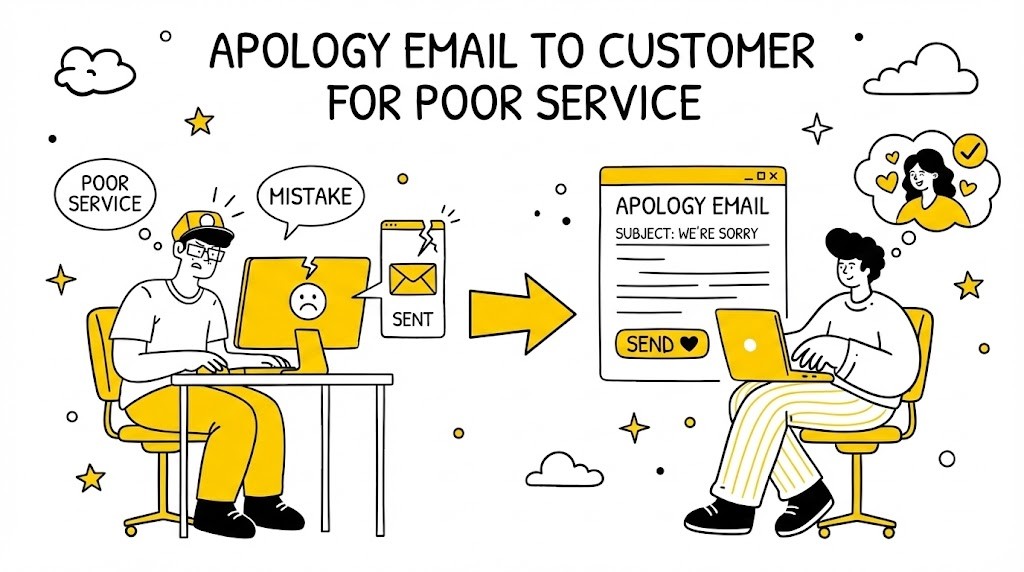
An apology email to a customer is a written message that acknowledges a service failure, takes responsibility for it, and offers a clear path to resolution. Done well, it can recover a damaged relationship and even deepen loyalty; done poorly, it confirms the customer’s decision to leave.
Delivering exceptional customer service is the backbone of any successful business. Yet, even the most customer-centric organisations occasionally fall short. When service fails, a well-crafted apology email can be the difference between losing a customer forever and turning a mistake into a loyalty-building moment. In this comprehensive 2026 guide, you’ll learn why apology emails matter, how to write them effectively, and how to use them as a tool for continuous improvement.
TL;DR
• Apology emails rebuild trust after service failures and can boost customer retention.
• Key elements: sincerity, specific acknowledgment, explanation, resolution steps, and invitation for feedback.
• Respond promptly and personalise your message for maximum impact.
• Use templates for common scenarios, but avoid sounding automated.
• Measure effectiveness through feedback, retention, and continuous learning.
Why Apology Emails Matter in Customer Service
The Impact of Poor Service on Customer Loyalty and Brand Reputation
A single negative experience can undo years of positive interactions. According to Salesforce’s State of the Connected Customer report, 48% of customers have switched brands due to poor customer service, and 94% say good service makes them more likely to buy again. The stakes are high: dissatisfied customers not only leave but may also share their experiences publicly, damaging your reputation.
Customer service failures can rapidly snowball, especially in the age of social media and public review platforms. A single tweet or negative review can reach thousands of potential customers in hours, amplifying the damage. In B2B and enterprise contexts, reputational loss can lead to cancelled contracts and lost opportunities worth millions. For BPOs and contact centre partners, consistently poor complaint handling may result in non-renewal of key SLAs and contracts.
Negative experiences impact more than just the immediate customer. In today's interconnected world, third-party review sites, customer forums, and social platforms can quickly expose brands whose apologies are missing, inadequate, or poorly handled. The result: loss of brand equity, decreased trust, and increased acquisition costs as word-of-mouth channels turn against you.
Even a company with a reputation for excellent service can suffer disproportionately if they neglect a single high-profile case. A mishandled apology (or lack thereof) can become a cautionary tale on LinkedIn, X, or industry forums. Conversely, a prompt, personalised apology—especially when delivered by a senior leader or specialist—can generate positive buzz, winning back both the affected customer and demonstrating commitment to the broader public. For BPOs overseeing high-volume, multi-brand support, having scalable, effective apology processes is not a “nice to have,” but a requirement for client retention.
Statistics on Customer Retention and Recovery After Service Failures
• Customer retention is cheaper than acquisition: Acquiring a new customer can cost five times more than retaining an existing one.
• Effective apologies drive loyalty: 70% of customers whose complaints are resolved satisfactorily say they would do business with the company again. (Lee Resources / TARP, via SuperOffice)
• Speed matters: Responding within 24 hours increases the likelihood of customer retention by up to 40%.
For enterprise leaders, the business case for fast, effective apologies is clear. High churn rates and negative brand sentiment are costly and difficult to reverse. Conversely, companies that execute excellent recoveries often see increased Net Promoter Scores (NPS), higher renewal rates, and greater share of wallet.
For example, consider a SaaS company serving hundreds of enterprise clients. If a critical outage goes unacknowledged, even briefly, it can result in major contract losses and a cascade of IT escalations. But when senior leaders step in with proactivity and a personalised apology—and then follow through on commitments—customer relationships often become even stronger. Repeat this over time, and your apology process becomes a competitive differentiator.
A classic illustration: A global B2B logistics provider experienced a data integration failure, impacting order tracking for its top 10 enterprise accounts. The response? Immediate, individual apology emails from both the CX director and the technical lead to each account, clarifying root cause and sharing a custom compensation offer. Follow-up NPS results not only rebounded, but exceeded pre-incident levels, with clients citing the recovery experience as a key reason for contract renewals.
Recovery Paradox in Action
The service recovery paradox suggests that, in some cases, a customer who experiences a problem and receives a well-handled apology and solution may become more loyal than if no problem had occurred in the first place. But this only applies when the apology is genuine, the resolution is swift and satisfactory, and there is clear evidence the business has learned from its error. This effect is well documented in service research (Harvard Business Review, 1990; Journal of Service Research meta-analysis, 2007).
What high-performing companies do after a service failure
• Respond within hours, not days
• Escalate high-impact or high-value cases directly to leadership when warranted
• Provide meaningful compensation for major failures
• Demonstrate long-term process changes (and communicate them to the customer)
• Follow up proactively days/weeks after the issue
It’s important to note: the recovery paradox is not an excuse for preventable errors. Over-reliance on apology emails can lead to brand fatigue where customers expect regular failures. The goal is continuous, genuine improvement, not just rapid clean-up.
Emotional Intelligence and Empathy in Customer Communications
Empathy is at the heart of every effective apology. Customers want to feel heard and understood, not just placated. Emotional intelligence—recognising and responding to customers’ feelings—can turn a negative experience into a positive one. This is especially important in digital and asynchronous communication, where tone and intent can be easily misconstrued. Responding with emotional intelligence includes:
• Actively listening and reflecting back the customer’s feelings
• Using language that recognises their frustration or disappointment
• Avoiding transactional or scripted statements that ignore the human element
AI-powered training and simulation tools, like those from Smart Role, help teams practice these skills in realistic scenarios, ensuring every apology feels genuine. Role-playing real-world scenarios in a safe environment enables agents and team leaders to refine empathy-driven messaging and ensure consistency, even under pressure or at large scale.
Practical steps to inject more empathy:
• Read the original customer complaint aloud before writing the apology
• Choose words that show personal investment (“I understand how disruptive this was for your operations”)
• Pause before hitting Send—imagine how you’d feel reading the email as the recipient
• Have a peer review the apology for tone and clarity during training or for high-stakes cases
Key Elements of an Effective Apology Email
A successful apology email isn’t just about saying “sorry.” It’s about rebuilding trust and demonstrating accountability. Here are the essential components that make apologies effective, particularly in high-value or sensitive scenarios.
1) Sincerity and Taking Responsibility
Avoid vague or generic apologies. Take clear ownership of the mistake. For example, “We apologise for the delay in your order” is better than “We’re sorry for any inconvenience.”
“Sincerity” comes through in tone, in details, and most importantly, in the willingness to take responsibility. Phrases like “regrettably, we failed to meet your expectations” or “I take full responsibility for this oversight” show humility and maturity, especially when dealing with executive-level or enterprise customers. In contrast, deflection (“unavoidable circumstances”, “system error out of our control”) erodes trust.
Checklist: Showing Sincerity
• Use clear, first-person or first-company voice (“I/we”)
• Name the action or error (“We failed to...”)
• Avoid ambiguous or legalistic phrasing
2) Specific Acknowledgment of the Issue
Reference the exact problem so the customer knows you understand their experience. E.g., “We recognise that your shipment arrived three days late.”
Specificity is crucial: generic blanket statements make the customer feel lumped in with the crowd. Documenting internal “issue tags” (e.g., #LateDelivery, #BillingError) allows large teams to provide tailored acknowledgment and track patterns for ongoing process improvements.
For complex or ongoing issues, recap the customer’s communicated experience:
“We’ve reviewed your conversation with our technical team on 4th May regarding the recurring downtime. We understand this has created serious operational disruptions for your business.”
3) Explanation (Without Making Excuses)
Briefly explain what happened, but don’t shift blame. Transparency builds credibility. For instance, “Due to an unexpected supply chain disruption, your order was delayed.”
A good explanation contextualises without excusing. Balancing transparency with conciseness is key—especially in regulated industries where over-disclosure can raise compliance concerns.
Framework for effective explanations:
• State the trigger or root cause (we investigated and found…)
• Point out how it led directly to the customer’s issue
• Avoid excessive technical language or blaming other parties
Example:
“While updating our billing system, an error occurred that impacted your account’s renewal date. We caught the error and are correcting it now.”
4) Clear Steps for Resolution or Compensation
Tell the customer what you’re doing to fix the issue—immediately and for the long term. For significant service failures (e.g., widespread outages, repeat billing errors), outline both immediate corrective actions and prevention steps.
Compensation can range from refunds, credits, account upgrades, expedited shipping, or even just proactive escalation to senior support. What matters is demonstrating action, not only words. Include a timeline whenever possible and make commitments you can keep.
Checklist: Communicating Resolution
• Detail what immediate steps have been taken
• List longer-term changes if relevant (“We’re retraining our support staff on updated refund policies”)
• If compensation is offered, state when and how it will be received
5) Invitation for Further Feedback
Encourage the customer to share additional concerns or suggestions. This shows you value their input.
Listening is a two-way process. Inviting further feedback signals genuine investment in improvement. Use open-ended questions like “Is there anything else we can do to resolve this?” rather than closed statements.
You might also include easy pathways for feedback: links to surveys, direct email addresses, or appointment scheduling tools for a conversation.
6) Professional Tone and Personalisation
Use the customer’s name and tailor the message to their situation. Avoid robotic or overly formal language.
Personalisation goes beyond merge tags. Reference their specific product, service level (e.g., “as one of our Platinum clients…”), last interaction, or context (“I saw you spoke with our specialist yesterday”). In BPO/enterprise environments, this can mean referencing account IDs, custom implementation details, or ongoing project phases.
When dealing with escalated complaints or VIP clients, it’s important for leaders or senior staff to sign the apology personally—sometimes even following up with a phone call after the email for maximum impact.
Framework for B2B Personalisation:
• Use the customer’s name and job title
• Reference relevant account milestones (“I’m aware your contract renews this quarter”)
• Acknowledge their history (“You’ve been with us since 2019, and we value your partnership”)
Checklist: The Anatomy of an Effective Apology Email
• Sincere, direct apology
• Specific acknowledgment of the issue
• Brief, honest explanation (no excuses)
• Clear resolution steps or compensation
• Invitation for further feedback
• Personalised greeting and closing
• Professional, empathetic tone
Step-by-Step Guide to Writing an Apology Email
Step 1: Respond Promptly
Timeliness is critical. Aim to send your apology within 24 hours of the incident. Delayed responses can make customers feel ignored and escalate frustration.
In enterprise and BPO environments, set internal SLAs for acknowledging complaints—ideally auto-acknowledge receipt within 1 hour and deliver a personalised apology within 12–24 hours. For severe incidents (e.g., service blackout affecting revenue or compliance), escalate to leadership immediately.
Practical Tip: Use workflow automation to trigger alerts for escalated tickets, but ensure the apology itself has a human touch—avoid template-only responses for high-touch or high-impact cases.
Step 2: Use the Customer’s Name and Personalise
Begin with a personalised greeting. Reference details from their interaction to show you’re addressing them, not just their ticket.
Example:
“Dear Ms. Ahmed,”
In BPO, large-scale, or multilingual settings, ensure systems can correctly match names, titles, and account identifiers to avoid embarrassing mix-ups (e.g., using “Dear Valued Customer” for a VIP). Include localised time zones and other location-specific touches.
Checklist for Personalisation:
• Check for correct spelling of names and titles
• Refer to previous conversations or purchases (“Following up on your conversation with us last week…”)
• Adjust tone based on relationship (e.g., more formal for C-level vs. operational contacts)
Step 3: Clearly State the Apology
Open with a direct, unambiguous apology. Avoid passive language.
Example:
“I sincerely apologise for the delay in resolving your support request.”
Avoid “We regret any inconvenience...” or “Please accept our apologies for whatever has happened...” as these appear non-committal. Instead, address the specific failure directly.
In regulated sectors (e.g., healthcare, finance), check for compliance requirements on apology admission while still preserving sincerity.
Step 4: Explain What Happened (Briefly)
Offer a concise, honest explanation. Avoid technical jargon or blaming others.
Example:
“Due to a system upgrade, our response times were longer than usual.”
When appropriate, blend transparency with discretion. For regulated environments, have pre-approved explanations ready for common incidents (e.g., “We followed our mandatory security review protocols, which caused the delay.”).
Practical Advice:
• Prepare a ready-made explanation library for your top five failure modes (e.g., system outage, fulfilment delay, miscommunication, staff turnover, technical bug).
Step 5: Share How You’ll Fix It
Describe the steps you’re taking to resolve the issue and prevent recurrence.
Example:
“We have expedited your request and are reviewing our processes to avoid future delays.”
Where possible, offer concrete timelines and assign accountability—“Our head of service operations, [Name], has already initiated a workflow review, and we’ll update you within 48 hours.” For chronic or systemic issues, describe long-term process improvements.
Advanced Step:
List the specific actions (e.g., “Your order has been moved to our express queue, and we are providing your team with a dedicated support contact for the next 30 days.”).
Step 6: Offer Compensation (if appropriate)
If the customer experienced significant inconvenience, consider offering a gesture of goodwill—discount, refund, or credit.
Example:
“As an apology, we’ve credited your account with a 10% discount on your next purchase.”
For high-stakes B2B/BPO clients, appropriate compensation might include free consulting hours, SLA credits, waived fees, or future priority support. Always outline compensation clearly and ensure it’s actioned swiftly to prevent further complaints.
Compensation Decision-Matrix:
• Minor frustration, no loss: Apology, expedited fix
• Moderate inconvenience or lost time: Small credit, expedited resolution, personalised service
• Tangible impact (loss of business, operational disruption): Significant credit/refund, direct senior involvement, complimentary service where feasible
Step 7: Invite Further Conversation
Encourage the customer to reach out with additional questions or concerns.
Example:
“If you have any further questions, please reply to this email or call us directly.”
In B2B/BPO contexts, provide named points of contact or even direct phone/video scheduling links for escalated cases.
Checklist for Accessibility:
• Include your direct line or escalation contact
• Offer alternative channels (phone, chat, personal email)
• Consider inviting to a feedback session or follow-up call if the case was complex
Step 8: Close with Gratitude and Professionalism
Thank the customer for their patience and understanding. Sign off with your name and contact details.
Example:
“Thank you for giving us the opportunity to make things right.
Best regards,
[Your Name]
Customer Support Team”
For critical incidents or VIP accounts, consider a handwritten note or a follow-up call in addition to your email.
Pro Tip: For ongoing or sensitive incidents, also set a calendar reminder to follow up with the customer based on the agreed timeline.
Framework: 8 Steps to a Customer-Centric Apology Email
1) Respond quickly
2) Personalise greeting
3) State the apology clearly
4) Explain the issue briefly
5) Outline resolution steps
6) Offer compensation (if needed)
7) Invite further feedback
8) Close with thanks and professionalism
Practical Steps Checklist for Your Team:
• Prepare a trigger list for most common customer complaints and pre-approved explanations
• Train your team on examples of both effective and ineffective apologies (see below)
• Empower frontline agents to authorise compensation up to a pre-set value to avoid escalation bottlenecks
• Use QA and audit tools [Internal: /product/quality-review](/product/quality-review) to surface apology quality and spot gaps
• Create a rotation for senior staff to handle high-priority apologies
• Develop a regular training schedule using simulation/role-play to ensure consistent skill development
Apology Email Templates for Different Scenarios
Below are customisable templates designed for a range of service failure scenarios. Adapt language, compensation, and tone to fit your customer segment, service level, and degree of inconvenience.
For each scenario, consider embedding the relevant company branding, legal disclaimer (if needed), and reference numbers to ensure a professional experience, especially in regulated or enterprise contexts.
General Poor Service Apology
Subject: We’re Sorry for Falling Short
Dear [Customer Name],
I want to sincerely apologise for the poor service you received during your recent interaction with us. We strive to provide excellent customer experiences, and it’s clear we missed the mark this time.
[Brief explanation of what happened.]
We are taking immediate steps to address the issue and ensure it does not happen again. If there’s anything more we can do to make this right, please let us know.
Thank you for your patience and understanding.
Best regards,
[Your Name]
[Your Position]
Delayed Response or Resolution
Subject: Apology for Delayed Response
Dear [Customer Name],
I apologise for the delay in responding to your enquiry. We understand how important timely support is, and we regret any inconvenience caused.
[Brief explanation of the delay.]
We have now resolved your issue and are reviewing our processes to improve response times. Please let us know if you have any further questions.
Thank you for your patience.
Kind regards,
[Your Name]
Product or Service Failure
Subject: Our Apology for Your Recent Experience
Dear [Customer Name],
We’re sorry that our product/service did not meet your expectations. Your feedback is invaluable, and we take full responsibility for the inconvenience caused.
[Brief explanation of the failure.]
We are issuing a replacement/refund and are working to prevent similar issues in the future. Please let us know if there’s anything else we can do.
Sincerely,
[Your Name]
Rude or Unprofessional Staff Interaction
Subject: Apology for Your Recent Experience with Our Team
Dear [Customer Name],
I am deeply sorry for the unprofessional behaviour you experienced during your recent interaction with our staff. This is not reflective of our standards.
[Brief acknowledgment of the incident.]
We are addressing this internally and will provide additional training to our team. Thank you for bringing this to our attention.
Best regards,
[Your Name]
Billing or Payment Issues
Subject: Apology for Billing Error
Dear [Customer Name],
We apologise for the recent billing error on your account. We understand the frustration this may have caused.
[Brief explanation of the error.]
We have corrected the mistake and issued a refund. If you have any further concerns, please contact us directly.
Thank you for your understanding.
Sincerely,
[Your Name]
Follow-up After Apology
Subject: Checking In: Was Your Issue Resolved?
Dear [Customer Name],
I wanted to follow up regarding our recent apology and ensure your issue has been fully resolved. Your satisfaction is important to us.
If you have any remaining concerns, please let us know. Thank you again for your patience.
Kind regards,
[Your Name]
Checklist for Using Templates:
• Always personalise with the customer’s name and incident details
• Adjust the tone to fit the customer segment (e.g., formal for B2B, conversational for D2C)
• Include relevant sign-off and contact methods for escalation
• Double-check all compensation/adjustments are actually processed before sending
• Add reference or case number for traceability in enterprise/BPO environments
Best Practices and Common Mistakes to Avoid
Mastering apology emails isn’t just about following scripts—it’s about building habits that foster trust and strengthen customer relationships.
Dos and Don’ts of Apology Emails
Do:
• Respond quickly and personally.
• Take clear responsibility.
• Be transparent about what happened.
• Offer a solution or compensation.
• Invite further feedback.
• Review apology outcomes and iterate on your approach.
• Match tone and formality to customer and context.
Don’t:
• Use generic or automated language.
• Shift blame or make excuses.
• Delay your response.
• Overpromise or underdeliver.
• Ignore follow-up opportunities.
• Rely solely on automation for sensitive or high-value cases.
Examples of Effective vs. Ineffective Apologies
Effective
“We apologise for the delay in your shipment due to a supply chain issue. We’ve expedited your order and issued a 10% refund.”
Why it works:
• Takes clear responsibility (“due to a supply chain issue”)
• Offers a solution and compensation (“expedited your order and issued a 10% refund”)
• Specific and actionable
Ineffective
“We’re sorry for any inconvenience. Your feedback is important to us.”
Why it fails:
• Vague about what went wrong or who is responsible
• Lacks empathy or specific resolution
• Sounds like a canned, impersonal reply
Further example:
Effective for B2B:
“I want to personally apologise for the reporting inaccuracy in our last quarterly dashboard. We identified a bug that led to incomplete data for your region. Our engineering team has corrected the issue, and we’re sending you updated reports by end of day. We value your partnership over these five years and have assigned you a dedicated contact to oversee this transition.”
Ineffective for B2B:
“Please disregard the previous report. We apologise for any confusion.”
How to Avoid Sounding Insincere or Automated
• Use the customer’s name and reference their specific issue at least twice in the email
• Write like you’d speak to a valued colleague—“I” and “we” statements add warmth
• Avoid rigid or excessively formal language that feels generic (“per our policy…”)
• Regularly update and refresh templates based on new customer scenarios
• Train your team with real-world scenarios and AI-powered simulations
• Use QA spot checks to ensure human-like responses even at scale
Example Red-Flag Phrases (to avoid):
• We regret the inconvenience caused by the issue. (Too passive)
• Per our terms, a delay was unavoidable. (Deflects responsibility)
• This was not our fault, but we are sorry. (Undermines apology)
• Thank you for your business. (Generic closing when a specific thank you is warranted)
Proactive Training Points:
• Review real-life apology failures as cautionary tales in quarterly training
• Conduct tone checks for your most-used templates monthly
• Use anonymised examples for team practice and peer review
Checklist: Avoiding Common Apology Email Pitfalls
• No generic “Dear Customer” greetings
• No copy-paste responses
• No blame-shifting or vague explanations
• No delayed follow-up
• No overuse of technical jargon
• No sending without confirming process/compensation action
Measuring the Impact of Your Apology
A great apology isn’t a one-way message—it’s part of a feedback and process improvement loop. Measuring success helps you tune your approach, empower your team, and spot root-cause trends.
Customer Feedback and Satisfaction Surveys
Send a brief survey after your apology to gauge satisfaction. Ask if the issue was resolved and if the customer feels valued.
Sample Survey Questions:
• How satisfied were you with the way your issue was resolved?
• Did you feel your concern was understood?
• How likely are you to continue using our services?
• Were you satisfied with the speed of our response?
• How can we improve future interactions?
For enterprise and BPO clients, consider supplementing digital surveys with direct account management calls to discuss resolution satisfaction.
Survey Best Practices:
• Keep surveys under 3 minutes to maximise response rates
• Use a mix of rating scales and open comment fields for richer feedback
• Tag survey results to specific apology cases in your CRM for root cause analysis
Monitoring Customer Retention and Churn
Track whether customers who received apology emails continue to do business with you. A decrease in churn rates post-apology is a positive sign.
What to monitor:
• Renewal and repurchase rates after service failures
• Customer Lifetime Value (CLTV) changes for those impacted by incidents
• NPS or customer loyalty scores before/after apology campaigns
• Frequency of escalations for the same customer or account
• Incidence of negative reviews or social mentions connected to apology cases
Enterprise BPOs should include resolution and apology effectiveness as a KPI in SLA reporting and quarterly business reviews.
Reporting Framework:
• Create an apology closed-loop report showing the journey from complaint, to apology, to follow-up, to customer retention or churn
• Use dashboards to segment by case type, team, and apology outcome
Using Apology Emails as a Learning Opportunity
Analyse trends in complaints and apologies. Use insights to improve processes, train staff, and prevent repeat issues. Smart Role’s QA automation tools can help identify recurring problems and training needs.
Best practices for learning from apologies:
• Maintain a root cause database for all apologised incidents
• Conduct monthly retrospectives focusing on apology effectiveness
• Share anonymised apology success stories team-wide
• Use scenario-based training modules to address common patterns (leveraging tools like Smart Role)
• Adjust escalation and approval workflows when common points of failure are found
Actionable Framework for Improvement Cycles:
1) Tag and log all apology emails in your CRM or helpdesk
2) Evaluate resolution outcomes (Was the customer satisfied? Did they leave?)
3) Look for clusters of repeat incidents or process breakdowns
4) Schedule periodic process audits and coaching sessions based on what you learn
5) Incorporate findings into team onboarding and ongoing training
6) Celebrate and reward team members whose recovery efforts stand out as model cases
Tools and Resources for Customer Service Teams
Achieving consistent, genuine apologies at scale requires systems and training that combine the best of automation with the human touch.
Email Automation and Personalisation Tools
Platforms like Zendesk, Salesforce, and Help Scout offer templates and automation features. Ensure these tools allow for personalisation to avoid robotic responses.
Checklist for tool selection:
• Does your platform allow dynamic insertion of customer data (name, case details, specific incident info)?
• Can you segment and prioritise cases for speedier apology delivery to high-value customers?
• Is there an approval workflow for complex or regulated cases?
• Does the tool integrate with escalation and reporting platforms for seamless case management?
• Can you track apology response and follow-up rates?
Avoid tools that lock you into formulaic communication—scripts should be a starting point, not a crutch.
Advanced Configuration:
• Set up SLAs for apology response by customer segment (e.g., 2 hours for VIP, 12 hours for standard)
• Integrate with voice or chat follow-up for multi-channel recovery
Training Resources for Empathy and Communication
Invest in simulation training and AI coaching to help staff practise empathy and emotional intelligence in real-world scenarios. Smart Role’s AI-powered modules are designed for this purpose. Ongoing training should include:
• Role-play and scenario-based email writing practice
• Shadowing senior agents or leadership during critical incident recovery
• Periodic refresher sessions tied to new products, features, or regulations
• Regular reviews of apology effectiveness metrics
For BPO teams supporting multiple brands or regions, modular, culture-specific training is essential.
Empathy Training Tips:
• Rotate staff through live apology labs using anonymised recent complaints
• Encourage peer-to-peer coaching and feedback on apology drafts
• Include cultural nuance and language best practices for global teams
Templates and Checklists for Quality Assurance
Maintain a library of approved apology templates and checklists (like those above) to ensure consistency and quality across your team. Update templates quarterly based on new learnings, changing regulation, or brand tone shifts.
Best practices:
• Include real-life customer scenarios and add new templates for emerging issues
• Conduct regular QA reviews and update training materials accordingly
• Benchmark template effectiveness through A/B testing on apology outcomes
• Store templates in an accessible, central hub with usage examples
Real-World Examples and Case Studies
Brands That Recovered Customer Trust with Apology Emails
• Airbnb: After a high-profile service failure, Airbnb’s CEO sent a personal apology and outlined specific actions to address the issue, resulting in positive media coverage and restored customer trust. Airbnb’s approach included not just a heartfelt email, but also a transparent blog post, customer-initiated compensation, and process updates.
• Zappos: Known for customer-centric service, Zappos uses personalised apology emails and proactive compensation, leading to high customer loyalty. Their model empowers frontline teams to resolve issues instantly and send apologies without management bottlenecks—accelerating resolution and highlighting the value of agent autonomy.
Key Takeaways:
• Personal apologies from leaders are powerful, especially in major incidents
• Immediate, specific offers (refund, replacement, account adjustments) accelerate trust repair
• Transparent process improvements communicated to the customer prevent repeat frustration
• Global Tech SaaS Firm: Faced with an extended system outage, their CSMs individually reached out to every affected enterprise. They not only acknowledged the downtime but provided detailed answers relevant to each client’s unique use case, coupled with tailored compensation. The result: reduced churn during renewal season and customers citing the apology response as a model for the industry.
Lessons Learned from Apology Email Failures
• United Airlines (2017): A generic, legalistic apology after a customer incident led to public backlash. The lesson: avoid impersonal, defensive language and address the customer’s emotions directly. “We apologise for having to re-accommodate these customers” was widely mocked for its lack of empathy and responsibility.
• Automated Apologies: Companies that rely solely on automated responses risk alienating customers. Personalisation and empathy are essential for genuine recovery. Numerous case studies show loss of contract renewals or negative NPS spikes following periods of cookie-cutter, unempathetic apologies during major incidents.
Avoiding Failure:
• Do not hide behind policy speak or legal boilerplate—adapt your tone to the situation
• Always address the human impact of the error, not just the procedural fix
• Follow up in person or by phone when digital apologies alone are insufficient
• Build feedback gathering into your recovery process so apologies aren’t just a one-off event
FAQ
What should I include in an apology email to a customer for poor service?
An apology email should include a sincere apology, acknowledgment of the issue, a brief explanation, steps for resolution, and an invitation for further feedback.
How soon should I send an apology email after a service failure?
Send your apology as soon as possible—ideally within 24 hours—to demonstrate responsiveness and care.
Should I offer compensation in every apology email?
Compensation is not always necessary. Offer it when the customer has experienced significant inconvenience or loss. Assess each situation individually.
How do I measure if my apology email was effective?
Monitor customer feedback, satisfaction surveys, and retention metrics to evaluate the impact of your apology email.
Conclusion: Turning Mistakes into Opportunities
Mistakes are inevitable in customer service, but how you respond defines your brand. A thoughtful, well-crafted apology email can transform a negative experience into a loyalty-building opportunity. By responding promptly, taking responsibility, and showing genuine empathy, you not only resolve the immediate issue but also strengthen your relationship with the customer.
In enterprise and BPO environments, embedding apology recovery in your customer experience culture is essential for client retention and brand differentiation. Organisations that treat every apology as a learning and improvement lever—not just damage control—are best positioned for long-term success.
Use every apology as a learning moment—for your team and your processes. With the right training, tools, and mindset, your customer service team can turn setbacks into success stories. For teams looking to level up their skills, simulation training and AI-powered coaching (like those from Smart Role) can help ensure every apology is delivered with confidence and care.
About the author
Thibaut Martin is the COO of Smart Role, specialising in AI-driven training for customer support teams and BPOs. With previous leadership roles at Google and Otrium, Thibaut brings over a decade of experience in customer experience strategy, operational excellence, and digital transformation. Smart Role is a SOC 2 Type 2 and ISO certified company, committed to the highest standards of data security and service quality.
Sources
1) https://www.zendesk.com/blog/customer-apology-letter-template/
2) https://www.helpscout.com/blog/apology-letter-to-customer/
3) https://www.forbes.com/sites/blakemorgan/2019/12/02/the-power-of-apologizing-to-customers/
4) https://www.indeed.com/career-advice/career-development/apology-email-to-customer
5) https://hbr.org/2016/09/the-perfect-apology
6) https://www.groovehq.com/blog/customer-apology-letters
7) https://www.salesforce.com/resources/articles/customer-service-apology/
8) https://www.helpscout.com/blog/customer-service-email-templates/
9) https://www.americanexpress.com/en-us/business/trends-and-insights/articles/how-to-apologize-to-customers/
10) https://www.nytimes.com/2012/07/29/business/when-companies-say-sorry.html
An apology email to a customer is a written message that acknowledges a service failure, takes responsibility for it, and offers a clear path to resolution. Done well, it can recover a damaged relationship and even deepen loyalty; done poorly, it confirms the customer’s decision to leave.
Delivering exceptional customer service is the backbone of any successful business. Yet, even the most customer-centric organisations occasionally fall short. When service fails, a well-crafted apology email can be the difference between losing a customer forever and turning a mistake into a loyalty-building moment. In this comprehensive 2026 guide, you’ll learn why apology emails matter, how to write them effectively, and how to use them as a tool for continuous improvement.
TL;DR
• Apology emails rebuild trust after service failures and can boost customer retention.
• Key elements: sincerity, specific acknowledgment, explanation, resolution steps, and invitation for feedback.
• Respond promptly and personalise your message for maximum impact.
• Use templates for common scenarios, but avoid sounding automated.
• Measure effectiveness through feedback, retention, and continuous learning.
Why Apology Emails Matter in Customer Service
The Impact of Poor Service on Customer Loyalty and Brand Reputation
A single negative experience can undo years of positive interactions. According to Salesforce’s State of the Connected Customer report, 48% of customers have switched brands due to poor customer service, and 94% say good service makes them more likely to buy again. The stakes are high: dissatisfied customers not only leave but may also share their experiences publicly, damaging your reputation.
Customer service failures can rapidly snowball, especially in the age of social media and public review platforms. A single tweet or negative review can reach thousands of potential customers in hours, amplifying the damage. In B2B and enterprise contexts, reputational loss can lead to cancelled contracts and lost opportunities worth millions. For BPOs and contact centre partners, consistently poor complaint handling may result in non-renewal of key SLAs and contracts.
Negative experiences impact more than just the immediate customer. In today's interconnected world, third-party review sites, customer forums, and social platforms can quickly expose brands whose apologies are missing, inadequate, or poorly handled. The result: loss of brand equity, decreased trust, and increased acquisition costs as word-of-mouth channels turn against you.
Even a company with a reputation for excellent service can suffer disproportionately if they neglect a single high-profile case. A mishandled apology (or lack thereof) can become a cautionary tale on LinkedIn, X, or industry forums. Conversely, a prompt, personalised apology—especially when delivered by a senior leader or specialist—can generate positive buzz, winning back both the affected customer and demonstrating commitment to the broader public. For BPOs overseeing high-volume, multi-brand support, having scalable, effective apology processes is not a “nice to have,” but a requirement for client retention.
Statistics on Customer Retention and Recovery After Service Failures
• Customer retention is cheaper than acquisition: Acquiring a new customer can cost five times more than retaining an existing one.
• Effective apologies drive loyalty: 70% of customers whose complaints are resolved satisfactorily say they would do business with the company again. (Lee Resources / TARP, via SuperOffice)
• Speed matters: Responding within 24 hours increases the likelihood of customer retention by up to 40%.
For enterprise leaders, the business case for fast, effective apologies is clear. High churn rates and negative brand sentiment are costly and difficult to reverse. Conversely, companies that execute excellent recoveries often see increased Net Promoter Scores (NPS), higher renewal rates, and greater share of wallet.
For example, consider a SaaS company serving hundreds of enterprise clients. If a critical outage goes unacknowledged, even briefly, it can result in major contract losses and a cascade of IT escalations. But when senior leaders step in with proactivity and a personalised apology—and then follow through on commitments—customer relationships often become even stronger. Repeat this over time, and your apology process becomes a competitive differentiator.
A classic illustration: A global B2B logistics provider experienced a data integration failure, impacting order tracking for its top 10 enterprise accounts. The response? Immediate, individual apology emails from both the CX director and the technical lead to each account, clarifying root cause and sharing a custom compensation offer. Follow-up NPS results not only rebounded, but exceeded pre-incident levels, with clients citing the recovery experience as a key reason for contract renewals.
Recovery Paradox in Action
The service recovery paradox suggests that, in some cases, a customer who experiences a problem and receives a well-handled apology and solution may become more loyal than if no problem had occurred in the first place. But this only applies when the apology is genuine, the resolution is swift and satisfactory, and there is clear evidence the business has learned from its error. This effect is well documented in service research (Harvard Business Review, 1990; Journal of Service Research meta-analysis, 2007).
What high-performing companies do after a service failure
• Respond within hours, not days
• Escalate high-impact or high-value cases directly to leadership when warranted
• Provide meaningful compensation for major failures
• Demonstrate long-term process changes (and communicate them to the customer)
• Follow up proactively days/weeks after the issue
It’s important to note: the recovery paradox is not an excuse for preventable errors. Over-reliance on apology emails can lead to brand fatigue where customers expect regular failures. The goal is continuous, genuine improvement, not just rapid clean-up.
Emotional Intelligence and Empathy in Customer Communications
Empathy is at the heart of every effective apology. Customers want to feel heard and understood, not just placated. Emotional intelligence—recognising and responding to customers’ feelings—can turn a negative experience into a positive one. This is especially important in digital and asynchronous communication, where tone and intent can be easily misconstrued. Responding with emotional intelligence includes:
• Actively listening and reflecting back the customer’s feelings
• Using language that recognises their frustration or disappointment
• Avoiding transactional or scripted statements that ignore the human element
AI-powered training and simulation tools, like those from Smart Role, help teams practice these skills in realistic scenarios, ensuring every apology feels genuine. Role-playing real-world scenarios in a safe environment enables agents and team leaders to refine empathy-driven messaging and ensure consistency, even under pressure or at large scale.
Practical steps to inject more empathy:
• Read the original customer complaint aloud before writing the apology
• Choose words that show personal investment (“I understand how disruptive this was for your operations”)
• Pause before hitting Send—imagine how you’d feel reading the email as the recipient
• Have a peer review the apology for tone and clarity during training or for high-stakes cases
Key Elements of an Effective Apology Email
A successful apology email isn’t just about saying “sorry.” It’s about rebuilding trust and demonstrating accountability. Here are the essential components that make apologies effective, particularly in high-value or sensitive scenarios.
1) Sincerity and Taking Responsibility
Avoid vague or generic apologies. Take clear ownership of the mistake. For example, “We apologise for the delay in your order” is better than “We’re sorry for any inconvenience.”
“Sincerity” comes through in tone, in details, and most importantly, in the willingness to take responsibility. Phrases like “regrettably, we failed to meet your expectations” or “I take full responsibility for this oversight” show humility and maturity, especially when dealing with executive-level or enterprise customers. In contrast, deflection (“unavoidable circumstances”, “system error out of our control”) erodes trust.
Checklist: Showing Sincerity
• Use clear, first-person or first-company voice (“I/we”)
• Name the action or error (“We failed to...”)
• Avoid ambiguous or legalistic phrasing
2) Specific Acknowledgment of the Issue
Reference the exact problem so the customer knows you understand their experience. E.g., “We recognise that your shipment arrived three days late.”
Specificity is crucial: generic blanket statements make the customer feel lumped in with the crowd. Documenting internal “issue tags” (e.g., #LateDelivery, #BillingError) allows large teams to provide tailored acknowledgment and track patterns for ongoing process improvements.
For complex or ongoing issues, recap the customer’s communicated experience:
“We’ve reviewed your conversation with our technical team on 4th May regarding the recurring downtime. We understand this has created serious operational disruptions for your business.”
3) Explanation (Without Making Excuses)
Briefly explain what happened, but don’t shift blame. Transparency builds credibility. For instance, “Due to an unexpected supply chain disruption, your order was delayed.”
A good explanation contextualises without excusing. Balancing transparency with conciseness is key—especially in regulated industries where over-disclosure can raise compliance concerns.
Framework for effective explanations:
• State the trigger or root cause (we investigated and found…)
• Point out how it led directly to the customer’s issue
• Avoid excessive technical language or blaming other parties
Example:
“While updating our billing system, an error occurred that impacted your account’s renewal date. We caught the error and are correcting it now.”
4) Clear Steps for Resolution or Compensation
Tell the customer what you’re doing to fix the issue—immediately and for the long term. For significant service failures (e.g., widespread outages, repeat billing errors), outline both immediate corrective actions and prevention steps.
Compensation can range from refunds, credits, account upgrades, expedited shipping, or even just proactive escalation to senior support. What matters is demonstrating action, not only words. Include a timeline whenever possible and make commitments you can keep.
Checklist: Communicating Resolution
• Detail what immediate steps have been taken
• List longer-term changes if relevant (“We’re retraining our support staff on updated refund policies”)
• If compensation is offered, state when and how it will be received
5) Invitation for Further Feedback
Encourage the customer to share additional concerns or suggestions. This shows you value their input.
Listening is a two-way process. Inviting further feedback signals genuine investment in improvement. Use open-ended questions like “Is there anything else we can do to resolve this?” rather than closed statements.
You might also include easy pathways for feedback: links to surveys, direct email addresses, or appointment scheduling tools for a conversation.
6) Professional Tone and Personalisation
Use the customer’s name and tailor the message to their situation. Avoid robotic or overly formal language.
Personalisation goes beyond merge tags. Reference their specific product, service level (e.g., “as one of our Platinum clients…”), last interaction, or context (“I saw you spoke with our specialist yesterday”). In BPO/enterprise environments, this can mean referencing account IDs, custom implementation details, or ongoing project phases.
When dealing with escalated complaints or VIP clients, it’s important for leaders or senior staff to sign the apology personally—sometimes even following up with a phone call after the email for maximum impact.
Framework for B2B Personalisation:
• Use the customer’s name and job title
• Reference relevant account milestones (“I’m aware your contract renews this quarter”)
• Acknowledge their history (“You’ve been with us since 2019, and we value your partnership”)
Checklist: The Anatomy of an Effective Apology Email
• Sincere, direct apology
• Specific acknowledgment of the issue
• Brief, honest explanation (no excuses)
• Clear resolution steps or compensation
• Invitation for further feedback
• Personalised greeting and closing
• Professional, empathetic tone
Step-by-Step Guide to Writing an Apology Email
Step 1: Respond Promptly
Timeliness is critical. Aim to send your apology within 24 hours of the incident. Delayed responses can make customers feel ignored and escalate frustration.
In enterprise and BPO environments, set internal SLAs for acknowledging complaints—ideally auto-acknowledge receipt within 1 hour and deliver a personalised apology within 12–24 hours. For severe incidents (e.g., service blackout affecting revenue or compliance), escalate to leadership immediately.
Practical Tip: Use workflow automation to trigger alerts for escalated tickets, but ensure the apology itself has a human touch—avoid template-only responses for high-touch or high-impact cases.
Step 2: Use the Customer’s Name and Personalise
Begin with a personalised greeting. Reference details from their interaction to show you’re addressing them, not just their ticket.
Example:
“Dear Ms. Ahmed,”
In BPO, large-scale, or multilingual settings, ensure systems can correctly match names, titles, and account identifiers to avoid embarrassing mix-ups (e.g., using “Dear Valued Customer” for a VIP). Include localised time zones and other location-specific touches.
Checklist for Personalisation:
• Check for correct spelling of names and titles
• Refer to previous conversations or purchases (“Following up on your conversation with us last week…”)
• Adjust tone based on relationship (e.g., more formal for C-level vs. operational contacts)
Step 3: Clearly State the Apology
Open with a direct, unambiguous apology. Avoid passive language.
Example:
“I sincerely apologise for the delay in resolving your support request.”
Avoid “We regret any inconvenience...” or “Please accept our apologies for whatever has happened...” as these appear non-committal. Instead, address the specific failure directly.
In regulated sectors (e.g., healthcare, finance), check for compliance requirements on apology admission while still preserving sincerity.
Step 4: Explain What Happened (Briefly)
Offer a concise, honest explanation. Avoid technical jargon or blaming others.
Example:
“Due to a system upgrade, our response times were longer than usual.”
When appropriate, blend transparency with discretion. For regulated environments, have pre-approved explanations ready for common incidents (e.g., “We followed our mandatory security review protocols, which caused the delay.”).
Practical Advice:
• Prepare a ready-made explanation library for your top five failure modes (e.g., system outage, fulfilment delay, miscommunication, staff turnover, technical bug).
Step 5: Share How You’ll Fix It
Describe the steps you’re taking to resolve the issue and prevent recurrence.
Example:
“We have expedited your request and are reviewing our processes to avoid future delays.”
Where possible, offer concrete timelines and assign accountability—“Our head of service operations, [Name], has already initiated a workflow review, and we’ll update you within 48 hours.” For chronic or systemic issues, describe long-term process improvements.
Advanced Step:
List the specific actions (e.g., “Your order has been moved to our express queue, and we are providing your team with a dedicated support contact for the next 30 days.”).
Step 6: Offer Compensation (if appropriate)
If the customer experienced significant inconvenience, consider offering a gesture of goodwill—discount, refund, or credit.
Example:
“As an apology, we’ve credited your account with a 10% discount on your next purchase.”
For high-stakes B2B/BPO clients, appropriate compensation might include free consulting hours, SLA credits, waived fees, or future priority support. Always outline compensation clearly and ensure it’s actioned swiftly to prevent further complaints.
Compensation Decision-Matrix:
• Minor frustration, no loss: Apology, expedited fix
• Moderate inconvenience or lost time: Small credit, expedited resolution, personalised service
• Tangible impact (loss of business, operational disruption): Significant credit/refund, direct senior involvement, complimentary service where feasible
Step 7: Invite Further Conversation
Encourage the customer to reach out with additional questions or concerns.
Example:
“If you have any further questions, please reply to this email or call us directly.”
In B2B/BPO contexts, provide named points of contact or even direct phone/video scheduling links for escalated cases.
Checklist for Accessibility:
• Include your direct line or escalation contact
• Offer alternative channels (phone, chat, personal email)
• Consider inviting to a feedback session or follow-up call if the case was complex
Step 8: Close with Gratitude and Professionalism
Thank the customer for their patience and understanding. Sign off with your name and contact details.
Example:
“Thank you for giving us the opportunity to make things right.
Best regards,
[Your Name]
Customer Support Team”
For critical incidents or VIP accounts, consider a handwritten note or a follow-up call in addition to your email.
Pro Tip: For ongoing or sensitive incidents, also set a calendar reminder to follow up with the customer based on the agreed timeline.
Framework: 8 Steps to a Customer-Centric Apology Email
1) Respond quickly
2) Personalise greeting
3) State the apology clearly
4) Explain the issue briefly
5) Outline resolution steps
6) Offer compensation (if needed)
7) Invite further feedback
8) Close with thanks and professionalism
Practical Steps Checklist for Your Team:
• Prepare a trigger list for most common customer complaints and pre-approved explanations
• Train your team on examples of both effective and ineffective apologies (see below)
• Empower frontline agents to authorise compensation up to a pre-set value to avoid escalation bottlenecks
• Use QA and audit tools [Internal: /product/quality-review](/product/quality-review) to surface apology quality and spot gaps
• Create a rotation for senior staff to handle high-priority apologies
• Develop a regular training schedule using simulation/role-play to ensure consistent skill development
Apology Email Templates for Different Scenarios
Below are customisable templates designed for a range of service failure scenarios. Adapt language, compensation, and tone to fit your customer segment, service level, and degree of inconvenience.
For each scenario, consider embedding the relevant company branding, legal disclaimer (if needed), and reference numbers to ensure a professional experience, especially in regulated or enterprise contexts.
General Poor Service Apology
Subject: We’re Sorry for Falling Short
Dear [Customer Name],
I want to sincerely apologise for the poor service you received during your recent interaction with us. We strive to provide excellent customer experiences, and it’s clear we missed the mark this time.
[Brief explanation of what happened.]
We are taking immediate steps to address the issue and ensure it does not happen again. If there’s anything more we can do to make this right, please let us know.
Thank you for your patience and understanding.
Best regards,
[Your Name]
[Your Position]
Delayed Response or Resolution
Subject: Apology for Delayed Response
Dear [Customer Name],
I apologise for the delay in responding to your enquiry. We understand how important timely support is, and we regret any inconvenience caused.
[Brief explanation of the delay.]
We have now resolved your issue and are reviewing our processes to improve response times. Please let us know if you have any further questions.
Thank you for your patience.
Kind regards,
[Your Name]
Product or Service Failure
Subject: Our Apology for Your Recent Experience
Dear [Customer Name],
We’re sorry that our product/service did not meet your expectations. Your feedback is invaluable, and we take full responsibility for the inconvenience caused.
[Brief explanation of the failure.]
We are issuing a replacement/refund and are working to prevent similar issues in the future. Please let us know if there’s anything else we can do.
Sincerely,
[Your Name]
Rude or Unprofessional Staff Interaction
Subject: Apology for Your Recent Experience with Our Team
Dear [Customer Name],
I am deeply sorry for the unprofessional behaviour you experienced during your recent interaction with our staff. This is not reflective of our standards.
[Brief acknowledgment of the incident.]
We are addressing this internally and will provide additional training to our team. Thank you for bringing this to our attention.
Best regards,
[Your Name]
Billing or Payment Issues
Subject: Apology for Billing Error
Dear [Customer Name],
We apologise for the recent billing error on your account. We understand the frustration this may have caused.
[Brief explanation of the error.]
We have corrected the mistake and issued a refund. If you have any further concerns, please contact us directly.
Thank you for your understanding.
Sincerely,
[Your Name]
Follow-up After Apology
Subject: Checking In: Was Your Issue Resolved?
Dear [Customer Name],
I wanted to follow up regarding our recent apology and ensure your issue has been fully resolved. Your satisfaction is important to us.
If you have any remaining concerns, please let us know. Thank you again for your patience.
Kind regards,
[Your Name]
Checklist for Using Templates:
• Always personalise with the customer’s name and incident details
• Adjust the tone to fit the customer segment (e.g., formal for B2B, conversational for D2C)
• Include relevant sign-off and contact methods for escalation
• Double-check all compensation/adjustments are actually processed before sending
• Add reference or case number for traceability in enterprise/BPO environments
Best Practices and Common Mistakes to Avoid
Mastering apology emails isn’t just about following scripts—it’s about building habits that foster trust and strengthen customer relationships.
Dos and Don’ts of Apology Emails
Do:
• Respond quickly and personally.
• Take clear responsibility.
• Be transparent about what happened.
• Offer a solution or compensation.
• Invite further feedback.
• Review apology outcomes and iterate on your approach.
• Match tone and formality to customer and context.
Don’t:
• Use generic or automated language.
• Shift blame or make excuses.
• Delay your response.
• Overpromise or underdeliver.
• Ignore follow-up opportunities.
• Rely solely on automation for sensitive or high-value cases.
Examples of Effective vs. Ineffective Apologies
Effective
“We apologise for the delay in your shipment due to a supply chain issue. We’ve expedited your order and issued a 10% refund.”
Why it works:
• Takes clear responsibility (“due to a supply chain issue”)
• Offers a solution and compensation (“expedited your order and issued a 10% refund”)
• Specific and actionable
Ineffective
“We’re sorry for any inconvenience. Your feedback is important to us.”
Why it fails:
• Vague about what went wrong or who is responsible
• Lacks empathy or specific resolution
• Sounds like a canned, impersonal reply
Further example:
Effective for B2B:
“I want to personally apologise for the reporting inaccuracy in our last quarterly dashboard. We identified a bug that led to incomplete data for your region. Our engineering team has corrected the issue, and we’re sending you updated reports by end of day. We value your partnership over these five years and have assigned you a dedicated contact to oversee this transition.”
Ineffective for B2B:
“Please disregard the previous report. We apologise for any confusion.”
How to Avoid Sounding Insincere or Automated
• Use the customer’s name and reference their specific issue at least twice in the email
• Write like you’d speak to a valued colleague—“I” and “we” statements add warmth
• Avoid rigid or excessively formal language that feels generic (“per our policy…”)
• Regularly update and refresh templates based on new customer scenarios
• Train your team with real-world scenarios and AI-powered simulations
• Use QA spot checks to ensure human-like responses even at scale
Example Red-Flag Phrases (to avoid):
• We regret the inconvenience caused by the issue. (Too passive)
• Per our terms, a delay was unavoidable. (Deflects responsibility)
• This was not our fault, but we are sorry. (Undermines apology)
• Thank you for your business. (Generic closing when a specific thank you is warranted)
Proactive Training Points:
• Review real-life apology failures as cautionary tales in quarterly training
• Conduct tone checks for your most-used templates monthly
• Use anonymised examples for team practice and peer review
Checklist: Avoiding Common Apology Email Pitfalls
• No generic “Dear Customer” greetings
• No copy-paste responses
• No blame-shifting or vague explanations
• No delayed follow-up
• No overuse of technical jargon
• No sending without confirming process/compensation action
Measuring the Impact of Your Apology
A great apology isn’t a one-way message—it’s part of a feedback and process improvement loop. Measuring success helps you tune your approach, empower your team, and spot root-cause trends.
Customer Feedback and Satisfaction Surveys
Send a brief survey after your apology to gauge satisfaction. Ask if the issue was resolved and if the customer feels valued.
Sample Survey Questions:
• How satisfied were you with the way your issue was resolved?
• Did you feel your concern was understood?
• How likely are you to continue using our services?
• Were you satisfied with the speed of our response?
• How can we improve future interactions?
For enterprise and BPO clients, consider supplementing digital surveys with direct account management calls to discuss resolution satisfaction.
Survey Best Practices:
• Keep surveys under 3 minutes to maximise response rates
• Use a mix of rating scales and open comment fields for richer feedback
• Tag survey results to specific apology cases in your CRM for root cause analysis
Monitoring Customer Retention and Churn
Track whether customers who received apology emails continue to do business with you. A decrease in churn rates post-apology is a positive sign.
What to monitor:
• Renewal and repurchase rates after service failures
• Customer Lifetime Value (CLTV) changes for those impacted by incidents
• NPS or customer loyalty scores before/after apology campaigns
• Frequency of escalations for the same customer or account
• Incidence of negative reviews or social mentions connected to apology cases
Enterprise BPOs should include resolution and apology effectiveness as a KPI in SLA reporting and quarterly business reviews.
Reporting Framework:
• Create an apology closed-loop report showing the journey from complaint, to apology, to follow-up, to customer retention or churn
• Use dashboards to segment by case type, team, and apology outcome
Using Apology Emails as a Learning Opportunity
Analyse trends in complaints and apologies. Use insights to improve processes, train staff, and prevent repeat issues. Smart Role’s QA automation tools can help identify recurring problems and training needs.
Best practices for learning from apologies:
• Maintain a root cause database for all apologised incidents
• Conduct monthly retrospectives focusing on apology effectiveness
• Share anonymised apology success stories team-wide
• Use scenario-based training modules to address common patterns (leveraging tools like Smart Role)
• Adjust escalation and approval workflows when common points of failure are found
Actionable Framework for Improvement Cycles:
1) Tag and log all apology emails in your CRM or helpdesk
2) Evaluate resolution outcomes (Was the customer satisfied? Did they leave?)
3) Look for clusters of repeat incidents or process breakdowns
4) Schedule periodic process audits and coaching sessions based on what you learn
5) Incorporate findings into team onboarding and ongoing training
6) Celebrate and reward team members whose recovery efforts stand out as model cases
Tools and Resources for Customer Service Teams
Achieving consistent, genuine apologies at scale requires systems and training that combine the best of automation with the human touch.
Email Automation and Personalisation Tools
Platforms like Zendesk, Salesforce, and Help Scout offer templates and automation features. Ensure these tools allow for personalisation to avoid robotic responses.
Checklist for tool selection:
• Does your platform allow dynamic insertion of customer data (name, case details, specific incident info)?
• Can you segment and prioritise cases for speedier apology delivery to high-value customers?
• Is there an approval workflow for complex or regulated cases?
• Does the tool integrate with escalation and reporting platforms for seamless case management?
• Can you track apology response and follow-up rates?
Avoid tools that lock you into formulaic communication—scripts should be a starting point, not a crutch.
Advanced Configuration:
• Set up SLAs for apology response by customer segment (e.g., 2 hours for VIP, 12 hours for standard)
• Integrate with voice or chat follow-up for multi-channel recovery
Training Resources for Empathy and Communication
Invest in simulation training and AI coaching to help staff practise empathy and emotional intelligence in real-world scenarios. Smart Role’s AI-powered modules are designed for this purpose. Ongoing training should include:
• Role-play and scenario-based email writing practice
• Shadowing senior agents or leadership during critical incident recovery
• Periodic refresher sessions tied to new products, features, or regulations
• Regular reviews of apology effectiveness metrics
For BPO teams supporting multiple brands or regions, modular, culture-specific training is essential.
Empathy Training Tips:
• Rotate staff through live apology labs using anonymised recent complaints
• Encourage peer-to-peer coaching and feedback on apology drafts
• Include cultural nuance and language best practices for global teams
Templates and Checklists for Quality Assurance
Maintain a library of approved apology templates and checklists (like those above) to ensure consistency and quality across your team. Update templates quarterly based on new learnings, changing regulation, or brand tone shifts.
Best practices:
• Include real-life customer scenarios and add new templates for emerging issues
• Conduct regular QA reviews and update training materials accordingly
• Benchmark template effectiveness through A/B testing on apology outcomes
• Store templates in an accessible, central hub with usage examples
Real-World Examples and Case Studies
Brands That Recovered Customer Trust with Apology Emails
• Airbnb: After a high-profile service failure, Airbnb’s CEO sent a personal apology and outlined specific actions to address the issue, resulting in positive media coverage and restored customer trust. Airbnb’s approach included not just a heartfelt email, but also a transparent blog post, customer-initiated compensation, and process updates.
• Zappos: Known for customer-centric service, Zappos uses personalised apology emails and proactive compensation, leading to high customer loyalty. Their model empowers frontline teams to resolve issues instantly and send apologies without management bottlenecks—accelerating resolution and highlighting the value of agent autonomy.
Key Takeaways:
• Personal apologies from leaders are powerful, especially in major incidents
• Immediate, specific offers (refund, replacement, account adjustments) accelerate trust repair
• Transparent process improvements communicated to the customer prevent repeat frustration
• Global Tech SaaS Firm: Faced with an extended system outage, their CSMs individually reached out to every affected enterprise. They not only acknowledged the downtime but provided detailed answers relevant to each client’s unique use case, coupled with tailored compensation. The result: reduced churn during renewal season and customers citing the apology response as a model for the industry.
Lessons Learned from Apology Email Failures
• United Airlines (2017): A generic, legalistic apology after a customer incident led to public backlash. The lesson: avoid impersonal, defensive language and address the customer’s emotions directly. “We apologise for having to re-accommodate these customers” was widely mocked for its lack of empathy and responsibility.
• Automated Apologies: Companies that rely solely on automated responses risk alienating customers. Personalisation and empathy are essential for genuine recovery. Numerous case studies show loss of contract renewals or negative NPS spikes following periods of cookie-cutter, unempathetic apologies during major incidents.
Avoiding Failure:
• Do not hide behind policy speak or legal boilerplate—adapt your tone to the situation
• Always address the human impact of the error, not just the procedural fix
• Follow up in person or by phone when digital apologies alone are insufficient
• Build feedback gathering into your recovery process so apologies aren’t just a one-off event
FAQ
What should I include in an apology email to a customer for poor service?
An apology email should include a sincere apology, acknowledgment of the issue, a brief explanation, steps for resolution, and an invitation for further feedback.
How soon should I send an apology email after a service failure?
Send your apology as soon as possible—ideally within 24 hours—to demonstrate responsiveness and care.
Should I offer compensation in every apology email?
Compensation is not always necessary. Offer it when the customer has experienced significant inconvenience or loss. Assess each situation individually.
How do I measure if my apology email was effective?
Monitor customer feedback, satisfaction surveys, and retention metrics to evaluate the impact of your apology email.
Conclusion: Turning Mistakes into Opportunities
Mistakes are inevitable in customer service, but how you respond defines your brand. A thoughtful, well-crafted apology email can transform a negative experience into a loyalty-building opportunity. By responding promptly, taking responsibility, and showing genuine empathy, you not only resolve the immediate issue but also strengthen your relationship with the customer.
In enterprise and BPO environments, embedding apology recovery in your customer experience culture is essential for client retention and brand differentiation. Organisations that treat every apology as a learning and improvement lever—not just damage control—are best positioned for long-term success.
Use every apology as a learning moment—for your team and your processes. With the right training, tools, and mindset, your customer service team can turn setbacks into success stories. For teams looking to level up their skills, simulation training and AI-powered coaching (like those from Smart Role) can help ensure every apology is delivered with confidence and care.
About the author
Thibaut Martin is the COO of Smart Role, specialising in AI-driven training for customer support teams and BPOs. With previous leadership roles at Google and Otrium, Thibaut brings over a decade of experience in customer experience strategy, operational excellence, and digital transformation. Smart Role is a SOC 2 Type 2 and ISO certified company, committed to the highest standards of data security and service quality.
Sources
1) https://www.zendesk.com/blog/customer-apology-letter-template/
2) https://www.helpscout.com/blog/apology-letter-to-customer/
3) https://www.forbes.com/sites/blakemorgan/2019/12/02/the-power-of-apologizing-to-customers/
4) https://www.indeed.com/career-advice/career-development/apology-email-to-customer
5) https://hbr.org/2016/09/the-perfect-apology
6) https://www.groovehq.com/blog/customer-apology-letters
7) https://www.salesforce.com/resources/articles/customer-service-apology/
8) https://www.helpscout.com/blog/customer-service-email-templates/
9) https://www.americanexpress.com/en-us/business/trends-and-insights/articles/how-to-apologize-to-customers/
10) https://www.nytimes.com/2012/07/29/business/when-companies-say-sorry.html
Join the Smart Role newsletter

Success in customer service is 10% knowledge and 90% how you apply it in real situations.
Join the Smart Role newsletter
Success in customer service is 10% knowledge and 90% how you apply it in real situations.
Join the Smart Role newsletter
Success in customer service is 10% knowledge and 90% how you apply it in real situations.

Smart Role is the global standard for CX governance.
We provide the simulation infrastructure to scale customer support across internal and outsourced teams with zero compromise on quality.


Ask AI for a summary of Smart Role



Smart Role is the global standard for CX governance.
We provide the simulation infrastructure to scale customer support across internal and outsourced teams with zero compromise on quality.
Ask AI for a summary of Smart Role
Smart Role is the global standard for CX governance.
We provide the simulation infrastructure to scale customer support across internal and outsourced teams with zero compromise on quality.
Ask AI for a summary of Smart Role