Training

Training

Training

How to Prepare Agents for Difficult Customers: Proven Strategies 2025

Jan 9, 2026

Jan 9, 2026

8 min read

8 min read

/ / / / / / / /

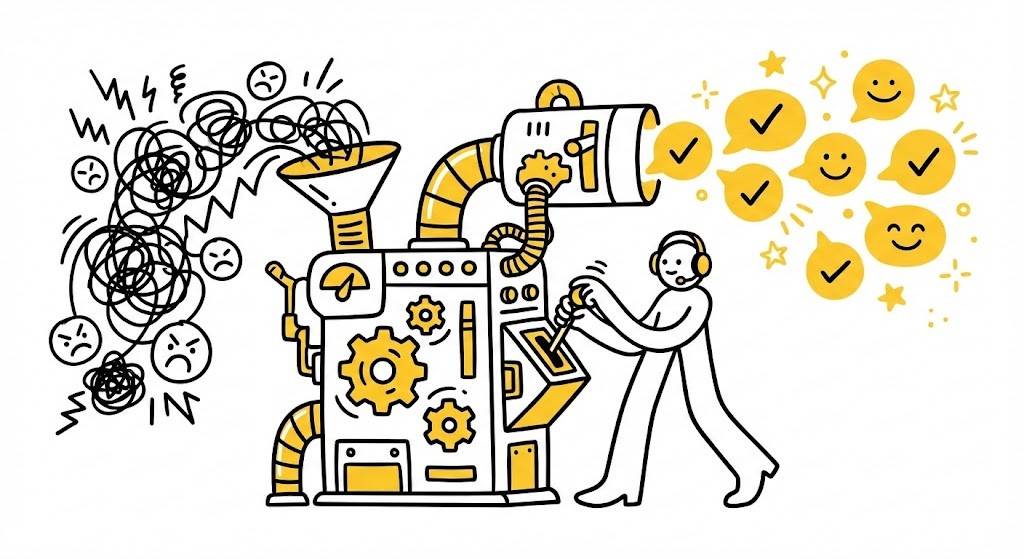
Dealing with difficult customers is an inevitable part of customer support. How your agents respond in these moments can make or break customer relationships, impact brand reputation, and affect team morale. In 2025, as customer expectations continue to rise and digital channels multiply, preparing agents for challenging interactions is more critical than ever.

Effective preparation not only improves customer satisfaction and retention but also reduces agent stress and turnover. This article explores proven strategies, essential skills, and the latest technology to help your team handle even the toughest customers with confidence.


TL;DR: Preparing Agents for Difficult Customers

• Understand the types and triggers of difficult customer behaviour.

• Invest in proactive, scenario-based training and ongoing support.

• Equip agents with key skills: empathy, emotional intelligence, clear communication, and problem-solving.

• Leverage AI-powered tools for real-time assistance and continuous improvement.

• Measure outcomes and adjust strategies for lasting success.


Understanding Difficult Customers

What is a difficult customer?

A difficult customer is anyone whose behaviour makes support interactions challenging. Common types include:

• Angry or upset: Expressing frustration, often loudly or emotionally.

• Impatient: Demanding immediate solutions or unwilling to wait.

• Demanding: Expecting special treatment or bending policies.

• Uncooperative: Refusing to provide needed information or follow instructions.


Why do customers become difficult?

Typical triggers include:

• Long wait times or unresolved issues.

• Miscommunication or lack of information.

• Product or service failures.

• Personal stress unrelated to your company.


Business impact of mishandled interactions

Poorly managed difficult customers can lead to:

• Lower customer satisfaction (CSAT) and loyalty.

• Negative reviews and reputational damage.

• Increased agent burnout and turnover.


According to Gartner, 81% of customers who have a negative service experience are likely to switch to a competitor (Source: Gartner, 2025: https://www.gartner.com/en/insights/customer-service). Handling these situations well is essential for business health.


The Importance of Preparation and Training

Why proactive training matters: Agents rarely “just know” how to handle tough conversations. Proactive training:

• Builds confidence and competence.

• Reduces stress and emotional fatigue.

• Equips agents to turn negative situations into positive outcomes.

Preparedness drives satisfaction:

McKinsey reports that companies investing in agent training see up to a 20% increase in customer satisfaction scores (Source: McKinsey, 2025: https://www.mckinsey.com/capabilities/growth-marketing-and-sales/our-insights/the-future-of-customer-experience).

Psychological benefits for agents:

Well-prepared agents experience less burnout and higher job satisfaction. They feel empowered to manage stress and resolve conflicts effectively.

Real-world example:

A leading telecom provider reduced escalations by 30% after implementing scenario-based training and real-time coaching, resulting in higher CSAT and lower agent turnover (Source: Zendesk, 2024: https://www.zendesk.com/blog/customer-service-training/).


Essential Skills for Handling Difficult Customers

Active Listening and Empathy

Active listening means giving customers your full attention, letting them speak without interruption, and confirming understanding.

Empathy is showing you understand and care about their feelings.

Techniques:

• Use verbal nods (“I see,” “I understand”).

• Paraphrase: “So, you’re frustrated because your order was delayed, is that correct?”

• Avoid interrupting; let the customer finish.

Example script:

“I’m sorry you’ve had this experience. I understand how frustrating delays can be. Let’s work together to resolve this.”


Emotional Intelligence and Self-Regulation

Emotional intelligence is recognising and managing your own emotions and those of others.

Self-regulation helps agents stay calm, even when customers are upset.

Tips:

• Pause and breathe before responding.

• Use positive self-talk (“I can handle this”).

• Practise mindfulness: focus on the present, not the emotion.

Checklist: Emotional Self-Regulation for Agents

• Recognise your emotional triggers.

• Take a deep breath before replying.

• Use neutral, calm language.

• Step away briefly if needed (with supervisor approval).

• Reflect after the call to learn and reset.


Clear Communication and De-escalation

Clear communication is using simple, direct language and avoiding jargon.

De-escalation involves reducing tension and guiding the conversation to a solution.

Best practices:

• Use positive, assertive language: “Let’s see how I can help.”

• Avoid trigger words: “You have to…” or “That’s not my problem.”

• Offer choices: “Would you prefer a call-back or to wait on the line?”


De-escalation Steps Framework

(1) Acknowledge the emotion: “I can hear you’re upset.”

(2) Apologise if appropriate: “I’m sorry this happened.”

(3) Clarify the issue: “Can you tell me more?”

(4) Offer solutions: “Here’s what I can do right now.”

(5) Confirm agreement: “Does that sound good to you?”


Problem-Solving and Resolution

Problem-solving is identifying the root cause and finding a workable solution.

Resolution means following through and ensuring the customer feels heard.

Steps:

• Ask clarifying questions to get all the facts.

• Suggest solutions or alternatives.

• Set clear expectations for next steps.

• Follow up to confirm resolution.

Example:

“If I understand correctly, your package was lost. I can offer a replacement or a refund—whichever you prefer. I’ll also follow up tomorrow to confirm you’ve received the update.”


Best Practices for Preparing Agents

Comprehensive Training Programs

Role-playing and scenario-based learning: Simulate real-life situations so agents can practise responses in a safe environment. This builds muscle memory and confidence.


Balance soft skills and product knowledge: Both are essential. Soft skills help with emotional situations; product knowledge enables accurate solutions.


Ongoing vs. one-time training: Continuous learning is key. Regular refreshers and new scenarios keep skills sharp and relevant (Source: Salesforce, 2025: https://www.salesforce.com/resources/articles/customer-service-skills/).


Real-Time Support and Resources

Knowledge bases and scripts: Give agents instant access to FAQs, troubleshooting guides, and approved responses. This reduces hesitation and errors.

Escalation paths: Clear guidelines for when and how to involve supervisors prevent confusion and ensure quick resolutions.

Supervisor support and live coaching: Encourage supervisors to monitor calls and provide real-time feedback or step in when needed.

AI-powered on-the-job assistance: Tools like Smart Role’s AI coach can suggest responses, flag sentiment, and guide agents during live interactions (https://smartrole.ai/product/quality-review).


Feedback and Continuous Improvement

Gather feedback: Collect input from both agents and customers to identify pain points and training gaps.

Regular performance reviews: Use call recordings, QA scores, and customer feedback to coach agents and celebrate improvements.

Encourage a growth mindset: Promote learning from mistakes and sharing best practices within the team.


Checklist: Continuous Improvement for Support Teams

• Review call recordings weekly.

• Hold monthly feedback sessions.

• Update training materials quarterly.

• Recognise and reward progress.

• Encourage peer-to-peer learning.


Leveraging Technology to Support Agents

AI-powered training and simulations: Platforms like Smart Role use realistic simulations to prepare agents for high-stress scenarios, allowing safe practice and instant feedback (https://smartrole.ai/blog/call-center-scripts).

Real-time sentiment analysis: AI tools can detect customer emotions during calls or chats, alerting agents to escalating situations and suggesting de-escalation techniques (Source: NICE, 2025: https://www.nice.com/engage/blog/5-ways-to-handle-difficult-customers-2166).

Automated knowledge suggestions: AI can surface relevant articles or scripts based on the conversation, reducing search time and improving accuracy.


Examples of leading platforms:

• Smart Role: Simulation training, AI coaching, QA automation.

• Zendesk: Integrated knowledge base and workflow automation.

• NICE: Real-time analytics and sentiment monitoring.

By integrating these technologies, companies can boost agent confidence, reduce errors, and deliver consistent customer experiences.


Measuring Success and Adjusting Strategies

Key metrics to track:

• Customer Satisfaction (CSAT): Direct feedback on service quality.

• First Contact Resolution (FCR): Percentage of issues resolved in the first interaction.

• Agent satisfaction: Surveys and retention rates.

• Churn rate: Customers lost after negative interactions.


How to analyse and act on feedback:

• Review metrics regularly to spot trends.

• Use feedback to update training and resources.

• Involve agents in identifying improvement areas.


Continuous improvement cycle:

(1) Train and support agents.

(2) Measure outcomes.

(3) Gather feedback.

(4) Refine strategies.

(5) Repeat.

This approach ensures your team stays agile and effective as customer expectations evolve.


Conclusion

Preparing agents for difficult customers is a continuous process that pays dividends in customer loyalty, agent well-being, and business success. By investing in comprehensive training, leveraging technology, and fostering a culture of feedback and growth, support teams can confidently handle even the most challenging interactions.

Start implementing these strategies today to empower your agents and deliver exceptional customer experiences—no matter what challenges arise.


Related reading

• AI-powered on-the-job assistance — https://smartrole.ai/product/quality-review

• AI-powered training and simulations — https://smartrole.ai/blog/call-center-scripts


FAQ

What are the most effective ways to train agents for difficult customers?

The most effective methods include scenario-based training, role-playing, real-time coaching, and providing access to up-to-date resources and support tools (Source: ComputerTalk, 2024: https://www.computer-talk.com/blogs/find-out-the-6-best-practices-you-need-to-be-using-to-handle-challenging-customers-today).

How can technology help agents handle challenging interactions?

Technology such as AI-powered simulations, real-time sentiment analysis, and automated knowledge bases can provide agents with instant guidance and support during difficult conversations (Source: CIO, 2024: https://www.cio.com/article/286563/customer-service-training-tips.html).

What skills are essential for dealing with angry or upset customers?

Key skills include active listening, empathy, emotional intelligence, clear communication, and effective problem-solving (Source: Help Scout, 2024: https://www.helpscout.com/blog/difficult-customers/).

How do you measure the success of agent training for difficult customers?

Success is measured using metrics like CSAT, FCR, agent satisfaction, and churn rate. Regular feedback and performance reviews help ensure continuous improvement (Source: Call Centre Helper, 2024: https://www.callcentrehelper.com/handling-difficult-customers-131849.htm).


About the author

Thibaut Martin is the COO of Smart Role, specialising in AI-powered training for support teams. With prior leadership roles at Google and Otrium, Thibaut brings over a decade of experience in customer experience (CX) strategy and agent enablement. He is passionate about leveraging technology to empower agents and elevate customer satisfaction. Smart Role is a SOC 2 Type 2 and ISO certified company, ensuring the highest standards of data security and operational excellence.


Sources

• https://www.gartner.com/en/insights/customer-service

• https://www.mckinsey.com/capabilities/growth-marketing-and-sales/our-insights/the-future-of-customer-experience

• https://www.salesforce.com/resources/articles/customer-service-skills/

• https://www.zendesk.com/blog/customer-service-training/

• https://www.nice.com/engage/blog/5-ways-to-handle-difficult-customers-2166

• https://www.cio.com/article/286563/customer-service-training-tips.html

• https://www.forbes.com/sites/blakemorgan/2020/01/27/10-ways-to-handle-difficult-customers/

• https://www.helpscout.com/blog/difficult-customers/

• https://www.computer-talk.com/blogs/find-out-the-6-best-practices-you-need-to-be-using-to-handle-challenging-customers-today

• https://www.callcentrehelper.com/handling-difficult-customers-131849.htm

Dealing with difficult customers is an inevitable part of customer support. How your agents respond in these moments can make or break customer relationships, impact brand reputation, and affect team morale. In 2025, as customer expectations continue to rise and digital channels multiply, preparing agents for challenging interactions is more critical than ever.

Effective preparation not only improves customer satisfaction and retention but also reduces agent stress and turnover. This article explores proven strategies, essential skills, and the latest technology to help your team handle even the toughest customers with confidence.


TL;DR: Preparing Agents for Difficult Customers

• Understand the types and triggers of difficult customer behaviour.

• Invest in proactive, scenario-based training and ongoing support.

• Equip agents with key skills: empathy, emotional intelligence, clear communication, and problem-solving.

• Leverage AI-powered tools for real-time assistance and continuous improvement.

• Measure outcomes and adjust strategies for lasting success.


Understanding Difficult Customers

What is a difficult customer?

A difficult customer is anyone whose behaviour makes support interactions challenging. Common types include:

• Angry or upset: Expressing frustration, often loudly or emotionally.

• Impatient: Demanding immediate solutions or unwilling to wait.

• Demanding: Expecting special treatment or bending policies.

• Uncooperative: Refusing to provide needed information or follow instructions.


Why do customers become difficult?

Typical triggers include:

• Long wait times or unresolved issues.

• Miscommunication or lack of information.

• Product or service failures.

• Personal stress unrelated to your company.


Business impact of mishandled interactions

Poorly managed difficult customers can lead to:

• Lower customer satisfaction (CSAT) and loyalty.

• Negative reviews and reputational damage.

• Increased agent burnout and turnover.


According to Gartner, 81% of customers who have a negative service experience are likely to switch to a competitor (Source: Gartner, 2025: https://www.gartner.com/en/insights/customer-service). Handling these situations well is essential for business health.


The Importance of Preparation and Training

Why proactive training matters: Agents rarely “just know” how to handle tough conversations. Proactive training:

• Builds confidence and competence.

• Reduces stress and emotional fatigue.

• Equips agents to turn negative situations into positive outcomes.

Preparedness drives satisfaction:

McKinsey reports that companies investing in agent training see up to a 20% increase in customer satisfaction scores (Source: McKinsey, 2025: https://www.mckinsey.com/capabilities/growth-marketing-and-sales/our-insights/the-future-of-customer-experience).

Psychological benefits for agents:

Well-prepared agents experience less burnout and higher job satisfaction. They feel empowered to manage stress and resolve conflicts effectively.

Real-world example:

A leading telecom provider reduced escalations by 30% after implementing scenario-based training and real-time coaching, resulting in higher CSAT and lower agent turnover (Source: Zendesk, 2024: https://www.zendesk.com/blog/customer-service-training/).


Essential Skills for Handling Difficult Customers

Active Listening and Empathy

Active listening means giving customers your full attention, letting them speak without interruption, and confirming understanding.

Empathy is showing you understand and care about their feelings.

Techniques:

• Use verbal nods (“I see,” “I understand”).

• Paraphrase: “So, you’re frustrated because your order was delayed, is that correct?”

• Avoid interrupting; let the customer finish.

Example script:

“I’m sorry you’ve had this experience. I understand how frustrating delays can be. Let’s work together to resolve this.”


Emotional Intelligence and Self-Regulation

Emotional intelligence is recognising and managing your own emotions and those of others.

Self-regulation helps agents stay calm, even when customers are upset.

Tips:

• Pause and breathe before responding.

• Use positive self-talk (“I can handle this”).

• Practise mindfulness: focus on the present, not the emotion.

Checklist: Emotional Self-Regulation for Agents

• Recognise your emotional triggers.

• Take a deep breath before replying.

• Use neutral, calm language.

• Step away briefly if needed (with supervisor approval).

• Reflect after the call to learn and reset.


Clear Communication and De-escalation

Clear communication is using simple, direct language and avoiding jargon.

De-escalation involves reducing tension and guiding the conversation to a solution.

Best practices:

• Use positive, assertive language: “Let’s see how I can help.”

• Avoid trigger words: “You have to…” or “That’s not my problem.”

• Offer choices: “Would you prefer a call-back or to wait on the line?”


De-escalation Steps Framework

(1) Acknowledge the emotion: “I can hear you’re upset.”

(2) Apologise if appropriate: “I’m sorry this happened.”

(3) Clarify the issue: “Can you tell me more?”

(4) Offer solutions: “Here’s what I can do right now.”

(5) Confirm agreement: “Does that sound good to you?”


Problem-Solving and Resolution

Problem-solving is identifying the root cause and finding a workable solution.

Resolution means following through and ensuring the customer feels heard.

Steps:

• Ask clarifying questions to get all the facts.

• Suggest solutions or alternatives.

• Set clear expectations for next steps.

• Follow up to confirm resolution.

Example:

“If I understand correctly, your package was lost. I can offer a replacement or a refund—whichever you prefer. I’ll also follow up tomorrow to confirm you’ve received the update.”


Best Practices for Preparing Agents

Comprehensive Training Programs

Role-playing and scenario-based learning: Simulate real-life situations so agents can practise responses in a safe environment. This builds muscle memory and confidence.


Balance soft skills and product knowledge: Both are essential. Soft skills help with emotional situations; product knowledge enables accurate solutions.


Ongoing vs. one-time training: Continuous learning is key. Regular refreshers and new scenarios keep skills sharp and relevant (Source: Salesforce, 2025: https://www.salesforce.com/resources/articles/customer-service-skills/).


Real-Time Support and Resources

Knowledge bases and scripts: Give agents instant access to FAQs, troubleshooting guides, and approved responses. This reduces hesitation and errors.

Escalation paths: Clear guidelines for when and how to involve supervisors prevent confusion and ensure quick resolutions.

Supervisor support and live coaching: Encourage supervisors to monitor calls and provide real-time feedback or step in when needed.

AI-powered on-the-job assistance: Tools like Smart Role’s AI coach can suggest responses, flag sentiment, and guide agents during live interactions (https://smartrole.ai/product/quality-review).


Feedback and Continuous Improvement

Gather feedback: Collect input from both agents and customers to identify pain points and training gaps.

Regular performance reviews: Use call recordings, QA scores, and customer feedback to coach agents and celebrate improvements.

Encourage a growth mindset: Promote learning from mistakes and sharing best practices within the team.


Checklist: Continuous Improvement for Support Teams

• Review call recordings weekly.

• Hold monthly feedback sessions.

• Update training materials quarterly.

• Recognise and reward progress.

• Encourage peer-to-peer learning.


Leveraging Technology to Support Agents

AI-powered training and simulations: Platforms like Smart Role use realistic simulations to prepare agents for high-stress scenarios, allowing safe practice and instant feedback (https://smartrole.ai/blog/call-center-scripts).

Real-time sentiment analysis: AI tools can detect customer emotions during calls or chats, alerting agents to escalating situations and suggesting de-escalation techniques (Source: NICE, 2025: https://www.nice.com/engage/blog/5-ways-to-handle-difficult-customers-2166).

Automated knowledge suggestions: AI can surface relevant articles or scripts based on the conversation, reducing search time and improving accuracy.


Examples of leading platforms:

• Smart Role: Simulation training, AI coaching, QA automation.

• Zendesk: Integrated knowledge base and workflow automation.

• NICE: Real-time analytics and sentiment monitoring.

By integrating these technologies, companies can boost agent confidence, reduce errors, and deliver consistent customer experiences.


Measuring Success and Adjusting Strategies

Key metrics to track:

• Customer Satisfaction (CSAT): Direct feedback on service quality.

• First Contact Resolution (FCR): Percentage of issues resolved in the first interaction.

• Agent satisfaction: Surveys and retention rates.

• Churn rate: Customers lost after negative interactions.


How to analyse and act on feedback:

• Review metrics regularly to spot trends.

• Use feedback to update training and resources.

• Involve agents in identifying improvement areas.


Continuous improvement cycle:

(1) Train and support agents.

(2) Measure outcomes.

(3) Gather feedback.

(4) Refine strategies.

(5) Repeat.

This approach ensures your team stays agile and effective as customer expectations evolve.


Conclusion

Preparing agents for difficult customers is a continuous process that pays dividends in customer loyalty, agent well-being, and business success. By investing in comprehensive training, leveraging technology, and fostering a culture of feedback and growth, support teams can confidently handle even the most challenging interactions.

Start implementing these strategies today to empower your agents and deliver exceptional customer experiences—no matter what challenges arise.


Related reading

• AI-powered on-the-job assistance — https://smartrole.ai/product/quality-review

• AI-powered training and simulations — https://smartrole.ai/blog/call-center-scripts


FAQ

What are the most effective ways to train agents for difficult customers?

The most effective methods include scenario-based training, role-playing, real-time coaching, and providing access to up-to-date resources and support tools (Source: ComputerTalk, 2024: https://www.computer-talk.com/blogs/find-out-the-6-best-practices-you-need-to-be-using-to-handle-challenging-customers-today).

How can technology help agents handle challenging interactions?

Technology such as AI-powered simulations, real-time sentiment analysis, and automated knowledge bases can provide agents with instant guidance and support during difficult conversations (Source: CIO, 2024: https://www.cio.com/article/286563/customer-service-training-tips.html).

What skills are essential for dealing with angry or upset customers?

Key skills include active listening, empathy, emotional intelligence, clear communication, and effective problem-solving (Source: Help Scout, 2024: https://www.helpscout.com/blog/difficult-customers/).

How do you measure the success of agent training for difficult customers?

Success is measured using metrics like CSAT, FCR, agent satisfaction, and churn rate. Regular feedback and performance reviews help ensure continuous improvement (Source: Call Centre Helper, 2024: https://www.callcentrehelper.com/handling-difficult-customers-131849.htm).


About the author

Thibaut Martin is the COO of Smart Role, specialising in AI-powered training for support teams. With prior leadership roles at Google and Otrium, Thibaut brings over a decade of experience in customer experience (CX) strategy and agent enablement. He is passionate about leveraging technology to empower agents and elevate customer satisfaction. Smart Role is a SOC 2 Type 2 and ISO certified company, ensuring the highest standards of data security and operational excellence.


Sources

• https://www.gartner.com/en/insights/customer-service

• https://www.mckinsey.com/capabilities/growth-marketing-and-sales/our-insights/the-future-of-customer-experience

• https://www.salesforce.com/resources/articles/customer-service-skills/

• https://www.zendesk.com/blog/customer-service-training/

• https://www.nice.com/engage/blog/5-ways-to-handle-difficult-customers-2166

• https://www.cio.com/article/286563/customer-service-training-tips.html

• https://www.forbes.com/sites/blakemorgan/2020/01/27/10-ways-to-handle-difficult-customers/

• https://www.helpscout.com/blog/difficult-customers/

• https://www.computer-talk.com/blogs/find-out-the-6-best-practices-you-need-to-be-using-to-handle-challenging-customers-today

• https://www.callcentrehelper.com/handling-difficult-customers-131849.htm

Dealing with difficult customers is an inevitable part of customer support. How your agents respond in these moments can make or break customer relationships, impact brand reputation, and affect team morale. In 2025, as customer expectations continue to rise and digital channels multiply, preparing agents for challenging interactions is more critical than ever.

Effective preparation not only improves customer satisfaction and retention but also reduces agent stress and turnover. This article explores proven strategies, essential skills, and the latest technology to help your team handle even the toughest customers with confidence.


TL;DR: Preparing Agents for Difficult Customers

• Understand the types and triggers of difficult customer behaviour.

• Invest in proactive, scenario-based training and ongoing support.

• Equip agents with key skills: empathy, emotional intelligence, clear communication, and problem-solving.

• Leverage AI-powered tools for real-time assistance and continuous improvement.

• Measure outcomes and adjust strategies for lasting success.


Understanding Difficult Customers

What is a difficult customer?

A difficult customer is anyone whose behaviour makes support interactions challenging. Common types include:

• Angry or upset: Expressing frustration, often loudly or emotionally.

• Impatient: Demanding immediate solutions or unwilling to wait.

• Demanding: Expecting special treatment or bending policies.

• Uncooperative: Refusing to provide needed information or follow instructions.


Why do customers become difficult?

Typical triggers include:

• Long wait times or unresolved issues.

• Miscommunication or lack of information.

• Product or service failures.

• Personal stress unrelated to your company.


Business impact of mishandled interactions

Poorly managed difficult customers can lead to:

• Lower customer satisfaction (CSAT) and loyalty.

• Negative reviews and reputational damage.

• Increased agent burnout and turnover.


According to Gartner, 81% of customers who have a negative service experience are likely to switch to a competitor (Source: Gartner, 2025: https://www.gartner.com/en/insights/customer-service). Handling these situations well is essential for business health.


The Importance of Preparation and Training

Why proactive training matters: Agents rarely “just know” how to handle tough conversations. Proactive training:

• Builds confidence and competence.

• Reduces stress and emotional fatigue.

• Equips agents to turn negative situations into positive outcomes.

Preparedness drives satisfaction:

McKinsey reports that companies investing in agent training see up to a 20% increase in customer satisfaction scores (Source: McKinsey, 2025: https://www.mckinsey.com/capabilities/growth-marketing-and-sales/our-insights/the-future-of-customer-experience).

Psychological benefits for agents:

Well-prepared agents experience less burnout and higher job satisfaction. They feel empowered to manage stress and resolve conflicts effectively.

Real-world example:

A leading telecom provider reduced escalations by 30% after implementing scenario-based training and real-time coaching, resulting in higher CSAT and lower agent turnover (Source: Zendesk, 2024: https://www.zendesk.com/blog/customer-service-training/).


Essential Skills for Handling Difficult Customers

Active Listening and Empathy

Active listening means giving customers your full attention, letting them speak without interruption, and confirming understanding.

Empathy is showing you understand and care about their feelings.

Techniques:

• Use verbal nods (“I see,” “I understand”).

• Paraphrase: “So, you’re frustrated because your order was delayed, is that correct?”

• Avoid interrupting; let the customer finish.

Example script:

“I’m sorry you’ve had this experience. I understand how frustrating delays can be. Let’s work together to resolve this.”


Emotional Intelligence and Self-Regulation

Emotional intelligence is recognising and managing your own emotions and those of others.

Self-regulation helps agents stay calm, even when customers are upset.

Tips:

• Pause and breathe before responding.

• Use positive self-talk (“I can handle this”).

• Practise mindfulness: focus on the present, not the emotion.

Checklist: Emotional Self-Regulation for Agents

• Recognise your emotional triggers.

• Take a deep breath before replying.

• Use neutral, calm language.

• Step away briefly if needed (with supervisor approval).

• Reflect after the call to learn and reset.


Clear Communication and De-escalation

Clear communication is using simple, direct language and avoiding jargon.

De-escalation involves reducing tension and guiding the conversation to a solution.

Best practices:

• Use positive, assertive language: “Let’s see how I can help.”

• Avoid trigger words: “You have to…” or “That’s not my problem.”

• Offer choices: “Would you prefer a call-back or to wait on the line?”


De-escalation Steps Framework

(1) Acknowledge the emotion: “I can hear you’re upset.”

(2) Apologise if appropriate: “I’m sorry this happened.”

(3) Clarify the issue: “Can you tell me more?”

(4) Offer solutions: “Here’s what I can do right now.”

(5) Confirm agreement: “Does that sound good to you?”


Problem-Solving and Resolution

Problem-solving is identifying the root cause and finding a workable solution.

Resolution means following through and ensuring the customer feels heard.

Steps:

• Ask clarifying questions to get all the facts.

• Suggest solutions or alternatives.

• Set clear expectations for next steps.

• Follow up to confirm resolution.

Example:

“If I understand correctly, your package was lost. I can offer a replacement or a refund—whichever you prefer. I’ll also follow up tomorrow to confirm you’ve received the update.”


Best Practices for Preparing Agents

Comprehensive Training Programs

Role-playing and scenario-based learning: Simulate real-life situations so agents can practise responses in a safe environment. This builds muscle memory and confidence.


Balance soft skills and product knowledge: Both are essential. Soft skills help with emotional situations; product knowledge enables accurate solutions.


Ongoing vs. one-time training: Continuous learning is key. Regular refreshers and new scenarios keep skills sharp and relevant (Source: Salesforce, 2025: https://www.salesforce.com/resources/articles/customer-service-skills/).


Real-Time Support and Resources

Knowledge bases and scripts: Give agents instant access to FAQs, troubleshooting guides, and approved responses. This reduces hesitation and errors.

Escalation paths: Clear guidelines for when and how to involve supervisors prevent confusion and ensure quick resolutions.

Supervisor support and live coaching: Encourage supervisors to monitor calls and provide real-time feedback or step in when needed.

AI-powered on-the-job assistance: Tools like Smart Role’s AI coach can suggest responses, flag sentiment, and guide agents during live interactions (https://smartrole.ai/product/quality-review).


Feedback and Continuous Improvement

Gather feedback: Collect input from both agents and customers to identify pain points and training gaps.

Regular performance reviews: Use call recordings, QA scores, and customer feedback to coach agents and celebrate improvements.

Encourage a growth mindset: Promote learning from mistakes and sharing best practices within the team.


Checklist: Continuous Improvement for Support Teams

• Review call recordings weekly.

• Hold monthly feedback sessions.

• Update training materials quarterly.

• Recognise and reward progress.

• Encourage peer-to-peer learning.


Leveraging Technology to Support Agents

AI-powered training and simulations: Platforms like Smart Role use realistic simulations to prepare agents for high-stress scenarios, allowing safe practice and instant feedback (https://smartrole.ai/blog/call-center-scripts).

Real-time sentiment analysis: AI tools can detect customer emotions during calls or chats, alerting agents to escalating situations and suggesting de-escalation techniques (Source: NICE, 2025: https://www.nice.com/engage/blog/5-ways-to-handle-difficult-customers-2166).

Automated knowledge suggestions: AI can surface relevant articles or scripts based on the conversation, reducing search time and improving accuracy.


Examples of leading platforms:

• Smart Role: Simulation training, AI coaching, QA automation.

• Zendesk: Integrated knowledge base and workflow automation.

• NICE: Real-time analytics and sentiment monitoring.

By integrating these technologies, companies can boost agent confidence, reduce errors, and deliver consistent customer experiences.


Measuring Success and Adjusting Strategies

Key metrics to track:

• Customer Satisfaction (CSAT): Direct feedback on service quality.

• First Contact Resolution (FCR): Percentage of issues resolved in the first interaction.

• Agent satisfaction: Surveys and retention rates.

• Churn rate: Customers lost after negative interactions.


How to analyse and act on feedback:

• Review metrics regularly to spot trends.

• Use feedback to update training and resources.

• Involve agents in identifying improvement areas.


Continuous improvement cycle:

(1) Train and support agents.

(2) Measure outcomes.

(3) Gather feedback.

(4) Refine strategies.

(5) Repeat.

This approach ensures your team stays agile and effective as customer expectations evolve.


Conclusion

Preparing agents for difficult customers is a continuous process that pays dividends in customer loyalty, agent well-being, and business success. By investing in comprehensive training, leveraging technology, and fostering a culture of feedback and growth, support teams can confidently handle even the most challenging interactions.

Start implementing these strategies today to empower your agents and deliver exceptional customer experiences—no matter what challenges arise.


Related reading

• AI-powered on-the-job assistance — https://smartrole.ai/product/quality-review

• AI-powered training and simulations — https://smartrole.ai/blog/call-center-scripts


FAQ

What are the most effective ways to train agents for difficult customers?

The most effective methods include scenario-based training, role-playing, real-time coaching, and providing access to up-to-date resources and support tools (Source: ComputerTalk, 2024: https://www.computer-talk.com/blogs/find-out-the-6-best-practices-you-need-to-be-using-to-handle-challenging-customers-today).

How can technology help agents handle challenging interactions?

Technology such as AI-powered simulations, real-time sentiment analysis, and automated knowledge bases can provide agents with instant guidance and support during difficult conversations (Source: CIO, 2024: https://www.cio.com/article/286563/customer-service-training-tips.html).

What skills are essential for dealing with angry or upset customers?

Key skills include active listening, empathy, emotional intelligence, clear communication, and effective problem-solving (Source: Help Scout, 2024: https://www.helpscout.com/blog/difficult-customers/).

How do you measure the success of agent training for difficult customers?

Success is measured using metrics like CSAT, FCR, agent satisfaction, and churn rate. Regular feedback and performance reviews help ensure continuous improvement (Source: Call Centre Helper, 2024: https://www.callcentrehelper.com/handling-difficult-customers-131849.htm).


About the author

Thibaut Martin is the COO of Smart Role, specialising in AI-powered training for support teams. With prior leadership roles at Google and Otrium, Thibaut brings over a decade of experience in customer experience (CX) strategy and agent enablement. He is passionate about leveraging technology to empower agents and elevate customer satisfaction. Smart Role is a SOC 2 Type 2 and ISO certified company, ensuring the highest standards of data security and operational excellence.


Sources

• https://www.gartner.com/en/insights/customer-service

• https://www.mckinsey.com/capabilities/growth-marketing-and-sales/our-insights/the-future-of-customer-experience

• https://www.salesforce.com/resources/articles/customer-service-skills/

• https://www.zendesk.com/blog/customer-service-training/

• https://www.nice.com/engage/blog/5-ways-to-handle-difficult-customers-2166

• https://www.cio.com/article/286563/customer-service-training-tips.html

• https://www.forbes.com/sites/blakemorgan/2020/01/27/10-ways-to-handle-difficult-customers/

• https://www.helpscout.com/blog/difficult-customers/

• https://www.computer-talk.com/blogs/find-out-the-6-best-practices-you-need-to-be-using-to-handle-challenging-customers-today

• https://www.callcentrehelper.com/handling-difficult-customers-131849.htm

Dealing with difficult customers is an inevitable part of customer support. How your agents respond in these moments can make or break customer relationships, impact brand reputation, and affect team morale. In 2025, as customer expectations continue to rise and digital channels multiply, preparing agents for challenging interactions is more critical than ever.

Effective preparation not only improves customer satisfaction and retention but also reduces agent stress and turnover. This article explores proven strategies, essential skills, and the latest technology to help your team handle even the toughest customers with confidence.


TL;DR: Preparing Agents for Difficult Customers

• Understand the types and triggers of difficult customer behaviour.

• Invest in proactive, scenario-based training and ongoing support.

• Equip agents with key skills: empathy, emotional intelligence, clear communication, and problem-solving.

• Leverage AI-powered tools for real-time assistance and continuous improvement.

• Measure outcomes and adjust strategies for lasting success.


Understanding Difficult Customers

What is a difficult customer?

A difficult customer is anyone whose behaviour makes support interactions challenging. Common types include:

• Angry or upset: Expressing frustration, often loudly or emotionally.

• Impatient: Demanding immediate solutions or unwilling to wait.

• Demanding: Expecting special treatment or bending policies.

• Uncooperative: Refusing to provide needed information or follow instructions.


Why do customers become difficult?

Typical triggers include:

• Long wait times or unresolved issues.

• Miscommunication or lack of information.

• Product or service failures.

• Personal stress unrelated to your company.


Business impact of mishandled interactions

Poorly managed difficult customers can lead to:

• Lower customer satisfaction (CSAT) and loyalty.

• Negative reviews and reputational damage.

• Increased agent burnout and turnover.


According to Gartner, 81% of customers who have a negative service experience are likely to switch to a competitor (Source: Gartner, 2025: https://www.gartner.com/en/insights/customer-service). Handling these situations well is essential for business health.


The Importance of Preparation and Training

Why proactive training matters: Agents rarely “just know” how to handle tough conversations. Proactive training:

• Builds confidence and competence.

• Reduces stress and emotional fatigue.

• Equips agents to turn negative situations into positive outcomes.

Preparedness drives satisfaction:

McKinsey reports that companies investing in agent training see up to a 20% increase in customer satisfaction scores (Source: McKinsey, 2025: https://www.mckinsey.com/capabilities/growth-marketing-and-sales/our-insights/the-future-of-customer-experience).

Psychological benefits for agents:

Well-prepared agents experience less burnout and higher job satisfaction. They feel empowered to manage stress and resolve conflicts effectively.

Real-world example:

A leading telecom provider reduced escalations by 30% after implementing scenario-based training and real-time coaching, resulting in higher CSAT and lower agent turnover (Source: Zendesk, 2024: https://www.zendesk.com/blog/customer-service-training/).


Essential Skills for Handling Difficult Customers

Active Listening and Empathy

Active listening means giving customers your full attention, letting them speak without interruption, and confirming understanding.

Empathy is showing you understand and care about their feelings.

Techniques:

• Use verbal nods (“I see,” “I understand”).

• Paraphrase: “So, you’re frustrated because your order was delayed, is that correct?”

• Avoid interrupting; let the customer finish.

Example script:

“I’m sorry you’ve had this experience. I understand how frustrating delays can be. Let’s work together to resolve this.”


Emotional Intelligence and Self-Regulation

Emotional intelligence is recognising and managing your own emotions and those of others.

Self-regulation helps agents stay calm, even when customers are upset.

Tips:

• Pause and breathe before responding.

• Use positive self-talk (“I can handle this”).

• Practise mindfulness: focus on the present, not the emotion.

Checklist: Emotional Self-Regulation for Agents

• Recognise your emotional triggers.

• Take a deep breath before replying.

• Use neutral, calm language.

• Step away briefly if needed (with supervisor approval).

• Reflect after the call to learn and reset.


Clear Communication and De-escalation

Clear communication is using simple, direct language and avoiding jargon.

De-escalation involves reducing tension and guiding the conversation to a solution.

Best practices:

• Use positive, assertive language: “Let’s see how I can help.”

• Avoid trigger words: “You have to…” or “That’s not my problem.”

• Offer choices: “Would you prefer a call-back or to wait on the line?”


De-escalation Steps Framework

(1) Acknowledge the emotion: “I can hear you’re upset.”

(2) Apologise if appropriate: “I’m sorry this happened.”

(3) Clarify the issue: “Can you tell me more?”

(4) Offer solutions: “Here’s what I can do right now.”

(5) Confirm agreement: “Does that sound good to you?”


Problem-Solving and Resolution

Problem-solving is identifying the root cause and finding a workable solution.

Resolution means following through and ensuring the customer feels heard.

Steps:

• Ask clarifying questions to get all the facts.

• Suggest solutions or alternatives.

• Set clear expectations for next steps.

• Follow up to confirm resolution.

Example:

“If I understand correctly, your package was lost. I can offer a replacement or a refund—whichever you prefer. I’ll also follow up tomorrow to confirm you’ve received the update.”


Best Practices for Preparing Agents

Comprehensive Training Programs

Role-playing and scenario-based learning: Simulate real-life situations so agents can practise responses in a safe environment. This builds muscle memory and confidence.


Balance soft skills and product knowledge: Both are essential. Soft skills help with emotional situations; product knowledge enables accurate solutions.


Ongoing vs. one-time training: Continuous learning is key. Regular refreshers and new scenarios keep skills sharp and relevant (Source: Salesforce, 2025: https://www.salesforce.com/resources/articles/customer-service-skills/).


Real-Time Support and Resources

Knowledge bases and scripts: Give agents instant access to FAQs, troubleshooting guides, and approved responses. This reduces hesitation and errors.

Escalation paths: Clear guidelines for when and how to involve supervisors prevent confusion and ensure quick resolutions.

Supervisor support and live coaching: Encourage supervisors to monitor calls and provide real-time feedback or step in when needed.

AI-powered on-the-job assistance: Tools like Smart Role’s AI coach can suggest responses, flag sentiment, and guide agents during live interactions (https://smartrole.ai/product/quality-review).


Feedback and Continuous Improvement

Gather feedback: Collect input from both agents and customers to identify pain points and training gaps.

Regular performance reviews: Use call recordings, QA scores, and customer feedback to coach agents and celebrate improvements.

Encourage a growth mindset: Promote learning from mistakes and sharing best practices within the team.


Checklist: Continuous Improvement for Support Teams

• Review call recordings weekly.

• Hold monthly feedback sessions.

• Update training materials quarterly.

• Recognise and reward progress.

• Encourage peer-to-peer learning.


Leveraging Technology to Support Agents

AI-powered training and simulations: Platforms like Smart Role use realistic simulations to prepare agents for high-stress scenarios, allowing safe practice and instant feedback (https://smartrole.ai/blog/call-center-scripts).

Real-time sentiment analysis: AI tools can detect customer emotions during calls or chats, alerting agents to escalating situations and suggesting de-escalation techniques (Source: NICE, 2025: https://www.nice.com/engage/blog/5-ways-to-handle-difficult-customers-2166).

Automated knowledge suggestions: AI can surface relevant articles or scripts based on the conversation, reducing search time and improving accuracy.


Examples of leading platforms:

• Smart Role: Simulation training, AI coaching, QA automation.

• Zendesk: Integrated knowledge base and workflow automation.

• NICE: Real-time analytics and sentiment monitoring.

By integrating these technologies, companies can boost agent confidence, reduce errors, and deliver consistent customer experiences.


Measuring Success and Adjusting Strategies

Key metrics to track:

• Customer Satisfaction (CSAT): Direct feedback on service quality.

• First Contact Resolution (FCR): Percentage of issues resolved in the first interaction.

• Agent satisfaction: Surveys and retention rates.

• Churn rate: Customers lost after negative interactions.


How to analyse and act on feedback:

• Review metrics regularly to spot trends.

• Use feedback to update training and resources.

• Involve agents in identifying improvement areas.


Continuous improvement cycle:

(1) Train and support agents.

(2) Measure outcomes.

(3) Gather feedback.

(4) Refine strategies.

(5) Repeat.

This approach ensures your team stays agile and effective as customer expectations evolve.


Conclusion

Preparing agents for difficult customers is a continuous process that pays dividends in customer loyalty, agent well-being, and business success. By investing in comprehensive training, leveraging technology, and fostering a culture of feedback and growth, support teams can confidently handle even the most challenging interactions.

Start implementing these strategies today to empower your agents and deliver exceptional customer experiences—no matter what challenges arise.


Related reading

• AI-powered on-the-job assistance — https://smartrole.ai/product/quality-review

• AI-powered training and simulations — https://smartrole.ai/blog/call-center-scripts


FAQ

What are the most effective ways to train agents for difficult customers?

The most effective methods include scenario-based training, role-playing, real-time coaching, and providing access to up-to-date resources and support tools (Source: ComputerTalk, 2024: https://www.computer-talk.com/blogs/find-out-the-6-best-practices-you-need-to-be-using-to-handle-challenging-customers-today).

How can technology help agents handle challenging interactions?

Technology such as AI-powered simulations, real-time sentiment analysis, and automated knowledge bases can provide agents with instant guidance and support during difficult conversations (Source: CIO, 2024: https://www.cio.com/article/286563/customer-service-training-tips.html).

What skills are essential for dealing with angry or upset customers?

Key skills include active listening, empathy, emotional intelligence, clear communication, and effective problem-solving (Source: Help Scout, 2024: https://www.helpscout.com/blog/difficult-customers/).

How do you measure the success of agent training for difficult customers?

Success is measured using metrics like CSAT, FCR, agent satisfaction, and churn rate. Regular feedback and performance reviews help ensure continuous improvement (Source: Call Centre Helper, 2024: https://www.callcentrehelper.com/handling-difficult-customers-131849.htm).


About the author

Thibaut Martin is the COO of Smart Role, specialising in AI-powered training for support teams. With prior leadership roles at Google and Otrium, Thibaut brings over a decade of experience in customer experience (CX) strategy and agent enablement. He is passionate about leveraging technology to empower agents and elevate customer satisfaction. Smart Role is a SOC 2 Type 2 and ISO certified company, ensuring the highest standards of data security and operational excellence.


Sources

• https://www.gartner.com/en/insights/customer-service

• https://www.mckinsey.com/capabilities/growth-marketing-and-sales/our-insights/the-future-of-customer-experience

• https://www.salesforce.com/resources/articles/customer-service-skills/

• https://www.zendesk.com/blog/customer-service-training/

• https://www.nice.com/engage/blog/5-ways-to-handle-difficult-customers-2166

• https://www.cio.com/article/286563/customer-service-training-tips.html

• https://www.forbes.com/sites/blakemorgan/2020/01/27/10-ways-to-handle-difficult-customers/

• https://www.helpscout.com/blog/difficult-customers/

• https://www.computer-talk.com/blogs/find-out-the-6-best-practices-you-need-to-be-using-to-handle-challenging-customers-today

• https://www.callcentrehelper.com/handling-difficult-customers-131849.htm

Join the Smart Role newsletter

Success in customer service is 10% knowledge and 90% how you apply it in real situations.

Join the Smart Role newsletter

Success in customer service is 10% knowledge and 90% how you apply it in real situations.

Join the Smart Role newsletter

Success in customer service is 10% knowledge and 90% how you apply it in real situations.

Smart Role is your support rep training platform for simulating customer conversations.

Ask AI for a summary of Smart Role
English

Smart Role is your support rep training platform for simulating customer conversations.

Ask AI for a summary of Smart Role
English

Smart Role is your support rep training platform for simulating customer conversations.

Ask AI for a summary of Smart Role
English