Outsourcing
Outsourcing
Outsourcing
Reducing Brand Risk in Outsourced Call Centers: Best Practices 2026
/ / / / / / / /
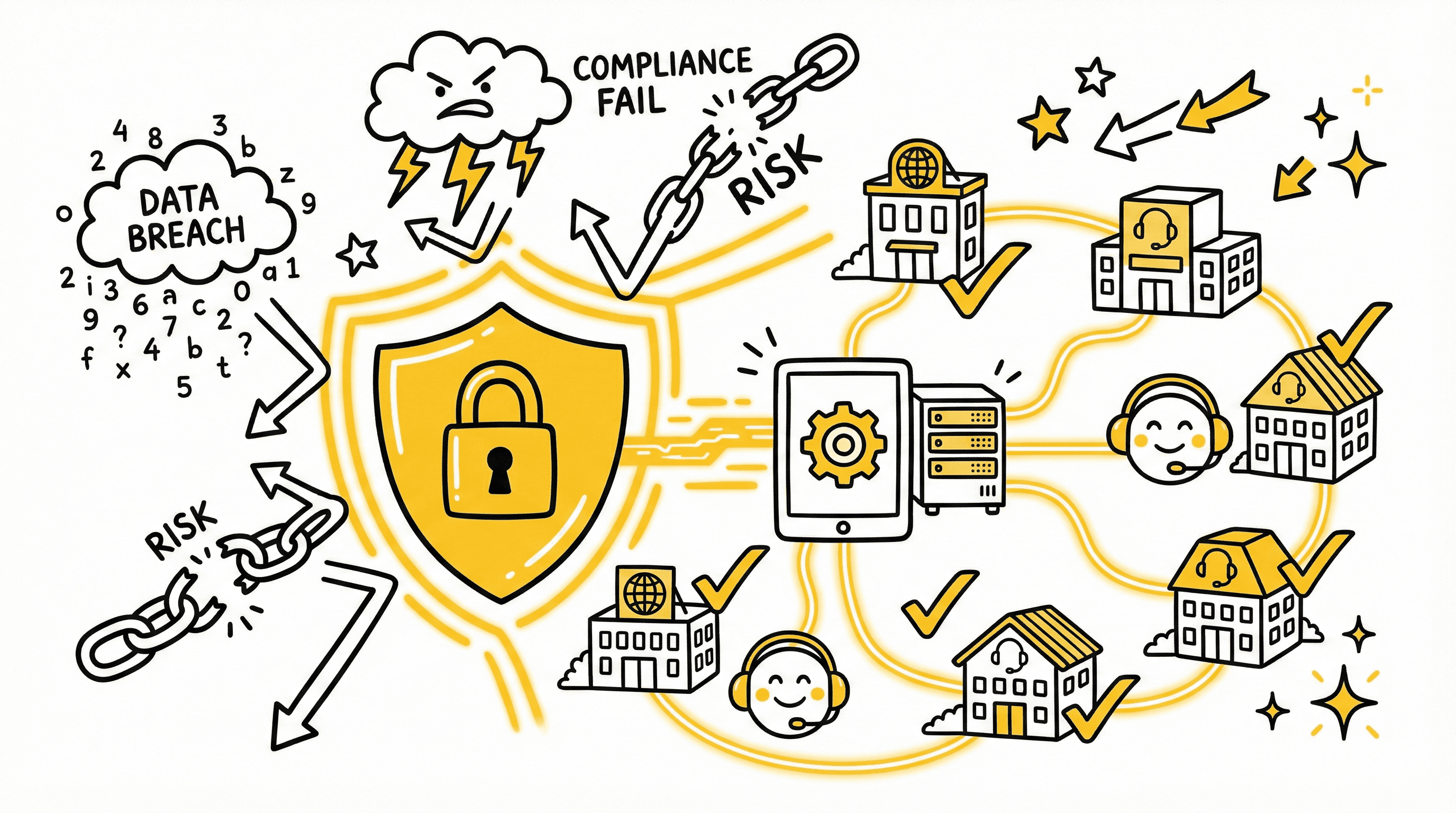
Brand risk in outsourced call centers refers to the potential threats to a company’s reputation, customer trust, and compliance status when customer interactions are handled by third-party providers. As more organisations turn to outsourcing for scalability and cost efficiency, the risk of brand damage from poor service, data breaches, or regulatory non-compliance increases (Source: Deloitte, 2025: https://www2.deloitte.com/us/en/insights/industry/technology/outsourcing-risk-management.html).
Brand risk matters because every customer interaction—no matter how routine—shapes a company’s public and internal perception. When contact center operations are outsourced, direct oversight over service delivery is reduced, and errors or lapses can occur without immediate visibility. A single negative experience—especially if mishandled—can quickly escalate on social media, impacting loyalty, Net Promoter Scores, and ultimately, revenue. For enterprise and BPO operations, compounding risks can spread rapidly across high-volume environments, affecting thousands of customers.
Key risk areas in outsourced environments include:
• Data security and privacy breaches that expose sensitive customer or payment data
• Service quality inconsistencies or gaps, damaging customer loyalty
• Regulatory non-compliance—locally and globally—with fines or legal actions
• Reputational management, particularly in crises or viral customer escalations
Outsourcing streamlines support and lowers costs—but it does not mean outsourcing responsibility. Brand leaders remain accountable to customers, regulators, and the market, and must proactively manage risks to protect their reputation, revenue, and customer relationships.
TL;DR: Reducing Brand Risk in Outsourced Call Centers
• Vet partners rigorously: Assess track record, certifications, and values alignment.
• Set clear contracts: Define KPIs, compliance, and escalation paths.
• Invest in training: Ensure agents understand your brand and compliance needs.
• Leverage technology: Use AI, analytics, and secure platforms for quality and data protection.
• Monitor continuously: Regular audits and real-time QA are essential.
Common Sources of Brand Risk in Outsourced Call Centers
Data Security and Privacy Risks
Outsourced call centers typically handle large volumes of sensitive customer data—PII, payment information, medical or account records—sometimes across borders. This expanded risk surface introduces threats like data breaches, unauthorised data access, or mishandling of customer information. In 2024, data breaches cost companies an average of $4.45 million per incident (Source: IBM, 2024: https://www.ibm.com/topics/call-center-outsourcing). Regulatory frameworks like GDPR and CCPA impose strict requirements on data handling, breach notification, storage, and cross-border data transfer, with heavy fines and reputational damage for violations.
Enterprise Data Security Checklist:
• Ensure vendors comply with globally recognised security standards such as ISO 27001 and SOC 2.
• Require evidence of PCI DSS (for payment handling) and other relevant industry certifications.
• Limit data access: Ensure only necessary personnel with business need-to-know can view or manipulate sensitive data.
• Deploy multi-factor authentication and role-based access control (RBAC).
• Conduct quarterly (or more frequent) security and vulnerability audits including penetration testing.
• Require all customer data is encrypted—both in transit (TLS/SSL) and at rest (AES-256).
• Establish incident response protocols and ensure vendor participation in breach simulation exercises.
• Enforce physical security measures onsite if using brick-and-mortar BPOs.
Inconsistent Customer Experience
Outsourcing can introduce variability in customer experience, especially if agents lack brand fluency, cultural awareness, or deep product knowledge. Common risks include inconsistent messaging, misunderstandings due to language or cultural barriers, and lack of empathy. According to Gartner, 81% of customers say a consistent experience across channels is critical (Source: Gartner, 2025: https://www.gartner.com/en/insights/customer-service-support). For global or multi-lingual operations, an agent’s unfamiliarity with regional expectations or tone can quickly undermine brand trust.
Typical areas where inconsistency creeps in:
• Differing agent approaches in handling complaints, upselling, or sensitive scenarios.
• Irregular application of company policies or failure to escalate at-risk calls.
• Mismatches between your intended brand tone of voice and how agents speak to customers.
Practical Steps:
• Develop and distribute comprehensive brand and CX guidelines.
• Establish a train-the-trainer model across vendor locations.
• Deploy customer journey mapping workshops with BPO teams for deeper empathy.
• Achieve alignment by having BPO managers shadow in-house teams.
Compliance and Legal Risks
Every industry faces unique regulatory requirements, from PCI DSS for handling payments, HIPAA for healthcare, to financial services standards like GLBA and international data protection. Outsourcing providers often operate in multiple jurisdictions, increasing the complexity of compliance. Non-compliance can result in steep fines, lawsuits, enforced remediation, or even the loss of business licences (Source: SHRM, 2025: https://www.shrm.org/resourcesandtools/hr-topics/global-hr/pages/compliance-risks-outsourcing.aspx).
Compliance Risk Examples:
• Handling credit card data out of PCI-compliant environments
• Failing to adhere to Do Not Call registries or records retention requirements
• Non-compliant call recording practices (e.g., recording sensitive information in restricted jurisdictions)
• Inadequate training for changes in evolving laws (e.g., new EU data protection mandates)
Checklist to Mitigate Compliance Risk:
• Mandate annual compliance training for all vendor agents.
• Require regular legal reviews and updates on jurisdictional law changes.
• Assign clear internal and vendor-side compliance officers.
• Execute data processing agreements (DPAs) detailing all obligations.
Reputational Damage
The viral speed of social media means that a single mishandled customer call or insensitive interaction can result in lasting reputational harm. Negative reviews or public complaints on platforms like Twitter, TikTok, or Trustpilot can point directly to your outsourced provider. A lack of crisis readiness or poor incident response further exacerbates brand harm. In regulated markets or among high-value customer segments, loss of reputation can quickly mean loss of business.
Proactive Measures:
• Monitor social channels for emerging incidents linked to BPO operations.
• Ensure vendors use escalation and crisis communication matrices for major incidents.
• Regularly test crisis playbooks with both internal and outsourced teams.
• Review negative case studies with partners to drive improvement.
Key Strategies to Reduce Brand Risk in Outsourced Call Centers
Rigorous Vendor Selection and Due Diligence
The foundation of reduced brand risk is choosing the right partner. Too often, vendor selection is based on cost or speed over quality and capability, increasing future exposure.
Comprehensive Vendor Assessment Criteria:
• Track Record: Review multi-year client references, documented case studies, and BPO attrition rates. Look for evidence of handling similar scale, verticals, or sensitive data.
• Certifications: Obtain and validate ISO 27001, SOC 2 Type 2, PCI DSS, HIPAA (if health data handled), regional data privacy attestations.
• Financial Stability: Demand recent audited financials, insurance coverage (cyber liability, errors and omissions), and evidence of long-term investment in people and platforms.
• Cultural and Values Alignment: Interview vendor executives and supervisors to gauge alignment on customer obsession, innovation, and transparency. Review diversity, equity, and inclusion policies.
• Technology Stack: Vet platforms used—are they secure, modern, and customizable to your compliance requirements? Ask about options for seamless integration with your systems.
• Physical and Virtual Site Security: For both in-office and remote teams, assess physical access controls, surveillance, and remote desktop management policies.
Vendor Due Diligence Checklist:
1) Request and independently verify certifications and licenses.
2) Conduct structured interviews with operations, compliance, and IT leadership.
3) Review detailed disaster recovery and business continuity plans.
4) Tour at least one delivery site (virtually or in person) and inspect security controls.
5) Speak to references in your industry and review client churn data.
Clear Contractual Agreements and SLAs
Contracts are your best defense in holding BPOs accountable while protecting your interests. Ambiguity in terms sets the stage for lapses and costly disputes.
Contract Essentials:
• KPIs: Define primary (First Call Resolution, CSAT, NPS, average handling time) and secondary (compliance error rate, escalation turnaround time) metrics. Outline how performance is measured—monthly, quarterly, yearly—and penalties or bonuses applied.
• Compliance Requirements: Specify all regulatory and data handling obligations, including security certifications and audit rights.
• Escalation Paths: Map out internal points of contact, communication methods, and incident management timelines for low to crisis-level incidents.
• Termination Clauses: Define triggers for contract review or early termination in the event of persistent non-compliance or reputational breaches.
• Data Ownership and Residency: Clearly state data sovereignty (where customer data is stored and processed) and right to audit.
Checklist:
• Include remedies for missed KPIs.
• Require periodic joint contract review sessions.
• Specify right to match clauses for technology or process improvements.
• Outline training, onboarding, and agent certification requirements.
• Address transition planning for future vendor changeover.
Robust Training and Onboarding
Agent readiness is non-negotiable in reducing risk. Enterprises must go beyond initial onboarding to create a learning culture within their outsourced teams.
Best Practices for Effective Training:
• Brand Immersion: Include in-depth modules on your brand story, values, tone of voice, and customer promise. Use real call samples and customer feedback as learning tools.
• Product and Process Training: Offer hands-on, scenario-based training covering FAQs, exception handling, and escalation scenarios.
• Compliance and Privacy Training: Ensure understanding of industry regulations, privacy mandates, and how to spot and report suspicious activity.
• Ongoing Learning: Schedule refreshers quarterly, introduce microlearning for new product launches or policy changes, and use digital learning tools for consistent global rollout.
• Simulation and Role Play: Use AI-driven role-play to rehearse crisis scenarios, objection handling, and compliance edge cases.
Framework:
• All new agents complete onboarding certification prior to accessing live systems.
• Certification renewals required annually and after major policy changes.
• Supervisors trained in coaching, feedback delivery, and performance management.
Data Security Protocols
Data breaches can be catastrophic; layered security protocols are critical.
Key Measures:
• Comprehensive Encryption: Enforce TLS or SSL for all data in motion, strong at-rest encryption (AES-256+), and VPN access for remote agents.
• Access Controls: Segregate duties and apply least-privilege policies with detailed audit trails.
• Multi-Layered Authentication: Implement 2FA or MFA for all sensitive systems and agent logins.
• Data Masking: Mask sensitive data where possible in agent and reporting interfaces.
• Automated Log Monitoring: Use SIEM platforms to pick up irregular access patterns or anomalies.
• Security Audits: Conduct mandated internal reviews monthly and commission third-party penetration tests bi-annually.
• Incident Response: Develop and test breach notification playbooks, ensuring rapid internal and regulatory compliance.
Quality Assurance and Continuous Monitoring
Implementing QA Frameworks
Quality assurance is the backbone of brand risk mitigation. A comprehensive QA program gives objective, repeatable, and actionable feedback to both vendors and internal stakeholders.
Elements of a Strong QA Framework:
• Call Monitoring: Listen to or watch a statistically significant sample of live or recorded calls across every queue, shift, and region.
• Scorecards: Use standardised scoring rubrics tracking scripting, empathy, regulatory compliance, escalation, and customer satisfaction. Incorporate both quantitative metrics and qualitative insights.
• Calibrations: Conduct joint calibration sessions between your QA, vendor QA, and supervisors to align interpretation and scoring.
• Customer Feedback Loops: Deploy post-interaction surveys, NPS, CES, and use text analytics to surface insights from customer verbatims.
Examples:
• Use QA dashboards that flag non-compliance or outlier performance immediately.
• Track root causes for failed interactions and implement coaching for recurring gaps.
Real-Time Performance Analytics
Traditional reporting only surfaces issues after the fact; real-time analytics help brands and BPOs detect, alert, and resolve issues before they harm customers.
Best Practices for Analytics:
• Deploy omnichannel dashboards covering calls, chats, and social media support.
• Visualise KPIs by region, campaign, product, and agent for targeted improvements.
• Use sentiment analysis to flag at-risk interactions for escalation before they escalate externally.
• Integrate analytics with workforce management tools for adaptive staffing.
Actionable Steps:
• Set up alerting rules for sudden drops in NPS or CSAT.
• Use analytics to identify policy or process confusion among agents, using heat maps or trend spotting.
Regular Audits and Compliance Checks
Consistent scrutiny reinforces high standards and accountability.
Auditing Essentials:
• Execute regular, scheduled audits covering compliance, brand alignment, and process adherence.
• Arrange unannounced spot checks for both physical locations and system access logs.
• Schedule third-party assessments annually (or as mandated for regulated industries).
• Enforce comprehensive audit trails—track which users accessed what data and when.
• Following audits, set clear deadlines for remediation and monitor progress.
Continuous Monitoring Tools:
• Implement ongoing screen capture or session recording (where allowed) for high-risk workflows.
• Conduct compliance reviews of call recordings, scripts, and policy applications.
Communication, Collaboration, and Transparency
Establishing Open Communication Channels
Siloed relationships with BPOs breed misunderstandings and delays. Build trust and surface risks through structured, open communication.
Examples of Effective Communication:
• Weekly operational syncs between internal leads and BPO supervisors across shifts and time zones.
• Monthly performance business reviews with executive stakeholders.
• Pre-defined escalation responsibility matrix (e.g., who responds to compliance alerts at 2am?).
• Shared Slack or Teams channels or ticketing systems to enable rapid cross-team discussion.
• Bi-annual strategic planning sessions to review partnership progress and reset priorities.
Sharing Brand Guidelines and Updates
Effective BPO partnerships require that every agent, QA analyst, and supervisor understands not just your brand, but your ongoing campaigns, shifting priorities, and customer expectations.
Best Practices:
• Distribute up-to-date digital brand handbooks including style, messaging, persona archetypes, and dos and don’ts.
• Notify all vendor teams of major brand, product, or policy changes prior to public rollout.
• Host quarterly brand briefings with vendor teams; use webinars or all-hands meetings.
• Include vendor agents in internal CX or EX recognition programs or competitions where possible.
• Ensure that all learning resources are easily accessible and translate to local languages as needed.
Building a Partnership Mindset
BPOs deliver optimal results when treated as mission-critical partners, not interchangeable vendors.
How to Build Partnership Alignment:
• Involve BPO leads in crisis debriefs, annual planning, and process innovation initiatives.
• Set up shared goals—linking success metrics (bonuses, incentives) to outcomes that improve both vendor performance and customer experience.
• Encourage co-innovation: Solicit process, script, or technology improvement ideas from frontline BPO staff.
• Celebrate joint milestones: Recognise BPO team wins in internal communications or all-hands meetings.
• Foster a one team mindset by rotating internal stakeholders into BPO quality or calibrations.
Leveraging Technology to Mitigate Brand Risk
AI and Automation for Quality Control
AI and automation can dramatically reduce human error, improve compliance, and surface risk signals faster.
Real-World Applications:
• Speech and Sentiment Analytics: AI listens for indicators of customer distress, frustration, or agent errors, and can trigger supervisor intervention in real time.
• Real-Time Agent Coaching: Onscreen prompts or chatbots offer live guidance during calls, especially for compliance triggers (e.g., PCI, DNC).
• Automated QA: Rather than sample 2–5% of calls manually, AI systems can review 100% of interactions for compliance, politeness, and brand alignment. Simulation training platforms like Smart Role help reinforce these automated learnings through realistic scenario-based practice.
• Fraud and Forgery Detection: AI can flag potential social engineering attempts or fraudulent requests in real time.
Implementation Steps:
• Start with high-risk or regulated queues for pilot deployment.
• Involve BPO IT in model validation and bias detection.
• Routinely retrain algorithms on updated call samples and new policy changes.
Secure Cloud Platforms
Cloud transformation continues to unlock improved security and operational efficiency when managed well.
Key Capabilities:
• Granular Data Controls: Define access by role, geography, and device; automatic log-off and session expiration for idle users.
• End-to-End Encryption: In transit (TLS 1.3) and at rest, with regular key rotation.
• Centralised Remote Management: Provision, monitor, and deprovision access for distributed BPO agents quickly.
• Resilience: Geographically redundant data centers, robust disaster recovery, and automated failover.
Checklist:
• Demand compliance certificates and SOC 2 Type 2 attestations from cloud vendors.
• Validate BPO’s patching, SIEM integration, and incident monitoring procedures.
• Test remote wipe capabilities for agent endpoints.
Advanced Reporting and Alerting
Tech-enabled reporting ensures that risks aren’t buried in spreadsheets or quarterly reviews.
Features to Prioritise:
• Customisable dashboards filtered by team, channel, risk area.
• Automated exception alerting (e.g., compliance slip, CSAT drop, data mishandling incident).
• Drill-down analytics to trace trends and root causes quickly.
• Integration hooks for exporting data or generating scheduled compliance reports.
Technology, supported by diligent governance and human oversight, provides a safety net for early detection, measurement, and mitigation of brand risk (Source: IBM, 2024: https://www.ibm.com/topics/call-center-outsourcing).
Crisis Management and Incident Response
Preparing for Brand-Impacting Incidents
No operation is immune to incidents. The difference is how quickly and competently your teams respond—especially when managed by a BPO.
Crisis Management Components:
• Crisis Team Roster: Update contacts for all internal and BPO crisis managers. Include backups for afterhours coverage.
• Cross-Functional Playbooks: Develop situation-specific protocols (e.g., data breach, PR scandal, service outage), tested through regular scenario drills and table-top exercises.
• Pre-Approved Messaging: Draft external and internal communications for common incident types (data breach notifications, service acknowledgements, investigation status updates).
• Supply Chain Coordination: Ensure BPOs are included in your broader incident response supply chain (legal, IT, PR, compliance, operations).
• Escalation Watch Rooms: Create dedicated war rooms—physical or virtual—so all stakeholders have coordinated visibility and actions.
Post-Incident Analysis and Remediation
Fast, transparent, and thorough post-mortems reduce repeat risk and underscore brand accountability.
Remediation Steps:
• Root Cause Analysis: Use a 5-Whys or Fishbone diagram framework to map all contributing factors.
• Remediation Planning: Identify immediate fixes (process, training, technology) and agree on when and how to deploy.
• Stakeholder Communication: Notify executive sponsors, BPO leaders, and where appropriate, the public or regulators about the steps being taken and progress milestones.
• Continuous Improvement: Feed learnings back into scenario training, updated playbooks, and agent simulations.
Effective post-incident analysis is driven by transparency and a learning mindset—not blame allocation. These steps not only restore trust but lay the groundwork for a stronger, more resilient partnership in the future (Source: CustomerServ, 2025: https://www.customerserv.com/blog/call-center-outsourcing-risks-mitigate).
Case Studies: Brands Successfully Reducing Risk in Outsourced Call Centers
Case Study 1: Global Retailer Enhances Data Security
A global retailer transitioned customer support to a new BPO in 2023. After identifying a minor data incident, the retailer worked closely with the provider to upgrade security: requiring ISO 27001 certification, enforcing end-to-end data encryption, deploying an improved access control matrix, and mandating quarterly vulnerability assessments. The ongoing security partnership led to zero breaches in 2024, improved customer trust scores, and positioned the retailer as a privacy leader in its industry.
Case Study 2: Fintech Firm Drives Consistent CX
A high-growth fintech faced growing pains with fragmented customer service across three regions. The problem: varied agent knowledge and uneven application of compliance processes. The solution: design and rollout of deep brand immersion bootcamps, tailored to each locale, paired with AI-fueled QA and analytics dashboards for real-time oversight. The impact included an 18% boost in CSAT, 40% reduction in compliance errors, and a significantly steadier customer journey across all touchpoints.
Case Study 3: Telecom Provider’s Crisis Response
A major telecom provider encountered a viral customer complaint campaign in 2022. Due to joint crisis-preparedness with their outsourced call center partners, they immediately activated their rapid response team—comprised of trained agents, PR leads, and escalation managers. Within hours, the team reached out directly to impacted customers, issued a tailored public apology, and initiated a transparent investigation, eventually updating their escalation process. The result: not only was the crisis contained, but the incident became a case study in proactive reputation management.
Building a Resilient, Brand-Safe Outsourcing Partnership
Reducing brand risk in outsourced call centers is a journey, not a checkbox exercise. It requires a proactive, multi-layered approach that combines rigorous due diligence, detailed contractual controls, deep training and onboarding, cutting-edge technology, quality monitoring, and an unbreakable partnership mindset.
The most successful organisations prioritize regular vendor assessments, precise SLAs, security-first technology platforms, simulation-based agent training, and robust QA. Continuous communication and transparent post-incident reviews—paired with ongoing partnership development—distinguish brands that thrive from those that falter.
For enterprises determined to scale support without trade-offs in quality, compliance, or trust, advanced simulation training, AI-enabled QA, and automated real-time coaching—such as those offered by Smart Role—should be core components in building a resilient, future-proof risk mitigation framework. By embedding these pillars into your outsourcing strategy, you don’t just reduce risk: you fuel loyalty, innovation, and sustainable growth for 2025 and beyond.
Related reading
• Quality Assurance and Continuous Monitoring — https://smartrole.ai/blog/quality-assurance-call-centers
• Reputational management — https://smartrole.ai/blog/crisis-management-in-call-centers
• Vet partners rigorously — https://smartrole.ai/blog/vetting-outsourcing-partners-effectively
• Data security protocols — https://smartrole.ai/blog/security-protocols-bpos
• Inconsistent Customer Experience — https://smartrole.ai/blog/improving-customer-experience
• Leverage technology — https://smartrole.ai/blog/call-center-ai-role-in-risk-reduction
• Clear contractual agreements and SLAs — https://smartrole.ai/blog/enforcing-sla-contracts
• Regulatory non-compliance — https://smartrole.ai/blog/compliance-strategies-outsourcing
FAQ
What are the biggest brand risks in outsourced call centers?
The biggest risks include data breaches, inconsistent customer experience, compliance failures, and reputational damage from negative interactions (Source: CustomerServ, 2025: https://www.customerserv.com/blog/call-center-outsourcing-risks-mitigate).
How can companies ensure data security with outsourced partners?
By enforcing strict data security protocols, conducting regular audits, requiring compliance with standards like ISO 27001, and setting clear contractual obligations (Source: ISO, 2025: https://www.iso.org/isoiec-27001-information-security.html).
What should be included in a call center outsourcing contract to protect brand reputation?
Key elements include detailed SLAs, compliance requirements, KPIs, escalation paths, and penalties for breaches or non-compliance (Source: PwC, 2025: https://www.pwc.com/gx/en/services/people-organisation/publications/global-outsourcing-survey.html).
How do you monitor and enforce quality standards in outsourced call centers?
Through QA frameworks, real-time analytics, regular audits, and continuous training aligned with brand standards (Source: Forrester, 2025: https://www.forrester.com/report/the-forrester-wave-customer-service-solutions/RES164041).
About the author
Thibaut Martin is the COO at Smart Role, specialising in AI-driven training for support agents and BPOs. With prior leadership roles at Google and Otrium, Thibaut brings over a decade of hands-on experience in customer experience, outsourcing strategy, and operational excellence. He is passionate about helping brands scale support while protecting their reputation and compliance. Smart Role is a SOC 2 Type 2 and ISO certified company, committed to the highest standards of data security and quality.
Sources
1) https://www.customerserv.com/blog/call-center-outsourcing-risks-mitigate
2) https://www.gartner.com/en/insights/customer-service-support
3) https://www2.deloitte.com/us/en/insights/industry/technology/outsourcing-risk-management.html
4) https://www.pwc.com/gx/en/services/people-organisation/publications/global-outsourcing-survey.html
5) https://www.iso.org/isoiec-27001-information-security.html
6) https://www.shrm.org/resourcesandtools/hr-topics/global-hr/pages/compliance-risks-outsourcing.aspx
7) https://www.forrester.com/report/the-forrester-wave-customer-service-solutions/RES164041
8) https://www.ibm.com/topics/call-center-outsourcing
9) https://www.mckinsey.com/capabilities/operations/our-insights/outsourcing-in-a-digital-age
10) https://www.privacy.org/data-breaches/

Brand risk in outsourced call centers refers to the potential threats to a company’s reputation, customer trust, and compliance status when customer interactions are handled by third-party providers. As more organisations turn to outsourcing for scalability and cost efficiency, the risk of brand damage from poor service, data breaches, or regulatory non-compliance increases (Source: Deloitte, 2025: https://www2.deloitte.com/us/en/insights/industry/technology/outsourcing-risk-management.html).
Brand risk matters because every customer interaction—no matter how routine—shapes a company’s public and internal perception. When contact center operations are outsourced, direct oversight over service delivery is reduced, and errors or lapses can occur without immediate visibility. A single negative experience—especially if mishandled—can quickly escalate on social media, impacting loyalty, Net Promoter Scores, and ultimately, revenue. For enterprise and BPO operations, compounding risks can spread rapidly across high-volume environments, affecting thousands of customers.
Key risk areas in outsourced environments include:
• Data security and privacy breaches that expose sensitive customer or payment data
• Service quality inconsistencies or gaps, damaging customer loyalty
• Regulatory non-compliance—locally and globally—with fines or legal actions
• Reputational management, particularly in crises or viral customer escalations
Outsourcing streamlines support and lowers costs—but it does not mean outsourcing responsibility. Brand leaders remain accountable to customers, regulators, and the market, and must proactively manage risks to protect their reputation, revenue, and customer relationships.
TL;DR: Reducing Brand Risk in Outsourced Call Centers
• Vet partners rigorously: Assess track record, certifications, and values alignment.
• Set clear contracts: Define KPIs, compliance, and escalation paths.
• Invest in training: Ensure agents understand your brand and compliance needs.
• Leverage technology: Use AI, analytics, and secure platforms for quality and data protection.
• Monitor continuously: Regular audits and real-time QA are essential.
Common Sources of Brand Risk in Outsourced Call Centers
Data Security and Privacy Risks
Outsourced call centers typically handle large volumes of sensitive customer data—PII, payment information, medical or account records—sometimes across borders. This expanded risk surface introduces threats like data breaches, unauthorised data access, or mishandling of customer information. In 2024, data breaches cost companies an average of $4.45 million per incident (Source: IBM, 2024: https://www.ibm.com/topics/call-center-outsourcing). Regulatory frameworks like GDPR and CCPA impose strict requirements on data handling, breach notification, storage, and cross-border data transfer, with heavy fines and reputational damage for violations.
Enterprise Data Security Checklist:
• Ensure vendors comply with globally recognised security standards such as ISO 27001 and SOC 2.
• Require evidence of PCI DSS (for payment handling) and other relevant industry certifications.
• Limit data access: Ensure only necessary personnel with business need-to-know can view or manipulate sensitive data.
• Deploy multi-factor authentication and role-based access control (RBAC).
• Conduct quarterly (or more frequent) security and vulnerability audits including penetration testing.
• Require all customer data is encrypted—both in transit (TLS/SSL) and at rest (AES-256).
• Establish incident response protocols and ensure vendor participation in breach simulation exercises.
• Enforce physical security measures onsite if using brick-and-mortar BPOs.
Inconsistent Customer Experience
Outsourcing can introduce variability in customer experience, especially if agents lack brand fluency, cultural awareness, or deep product knowledge. Common risks include inconsistent messaging, misunderstandings due to language or cultural barriers, and lack of empathy. According to Gartner, 81% of customers say a consistent experience across channels is critical (Source: Gartner, 2025: https://www.gartner.com/en/insights/customer-service-support). For global or multi-lingual operations, an agent’s unfamiliarity with regional expectations or tone can quickly undermine brand trust.
Typical areas where inconsistency creeps in:
• Differing agent approaches in handling complaints, upselling, or sensitive scenarios.
• Irregular application of company policies or failure to escalate at-risk calls.
• Mismatches between your intended brand tone of voice and how agents speak to customers.
Practical Steps:
• Develop and distribute comprehensive brand and CX guidelines.
• Establish a train-the-trainer model across vendor locations.
• Deploy customer journey mapping workshops with BPO teams for deeper empathy.
• Achieve alignment by having BPO managers shadow in-house teams.
Compliance and Legal Risks
Every industry faces unique regulatory requirements, from PCI DSS for handling payments, HIPAA for healthcare, to financial services standards like GLBA and international data protection. Outsourcing providers often operate in multiple jurisdictions, increasing the complexity of compliance. Non-compliance can result in steep fines, lawsuits, enforced remediation, or even the loss of business licences (Source: SHRM, 2025: https://www.shrm.org/resourcesandtools/hr-topics/global-hr/pages/compliance-risks-outsourcing.aspx).
Compliance Risk Examples:
• Handling credit card data out of PCI-compliant environments
• Failing to adhere to Do Not Call registries or records retention requirements
• Non-compliant call recording practices (e.g., recording sensitive information in restricted jurisdictions)
• Inadequate training for changes in evolving laws (e.g., new EU data protection mandates)
Checklist to Mitigate Compliance Risk:
• Mandate annual compliance training for all vendor agents.
• Require regular legal reviews and updates on jurisdictional law changes.
• Assign clear internal and vendor-side compliance officers.
• Execute data processing agreements (DPAs) detailing all obligations.
Reputational Damage
The viral speed of social media means that a single mishandled customer call or insensitive interaction can result in lasting reputational harm. Negative reviews or public complaints on platforms like Twitter, TikTok, or Trustpilot can point directly to your outsourced provider. A lack of crisis readiness or poor incident response further exacerbates brand harm. In regulated markets or among high-value customer segments, loss of reputation can quickly mean loss of business.
Proactive Measures:
• Monitor social channels for emerging incidents linked to BPO operations.
• Ensure vendors use escalation and crisis communication matrices for major incidents.
• Regularly test crisis playbooks with both internal and outsourced teams.
• Review negative case studies with partners to drive improvement.
Key Strategies to Reduce Brand Risk in Outsourced Call Centers
Rigorous Vendor Selection and Due Diligence
The foundation of reduced brand risk is choosing the right partner. Too often, vendor selection is based on cost or speed over quality and capability, increasing future exposure.
Comprehensive Vendor Assessment Criteria:
• Track Record: Review multi-year client references, documented case studies, and BPO attrition rates. Look for evidence of handling similar scale, verticals, or sensitive data.
• Certifications: Obtain and validate ISO 27001, SOC 2 Type 2, PCI DSS, HIPAA (if health data handled), regional data privacy attestations.
• Financial Stability: Demand recent audited financials, insurance coverage (cyber liability, errors and omissions), and evidence of long-term investment in people and platforms.
• Cultural and Values Alignment: Interview vendor executives and supervisors to gauge alignment on customer obsession, innovation, and transparency. Review diversity, equity, and inclusion policies.
• Technology Stack: Vet platforms used—are they secure, modern, and customizable to your compliance requirements? Ask about options for seamless integration with your systems.
• Physical and Virtual Site Security: For both in-office and remote teams, assess physical access controls, surveillance, and remote desktop management policies.
Vendor Due Diligence Checklist:
1) Request and independently verify certifications and licenses.
2) Conduct structured interviews with operations, compliance, and IT leadership.
3) Review detailed disaster recovery and business continuity plans.
4) Tour at least one delivery site (virtually or in person) and inspect security controls.
5) Speak to references in your industry and review client churn data.
Clear Contractual Agreements and SLAs
Contracts are your best defense in holding BPOs accountable while protecting your interests. Ambiguity in terms sets the stage for lapses and costly disputes.
Contract Essentials:
• KPIs: Define primary (First Call Resolution, CSAT, NPS, average handling time) and secondary (compliance error rate, escalation turnaround time) metrics. Outline how performance is measured—monthly, quarterly, yearly—and penalties or bonuses applied.
• Compliance Requirements: Specify all regulatory and data handling obligations, including security certifications and audit rights.
• Escalation Paths: Map out internal points of contact, communication methods, and incident management timelines for low to crisis-level incidents.
• Termination Clauses: Define triggers for contract review or early termination in the event of persistent non-compliance or reputational breaches.
• Data Ownership and Residency: Clearly state data sovereignty (where customer data is stored and processed) and right to audit.
Checklist:
• Include remedies for missed KPIs.
• Require periodic joint contract review sessions.
• Specify right to match clauses for technology or process improvements.
• Outline training, onboarding, and agent certification requirements.
• Address transition planning for future vendor changeover.
Robust Training and Onboarding
Agent readiness is non-negotiable in reducing risk. Enterprises must go beyond initial onboarding to create a learning culture within their outsourced teams.
Best Practices for Effective Training:
• Brand Immersion: Include in-depth modules on your brand story, values, tone of voice, and customer promise. Use real call samples and customer feedback as learning tools.
• Product and Process Training: Offer hands-on, scenario-based training covering FAQs, exception handling, and escalation scenarios.
• Compliance and Privacy Training: Ensure understanding of industry regulations, privacy mandates, and how to spot and report suspicious activity.
• Ongoing Learning: Schedule refreshers quarterly, introduce microlearning for new product launches or policy changes, and use digital learning tools for consistent global rollout.
• Simulation and Role Play: Use AI-driven role-play to rehearse crisis scenarios, objection handling, and compliance edge cases.
Framework:
• All new agents complete onboarding certification prior to accessing live systems.
• Certification renewals required annually and after major policy changes.
• Supervisors trained in coaching, feedback delivery, and performance management.
Data Security Protocols
Data breaches can be catastrophic; layered security protocols are critical.
Key Measures:
• Comprehensive Encryption: Enforce TLS or SSL for all data in motion, strong at-rest encryption (AES-256+), and VPN access for remote agents.
• Access Controls: Segregate duties and apply least-privilege policies with detailed audit trails.
• Multi-Layered Authentication: Implement 2FA or MFA for all sensitive systems and agent logins.
• Data Masking: Mask sensitive data where possible in agent and reporting interfaces.
• Automated Log Monitoring: Use SIEM platforms to pick up irregular access patterns or anomalies.
• Security Audits: Conduct mandated internal reviews monthly and commission third-party penetration tests bi-annually.
• Incident Response: Develop and test breach notification playbooks, ensuring rapid internal and regulatory compliance.
Quality Assurance and Continuous Monitoring
Implementing QA Frameworks
Quality assurance is the backbone of brand risk mitigation. A comprehensive QA program gives objective, repeatable, and actionable feedback to both vendors and internal stakeholders.
Elements of a Strong QA Framework:
• Call Monitoring: Listen to or watch a statistically significant sample of live or recorded calls across every queue, shift, and region.
• Scorecards: Use standardised scoring rubrics tracking scripting, empathy, regulatory compliance, escalation, and customer satisfaction. Incorporate both quantitative metrics and qualitative insights.
• Calibrations: Conduct joint calibration sessions between your QA, vendor QA, and supervisors to align interpretation and scoring.
• Customer Feedback Loops: Deploy post-interaction surveys, NPS, CES, and use text analytics to surface insights from customer verbatims.
Examples:
• Use QA dashboards that flag non-compliance or outlier performance immediately.
• Track root causes for failed interactions and implement coaching for recurring gaps.
Real-Time Performance Analytics
Traditional reporting only surfaces issues after the fact; real-time analytics help brands and BPOs detect, alert, and resolve issues before they harm customers.
Best Practices for Analytics:
• Deploy omnichannel dashboards covering calls, chats, and social media support.
• Visualise KPIs by region, campaign, product, and agent for targeted improvements.
• Use sentiment analysis to flag at-risk interactions for escalation before they escalate externally.
• Integrate analytics with workforce management tools for adaptive staffing.
Actionable Steps:
• Set up alerting rules for sudden drops in NPS or CSAT.
• Use analytics to identify policy or process confusion among agents, using heat maps or trend spotting.
Regular Audits and Compliance Checks
Consistent scrutiny reinforces high standards and accountability.
Auditing Essentials:
• Execute regular, scheduled audits covering compliance, brand alignment, and process adherence.
• Arrange unannounced spot checks for both physical locations and system access logs.
• Schedule third-party assessments annually (or as mandated for regulated industries).
• Enforce comprehensive audit trails—track which users accessed what data and when.
• Following audits, set clear deadlines for remediation and monitor progress.
Continuous Monitoring Tools:
• Implement ongoing screen capture or session recording (where allowed) for high-risk workflows.
• Conduct compliance reviews of call recordings, scripts, and policy applications.
Communication, Collaboration, and Transparency
Establishing Open Communication Channels
Siloed relationships with BPOs breed misunderstandings and delays. Build trust and surface risks through structured, open communication.
Examples of Effective Communication:
• Weekly operational syncs between internal leads and BPO supervisors across shifts and time zones.
• Monthly performance business reviews with executive stakeholders.
• Pre-defined escalation responsibility matrix (e.g., who responds to compliance alerts at 2am?).
• Shared Slack or Teams channels or ticketing systems to enable rapid cross-team discussion.
• Bi-annual strategic planning sessions to review partnership progress and reset priorities.
Sharing Brand Guidelines and Updates
Effective BPO partnerships require that every agent, QA analyst, and supervisor understands not just your brand, but your ongoing campaigns, shifting priorities, and customer expectations.
Best Practices:
• Distribute up-to-date digital brand handbooks including style, messaging, persona archetypes, and dos and don’ts.
• Notify all vendor teams of major brand, product, or policy changes prior to public rollout.
• Host quarterly brand briefings with vendor teams; use webinars or all-hands meetings.
• Include vendor agents in internal CX or EX recognition programs or competitions where possible.
• Ensure that all learning resources are easily accessible and translate to local languages as needed.
Building a Partnership Mindset
BPOs deliver optimal results when treated as mission-critical partners, not interchangeable vendors.
How to Build Partnership Alignment:
• Involve BPO leads in crisis debriefs, annual planning, and process innovation initiatives.
• Set up shared goals—linking success metrics (bonuses, incentives) to outcomes that improve both vendor performance and customer experience.
• Encourage co-innovation: Solicit process, script, or technology improvement ideas from frontline BPO staff.
• Celebrate joint milestones: Recognise BPO team wins in internal communications or all-hands meetings.
• Foster a one team mindset by rotating internal stakeholders into BPO quality or calibrations.
Leveraging Technology to Mitigate Brand Risk
AI and Automation for Quality Control
AI and automation can dramatically reduce human error, improve compliance, and surface risk signals faster.
Real-World Applications:
• Speech and Sentiment Analytics: AI listens for indicators of customer distress, frustration, or agent errors, and can trigger supervisor intervention in real time.
• Real-Time Agent Coaching: Onscreen prompts or chatbots offer live guidance during calls, especially for compliance triggers (e.g., PCI, DNC).
• Automated QA: Rather than sample 2–5% of calls manually, AI systems can review 100% of interactions for compliance, politeness, and brand alignment. Simulation training platforms like Smart Role help reinforce these automated learnings through realistic scenario-based practice.
• Fraud and Forgery Detection: AI can flag potential social engineering attempts or fraudulent requests in real time.
Implementation Steps:
• Start with high-risk or regulated queues for pilot deployment.
• Involve BPO IT in model validation and bias detection.
• Routinely retrain algorithms on updated call samples and new policy changes.
Secure Cloud Platforms
Cloud transformation continues to unlock improved security and operational efficiency when managed well.
Key Capabilities:
• Granular Data Controls: Define access by role, geography, and device; automatic log-off and session expiration for idle users.
• End-to-End Encryption: In transit (TLS 1.3) and at rest, with regular key rotation.
• Centralised Remote Management: Provision, monitor, and deprovision access for distributed BPO agents quickly.
• Resilience: Geographically redundant data centers, robust disaster recovery, and automated failover.
Checklist:
• Demand compliance certificates and SOC 2 Type 2 attestations from cloud vendors.
• Validate BPO’s patching, SIEM integration, and incident monitoring procedures.
• Test remote wipe capabilities for agent endpoints.
Advanced Reporting and Alerting
Tech-enabled reporting ensures that risks aren’t buried in spreadsheets or quarterly reviews.
Features to Prioritise:
• Customisable dashboards filtered by team, channel, risk area.
• Automated exception alerting (e.g., compliance slip, CSAT drop, data mishandling incident).
• Drill-down analytics to trace trends and root causes quickly.
• Integration hooks for exporting data or generating scheduled compliance reports.
Technology, supported by diligent governance and human oversight, provides a safety net for early detection, measurement, and mitigation of brand risk (Source: IBM, 2024: https://www.ibm.com/topics/call-center-outsourcing).
Crisis Management and Incident Response
Preparing for Brand-Impacting Incidents
No operation is immune to incidents. The difference is how quickly and competently your teams respond—especially when managed by a BPO.
Crisis Management Components:
• Crisis Team Roster: Update contacts for all internal and BPO crisis managers. Include backups for afterhours coverage.
• Cross-Functional Playbooks: Develop situation-specific protocols (e.g., data breach, PR scandal, service outage), tested through regular scenario drills and table-top exercises.
• Pre-Approved Messaging: Draft external and internal communications for common incident types (data breach notifications, service acknowledgements, investigation status updates).
• Supply Chain Coordination: Ensure BPOs are included in your broader incident response supply chain (legal, IT, PR, compliance, operations).
• Escalation Watch Rooms: Create dedicated war rooms—physical or virtual—so all stakeholders have coordinated visibility and actions.
Post-Incident Analysis and Remediation
Fast, transparent, and thorough post-mortems reduce repeat risk and underscore brand accountability.
Remediation Steps:
• Root Cause Analysis: Use a 5-Whys or Fishbone diagram framework to map all contributing factors.
• Remediation Planning: Identify immediate fixes (process, training, technology) and agree on when and how to deploy.
• Stakeholder Communication: Notify executive sponsors, BPO leaders, and where appropriate, the public or regulators about the steps being taken and progress milestones.
• Continuous Improvement: Feed learnings back into scenario training, updated playbooks, and agent simulations.
Effective post-incident analysis is driven by transparency and a learning mindset—not blame allocation. These steps not only restore trust but lay the groundwork for a stronger, more resilient partnership in the future (Source: CustomerServ, 2025: https://www.customerserv.com/blog/call-center-outsourcing-risks-mitigate).
Case Studies: Brands Successfully Reducing Risk in Outsourced Call Centers
Case Study 1: Global Retailer Enhances Data Security
A global retailer transitioned customer support to a new BPO in 2023. After identifying a minor data incident, the retailer worked closely with the provider to upgrade security: requiring ISO 27001 certification, enforcing end-to-end data encryption, deploying an improved access control matrix, and mandating quarterly vulnerability assessments. The ongoing security partnership led to zero breaches in 2024, improved customer trust scores, and positioned the retailer as a privacy leader in its industry.
Case Study 2: Fintech Firm Drives Consistent CX
A high-growth fintech faced growing pains with fragmented customer service across three regions. The problem: varied agent knowledge and uneven application of compliance processes. The solution: design and rollout of deep brand immersion bootcamps, tailored to each locale, paired with AI-fueled QA and analytics dashboards for real-time oversight. The impact included an 18% boost in CSAT, 40% reduction in compliance errors, and a significantly steadier customer journey across all touchpoints.
Case Study 3: Telecom Provider’s Crisis Response
A major telecom provider encountered a viral customer complaint campaign in 2022. Due to joint crisis-preparedness with their outsourced call center partners, they immediately activated their rapid response team—comprised of trained agents, PR leads, and escalation managers. Within hours, the team reached out directly to impacted customers, issued a tailored public apology, and initiated a transparent investigation, eventually updating their escalation process. The result: not only was the crisis contained, but the incident became a case study in proactive reputation management.
Building a Resilient, Brand-Safe Outsourcing Partnership
Reducing brand risk in outsourced call centers is a journey, not a checkbox exercise. It requires a proactive, multi-layered approach that combines rigorous due diligence, detailed contractual controls, deep training and onboarding, cutting-edge technology, quality monitoring, and an unbreakable partnership mindset.
The most successful organisations prioritize regular vendor assessments, precise SLAs, security-first technology platforms, simulation-based agent training, and robust QA. Continuous communication and transparent post-incident reviews—paired with ongoing partnership development—distinguish brands that thrive from those that falter.
For enterprises determined to scale support without trade-offs in quality, compliance, or trust, advanced simulation training, AI-enabled QA, and automated real-time coaching—such as those offered by Smart Role—should be core components in building a resilient, future-proof risk mitigation framework. By embedding these pillars into your outsourcing strategy, you don’t just reduce risk: you fuel loyalty, innovation, and sustainable growth for 2025 and beyond.
Related reading
• Quality Assurance and Continuous Monitoring — https://smartrole.ai/blog/quality-assurance-call-centers
• Reputational management — https://smartrole.ai/blog/crisis-management-in-call-centers
• Vet partners rigorously — https://smartrole.ai/blog/vetting-outsourcing-partners-effectively
• Data security protocols — https://smartrole.ai/blog/security-protocols-bpos
• Inconsistent Customer Experience — https://smartrole.ai/blog/improving-customer-experience
• Leverage technology — https://smartrole.ai/blog/call-center-ai-role-in-risk-reduction
• Clear contractual agreements and SLAs — https://smartrole.ai/blog/enforcing-sla-contracts
• Regulatory non-compliance — https://smartrole.ai/blog/compliance-strategies-outsourcing
FAQ
What are the biggest brand risks in outsourced call centers?
The biggest risks include data breaches, inconsistent customer experience, compliance failures, and reputational damage from negative interactions (Source: CustomerServ, 2025: https://www.customerserv.com/blog/call-center-outsourcing-risks-mitigate).
How can companies ensure data security with outsourced partners?
By enforcing strict data security protocols, conducting regular audits, requiring compliance with standards like ISO 27001, and setting clear contractual obligations (Source: ISO, 2025: https://www.iso.org/isoiec-27001-information-security.html).
What should be included in a call center outsourcing contract to protect brand reputation?
Key elements include detailed SLAs, compliance requirements, KPIs, escalation paths, and penalties for breaches or non-compliance (Source: PwC, 2025: https://www.pwc.com/gx/en/services/people-organisation/publications/global-outsourcing-survey.html).
How do you monitor and enforce quality standards in outsourced call centers?
Through QA frameworks, real-time analytics, regular audits, and continuous training aligned with brand standards (Source: Forrester, 2025: https://www.forrester.com/report/the-forrester-wave-customer-service-solutions/RES164041).
About the author
Thibaut Martin is the COO at Smart Role, specialising in AI-driven training for support agents and BPOs. With prior leadership roles at Google and Otrium, Thibaut brings over a decade of hands-on experience in customer experience, outsourcing strategy, and operational excellence. He is passionate about helping brands scale support while protecting their reputation and compliance. Smart Role is a SOC 2 Type 2 and ISO certified company, committed to the highest standards of data security and quality.
Sources
1) https://www.customerserv.com/blog/call-center-outsourcing-risks-mitigate
2) https://www.gartner.com/en/insights/customer-service-support
3) https://www2.deloitte.com/us/en/insights/industry/technology/outsourcing-risk-management.html
4) https://www.pwc.com/gx/en/services/people-organisation/publications/global-outsourcing-survey.html
5) https://www.iso.org/isoiec-27001-information-security.html
6) https://www.shrm.org/resourcesandtools/hr-topics/global-hr/pages/compliance-risks-outsourcing.aspx
7) https://www.forrester.com/report/the-forrester-wave-customer-service-solutions/RES164041
8) https://www.ibm.com/topics/call-center-outsourcing
9) https://www.mckinsey.com/capabilities/operations/our-insights/outsourcing-in-a-digital-age
10) https://www.privacy.org/data-breaches/

Brand risk in outsourced call centers refers to the potential threats to a company’s reputation, customer trust, and compliance status when customer interactions are handled by third-party providers. As more organisations turn to outsourcing for scalability and cost efficiency, the risk of brand damage from poor service, data breaches, or regulatory non-compliance increases (Source: Deloitte, 2025: https://www2.deloitte.com/us/en/insights/industry/technology/outsourcing-risk-management.html).
Brand risk matters because every customer interaction—no matter how routine—shapes a company’s public and internal perception. When contact center operations are outsourced, direct oversight over service delivery is reduced, and errors or lapses can occur without immediate visibility. A single negative experience—especially if mishandled—can quickly escalate on social media, impacting loyalty, Net Promoter Scores, and ultimately, revenue. For enterprise and BPO operations, compounding risks can spread rapidly across high-volume environments, affecting thousands of customers.
Key risk areas in outsourced environments include:
• Data security and privacy breaches that expose sensitive customer or payment data
• Service quality inconsistencies or gaps, damaging customer loyalty
• Regulatory non-compliance—locally and globally—with fines or legal actions
• Reputational management, particularly in crises or viral customer escalations
Outsourcing streamlines support and lowers costs—but it does not mean outsourcing responsibility. Brand leaders remain accountable to customers, regulators, and the market, and must proactively manage risks to protect their reputation, revenue, and customer relationships.
TL;DR: Reducing Brand Risk in Outsourced Call Centers
• Vet partners rigorously: Assess track record, certifications, and values alignment.
• Set clear contracts: Define KPIs, compliance, and escalation paths.
• Invest in training: Ensure agents understand your brand and compliance needs.
• Leverage technology: Use AI, analytics, and secure platforms for quality and data protection.
• Monitor continuously: Regular audits and real-time QA are essential.
Common Sources of Brand Risk in Outsourced Call Centers
Data Security and Privacy Risks
Outsourced call centers typically handle large volumes of sensitive customer data—PII, payment information, medical or account records—sometimes across borders. This expanded risk surface introduces threats like data breaches, unauthorised data access, or mishandling of customer information. In 2024, data breaches cost companies an average of $4.45 million per incident (Source: IBM, 2024: https://www.ibm.com/topics/call-center-outsourcing). Regulatory frameworks like GDPR and CCPA impose strict requirements on data handling, breach notification, storage, and cross-border data transfer, with heavy fines and reputational damage for violations.
Enterprise Data Security Checklist:
• Ensure vendors comply with globally recognised security standards such as ISO 27001 and SOC 2.
• Require evidence of PCI DSS (for payment handling) and other relevant industry certifications.
• Limit data access: Ensure only necessary personnel with business need-to-know can view or manipulate sensitive data.
• Deploy multi-factor authentication and role-based access control (RBAC).
• Conduct quarterly (or more frequent) security and vulnerability audits including penetration testing.
• Require all customer data is encrypted—both in transit (TLS/SSL) and at rest (AES-256).
• Establish incident response protocols and ensure vendor participation in breach simulation exercises.
• Enforce physical security measures onsite if using brick-and-mortar BPOs.
Inconsistent Customer Experience
Outsourcing can introduce variability in customer experience, especially if agents lack brand fluency, cultural awareness, or deep product knowledge. Common risks include inconsistent messaging, misunderstandings due to language or cultural barriers, and lack of empathy. According to Gartner, 81% of customers say a consistent experience across channels is critical (Source: Gartner, 2025: https://www.gartner.com/en/insights/customer-service-support). For global or multi-lingual operations, an agent’s unfamiliarity with regional expectations or tone can quickly undermine brand trust.
Typical areas where inconsistency creeps in:
• Differing agent approaches in handling complaints, upselling, or sensitive scenarios.
• Irregular application of company policies or failure to escalate at-risk calls.
• Mismatches between your intended brand tone of voice and how agents speak to customers.
Practical Steps:
• Develop and distribute comprehensive brand and CX guidelines.
• Establish a train-the-trainer model across vendor locations.
• Deploy customer journey mapping workshops with BPO teams for deeper empathy.
• Achieve alignment by having BPO managers shadow in-house teams.
Compliance and Legal Risks
Every industry faces unique regulatory requirements, from PCI DSS for handling payments, HIPAA for healthcare, to financial services standards like GLBA and international data protection. Outsourcing providers often operate in multiple jurisdictions, increasing the complexity of compliance. Non-compliance can result in steep fines, lawsuits, enforced remediation, or even the loss of business licences (Source: SHRM, 2025: https://www.shrm.org/resourcesandtools/hr-topics/global-hr/pages/compliance-risks-outsourcing.aspx).
Compliance Risk Examples:
• Handling credit card data out of PCI-compliant environments
• Failing to adhere to Do Not Call registries or records retention requirements
• Non-compliant call recording practices (e.g., recording sensitive information in restricted jurisdictions)
• Inadequate training for changes in evolving laws (e.g., new EU data protection mandates)
Checklist to Mitigate Compliance Risk:
• Mandate annual compliance training for all vendor agents.
• Require regular legal reviews and updates on jurisdictional law changes.
• Assign clear internal and vendor-side compliance officers.
• Execute data processing agreements (DPAs) detailing all obligations.
Reputational Damage
The viral speed of social media means that a single mishandled customer call or insensitive interaction can result in lasting reputational harm. Negative reviews or public complaints on platforms like Twitter, TikTok, or Trustpilot can point directly to your outsourced provider. A lack of crisis readiness or poor incident response further exacerbates brand harm. In regulated markets or among high-value customer segments, loss of reputation can quickly mean loss of business.
Proactive Measures:
• Monitor social channels for emerging incidents linked to BPO operations.
• Ensure vendors use escalation and crisis communication matrices for major incidents.
• Regularly test crisis playbooks with both internal and outsourced teams.
• Review negative case studies with partners to drive improvement.
Key Strategies to Reduce Brand Risk in Outsourced Call Centers
Rigorous Vendor Selection and Due Diligence
The foundation of reduced brand risk is choosing the right partner. Too often, vendor selection is based on cost or speed over quality and capability, increasing future exposure.
Comprehensive Vendor Assessment Criteria:
• Track Record: Review multi-year client references, documented case studies, and BPO attrition rates. Look for evidence of handling similar scale, verticals, or sensitive data.
• Certifications: Obtain and validate ISO 27001, SOC 2 Type 2, PCI DSS, HIPAA (if health data handled), regional data privacy attestations.
• Financial Stability: Demand recent audited financials, insurance coverage (cyber liability, errors and omissions), and evidence of long-term investment in people and platforms.
• Cultural and Values Alignment: Interview vendor executives and supervisors to gauge alignment on customer obsession, innovation, and transparency. Review diversity, equity, and inclusion policies.
• Technology Stack: Vet platforms used—are they secure, modern, and customizable to your compliance requirements? Ask about options for seamless integration with your systems.
• Physical and Virtual Site Security: For both in-office and remote teams, assess physical access controls, surveillance, and remote desktop management policies.
Vendor Due Diligence Checklist:
1) Request and independently verify certifications and licenses.
2) Conduct structured interviews with operations, compliance, and IT leadership.
3) Review detailed disaster recovery and business continuity plans.
4) Tour at least one delivery site (virtually or in person) and inspect security controls.
5) Speak to references in your industry and review client churn data.
Clear Contractual Agreements and SLAs
Contracts are your best defense in holding BPOs accountable while protecting your interests. Ambiguity in terms sets the stage for lapses and costly disputes.
Contract Essentials:
• KPIs: Define primary (First Call Resolution, CSAT, NPS, average handling time) and secondary (compliance error rate, escalation turnaround time) metrics. Outline how performance is measured—monthly, quarterly, yearly—and penalties or bonuses applied.
• Compliance Requirements: Specify all regulatory and data handling obligations, including security certifications and audit rights.
• Escalation Paths: Map out internal points of contact, communication methods, and incident management timelines for low to crisis-level incidents.
• Termination Clauses: Define triggers for contract review or early termination in the event of persistent non-compliance or reputational breaches.
• Data Ownership and Residency: Clearly state data sovereignty (where customer data is stored and processed) and right to audit.
Checklist:
• Include remedies for missed KPIs.
• Require periodic joint contract review sessions.
• Specify right to match clauses for technology or process improvements.
• Outline training, onboarding, and agent certification requirements.
• Address transition planning for future vendor changeover.
Robust Training and Onboarding
Agent readiness is non-negotiable in reducing risk. Enterprises must go beyond initial onboarding to create a learning culture within their outsourced teams.
Best Practices for Effective Training:
• Brand Immersion: Include in-depth modules on your brand story, values, tone of voice, and customer promise. Use real call samples and customer feedback as learning tools.
• Product and Process Training: Offer hands-on, scenario-based training covering FAQs, exception handling, and escalation scenarios.
• Compliance and Privacy Training: Ensure understanding of industry regulations, privacy mandates, and how to spot and report suspicious activity.
• Ongoing Learning: Schedule refreshers quarterly, introduce microlearning for new product launches or policy changes, and use digital learning tools for consistent global rollout.
• Simulation and Role Play: Use AI-driven role-play to rehearse crisis scenarios, objection handling, and compliance edge cases.
Framework:
• All new agents complete onboarding certification prior to accessing live systems.
• Certification renewals required annually and after major policy changes.
• Supervisors trained in coaching, feedback delivery, and performance management.
Data Security Protocols
Data breaches can be catastrophic; layered security protocols are critical.
Key Measures:
• Comprehensive Encryption: Enforce TLS or SSL for all data in motion, strong at-rest encryption (AES-256+), and VPN access for remote agents.
• Access Controls: Segregate duties and apply least-privilege policies with detailed audit trails.
• Multi-Layered Authentication: Implement 2FA or MFA for all sensitive systems and agent logins.
• Data Masking: Mask sensitive data where possible in agent and reporting interfaces.
• Automated Log Monitoring: Use SIEM platforms to pick up irregular access patterns or anomalies.
• Security Audits: Conduct mandated internal reviews monthly and commission third-party penetration tests bi-annually.
• Incident Response: Develop and test breach notification playbooks, ensuring rapid internal and regulatory compliance.
Quality Assurance and Continuous Monitoring
Implementing QA Frameworks
Quality assurance is the backbone of brand risk mitigation. A comprehensive QA program gives objective, repeatable, and actionable feedback to both vendors and internal stakeholders.
Elements of a Strong QA Framework:
• Call Monitoring: Listen to or watch a statistically significant sample of live or recorded calls across every queue, shift, and region.
• Scorecards: Use standardised scoring rubrics tracking scripting, empathy, regulatory compliance, escalation, and customer satisfaction. Incorporate both quantitative metrics and qualitative insights.
• Calibrations: Conduct joint calibration sessions between your QA, vendor QA, and supervisors to align interpretation and scoring.
• Customer Feedback Loops: Deploy post-interaction surveys, NPS, CES, and use text analytics to surface insights from customer verbatims.
Examples:
• Use QA dashboards that flag non-compliance or outlier performance immediately.
• Track root causes for failed interactions and implement coaching for recurring gaps.
Real-Time Performance Analytics
Traditional reporting only surfaces issues after the fact; real-time analytics help brands and BPOs detect, alert, and resolve issues before they harm customers.
Best Practices for Analytics:
• Deploy omnichannel dashboards covering calls, chats, and social media support.
• Visualise KPIs by region, campaign, product, and agent for targeted improvements.
• Use sentiment analysis to flag at-risk interactions for escalation before they escalate externally.
• Integrate analytics with workforce management tools for adaptive staffing.
Actionable Steps:
• Set up alerting rules for sudden drops in NPS or CSAT.
• Use analytics to identify policy or process confusion among agents, using heat maps or trend spotting.
Regular Audits and Compliance Checks
Consistent scrutiny reinforces high standards and accountability.
Auditing Essentials:
• Execute regular, scheduled audits covering compliance, brand alignment, and process adherence.
• Arrange unannounced spot checks for both physical locations and system access logs.
• Schedule third-party assessments annually (or as mandated for regulated industries).
• Enforce comprehensive audit trails—track which users accessed what data and when.
• Following audits, set clear deadlines for remediation and monitor progress.
Continuous Monitoring Tools:
• Implement ongoing screen capture or session recording (where allowed) for high-risk workflows.
• Conduct compliance reviews of call recordings, scripts, and policy applications.
Communication, Collaboration, and Transparency
Establishing Open Communication Channels
Siloed relationships with BPOs breed misunderstandings and delays. Build trust and surface risks through structured, open communication.
Examples of Effective Communication:
• Weekly operational syncs between internal leads and BPO supervisors across shifts and time zones.
• Monthly performance business reviews with executive stakeholders.
• Pre-defined escalation responsibility matrix (e.g., who responds to compliance alerts at 2am?).
• Shared Slack or Teams channels or ticketing systems to enable rapid cross-team discussion.
• Bi-annual strategic planning sessions to review partnership progress and reset priorities.
Sharing Brand Guidelines and Updates
Effective BPO partnerships require that every agent, QA analyst, and supervisor understands not just your brand, but your ongoing campaigns, shifting priorities, and customer expectations.
Best Practices:
• Distribute up-to-date digital brand handbooks including style, messaging, persona archetypes, and dos and don’ts.
• Notify all vendor teams of major brand, product, or policy changes prior to public rollout.
• Host quarterly brand briefings with vendor teams; use webinars or all-hands meetings.
• Include vendor agents in internal CX or EX recognition programs or competitions where possible.
• Ensure that all learning resources are easily accessible and translate to local languages as needed.
Building a Partnership Mindset
BPOs deliver optimal results when treated as mission-critical partners, not interchangeable vendors.
How to Build Partnership Alignment:
• Involve BPO leads in crisis debriefs, annual planning, and process innovation initiatives.
• Set up shared goals—linking success metrics (bonuses, incentives) to outcomes that improve both vendor performance and customer experience.
• Encourage co-innovation: Solicit process, script, or technology improvement ideas from frontline BPO staff.
• Celebrate joint milestones: Recognise BPO team wins in internal communications or all-hands meetings.
• Foster a one team mindset by rotating internal stakeholders into BPO quality or calibrations.
Leveraging Technology to Mitigate Brand Risk
AI and Automation for Quality Control
AI and automation can dramatically reduce human error, improve compliance, and surface risk signals faster.
Real-World Applications:
• Speech and Sentiment Analytics: AI listens for indicators of customer distress, frustration, or agent errors, and can trigger supervisor intervention in real time.
• Real-Time Agent Coaching: Onscreen prompts or chatbots offer live guidance during calls, especially for compliance triggers (e.g., PCI, DNC).
• Automated QA: Rather than sample 2–5% of calls manually, AI systems can review 100% of interactions for compliance, politeness, and brand alignment. Simulation training platforms like Smart Role help reinforce these automated learnings through realistic scenario-based practice.
• Fraud and Forgery Detection: AI can flag potential social engineering attempts or fraudulent requests in real time.
Implementation Steps:
• Start with high-risk or regulated queues for pilot deployment.
• Involve BPO IT in model validation and bias detection.
• Routinely retrain algorithms on updated call samples and new policy changes.
Secure Cloud Platforms
Cloud transformation continues to unlock improved security and operational efficiency when managed well.
Key Capabilities:
• Granular Data Controls: Define access by role, geography, and device; automatic log-off and session expiration for idle users.
• End-to-End Encryption: In transit (TLS 1.3) and at rest, with regular key rotation.
• Centralised Remote Management: Provision, monitor, and deprovision access for distributed BPO agents quickly.
• Resilience: Geographically redundant data centers, robust disaster recovery, and automated failover.
Checklist:
• Demand compliance certificates and SOC 2 Type 2 attestations from cloud vendors.
• Validate BPO’s patching, SIEM integration, and incident monitoring procedures.
• Test remote wipe capabilities for agent endpoints.
Advanced Reporting and Alerting
Tech-enabled reporting ensures that risks aren’t buried in spreadsheets or quarterly reviews.
Features to Prioritise:
• Customisable dashboards filtered by team, channel, risk area.
• Automated exception alerting (e.g., compliance slip, CSAT drop, data mishandling incident).
• Drill-down analytics to trace trends and root causes quickly.
• Integration hooks for exporting data or generating scheduled compliance reports.
Technology, supported by diligent governance and human oversight, provides a safety net for early detection, measurement, and mitigation of brand risk (Source: IBM, 2024: https://www.ibm.com/topics/call-center-outsourcing).
Crisis Management and Incident Response
Preparing for Brand-Impacting Incidents
No operation is immune to incidents. The difference is how quickly and competently your teams respond—especially when managed by a BPO.
Crisis Management Components:
• Crisis Team Roster: Update contacts for all internal and BPO crisis managers. Include backups for afterhours coverage.
• Cross-Functional Playbooks: Develop situation-specific protocols (e.g., data breach, PR scandal, service outage), tested through regular scenario drills and table-top exercises.
• Pre-Approved Messaging: Draft external and internal communications for common incident types (data breach notifications, service acknowledgements, investigation status updates).
• Supply Chain Coordination: Ensure BPOs are included in your broader incident response supply chain (legal, IT, PR, compliance, operations).
• Escalation Watch Rooms: Create dedicated war rooms—physical or virtual—so all stakeholders have coordinated visibility and actions.
Post-Incident Analysis and Remediation
Fast, transparent, and thorough post-mortems reduce repeat risk and underscore brand accountability.
Remediation Steps:
• Root Cause Analysis: Use a 5-Whys or Fishbone diagram framework to map all contributing factors.
• Remediation Planning: Identify immediate fixes (process, training, technology) and agree on when and how to deploy.
• Stakeholder Communication: Notify executive sponsors, BPO leaders, and where appropriate, the public or regulators about the steps being taken and progress milestones.
• Continuous Improvement: Feed learnings back into scenario training, updated playbooks, and agent simulations.
Effective post-incident analysis is driven by transparency and a learning mindset—not blame allocation. These steps not only restore trust but lay the groundwork for a stronger, more resilient partnership in the future (Source: CustomerServ, 2025: https://www.customerserv.com/blog/call-center-outsourcing-risks-mitigate).
Case Studies: Brands Successfully Reducing Risk in Outsourced Call Centers
Case Study 1: Global Retailer Enhances Data Security
A global retailer transitioned customer support to a new BPO in 2023. After identifying a minor data incident, the retailer worked closely with the provider to upgrade security: requiring ISO 27001 certification, enforcing end-to-end data encryption, deploying an improved access control matrix, and mandating quarterly vulnerability assessments. The ongoing security partnership led to zero breaches in 2024, improved customer trust scores, and positioned the retailer as a privacy leader in its industry.
Case Study 2: Fintech Firm Drives Consistent CX
A high-growth fintech faced growing pains with fragmented customer service across three regions. The problem: varied agent knowledge and uneven application of compliance processes. The solution: design and rollout of deep brand immersion bootcamps, tailored to each locale, paired with AI-fueled QA and analytics dashboards for real-time oversight. The impact included an 18% boost in CSAT, 40% reduction in compliance errors, and a significantly steadier customer journey across all touchpoints.
Case Study 3: Telecom Provider’s Crisis Response
A major telecom provider encountered a viral customer complaint campaign in 2022. Due to joint crisis-preparedness with their outsourced call center partners, they immediately activated their rapid response team—comprised of trained agents, PR leads, and escalation managers. Within hours, the team reached out directly to impacted customers, issued a tailored public apology, and initiated a transparent investigation, eventually updating their escalation process. The result: not only was the crisis contained, but the incident became a case study in proactive reputation management.
Building a Resilient, Brand-Safe Outsourcing Partnership
Reducing brand risk in outsourced call centers is a journey, not a checkbox exercise. It requires a proactive, multi-layered approach that combines rigorous due diligence, detailed contractual controls, deep training and onboarding, cutting-edge technology, quality monitoring, and an unbreakable partnership mindset.
The most successful organisations prioritize regular vendor assessments, precise SLAs, security-first technology platforms, simulation-based agent training, and robust QA. Continuous communication and transparent post-incident reviews—paired with ongoing partnership development—distinguish brands that thrive from those that falter.
For enterprises determined to scale support without trade-offs in quality, compliance, or trust, advanced simulation training, AI-enabled QA, and automated real-time coaching—such as those offered by Smart Role—should be core components in building a resilient, future-proof risk mitigation framework. By embedding these pillars into your outsourcing strategy, you don’t just reduce risk: you fuel loyalty, innovation, and sustainable growth for 2025 and beyond.
Related reading
• Quality Assurance and Continuous Monitoring — https://smartrole.ai/blog/quality-assurance-call-centers
• Reputational management — https://smartrole.ai/blog/crisis-management-in-call-centers
• Vet partners rigorously — https://smartrole.ai/blog/vetting-outsourcing-partners-effectively
• Data security protocols — https://smartrole.ai/blog/security-protocols-bpos
• Inconsistent Customer Experience — https://smartrole.ai/blog/improving-customer-experience
• Leverage technology — https://smartrole.ai/blog/call-center-ai-role-in-risk-reduction
• Clear contractual agreements and SLAs — https://smartrole.ai/blog/enforcing-sla-contracts
• Regulatory non-compliance — https://smartrole.ai/blog/compliance-strategies-outsourcing
FAQ
What are the biggest brand risks in outsourced call centers?
The biggest risks include data breaches, inconsistent customer experience, compliance failures, and reputational damage from negative interactions (Source: CustomerServ, 2025: https://www.customerserv.com/blog/call-center-outsourcing-risks-mitigate).
How can companies ensure data security with outsourced partners?
By enforcing strict data security protocols, conducting regular audits, requiring compliance with standards like ISO 27001, and setting clear contractual obligations (Source: ISO, 2025: https://www.iso.org/isoiec-27001-information-security.html).
What should be included in a call center outsourcing contract to protect brand reputation?
Key elements include detailed SLAs, compliance requirements, KPIs, escalation paths, and penalties for breaches or non-compliance (Source: PwC, 2025: https://www.pwc.com/gx/en/services/people-organisation/publications/global-outsourcing-survey.html).
How do you monitor and enforce quality standards in outsourced call centers?
Through QA frameworks, real-time analytics, regular audits, and continuous training aligned with brand standards (Source: Forrester, 2025: https://www.forrester.com/report/the-forrester-wave-customer-service-solutions/RES164041).
About the author
Thibaut Martin is the COO at Smart Role, specialising in AI-driven training for support agents and BPOs. With prior leadership roles at Google and Otrium, Thibaut brings over a decade of hands-on experience in customer experience, outsourcing strategy, and operational excellence. He is passionate about helping brands scale support while protecting their reputation and compliance. Smart Role is a SOC 2 Type 2 and ISO certified company, committed to the highest standards of data security and quality.
Sources
1) https://www.customerserv.com/blog/call-center-outsourcing-risks-mitigate
2) https://www.gartner.com/en/insights/customer-service-support
3) https://www2.deloitte.com/us/en/insights/industry/technology/outsourcing-risk-management.html
4) https://www.pwc.com/gx/en/services/people-organisation/publications/global-outsourcing-survey.html
5) https://www.iso.org/isoiec-27001-information-security.html
6) https://www.shrm.org/resourcesandtools/hr-topics/global-hr/pages/compliance-risks-outsourcing.aspx
7) https://www.forrester.com/report/the-forrester-wave-customer-service-solutions/RES164041
8) https://www.ibm.com/topics/call-center-outsourcing
9) https://www.mckinsey.com/capabilities/operations/our-insights/outsourcing-in-a-digital-age
10) https://www.privacy.org/data-breaches/
Brand risk in outsourced call centers refers to the potential threats to a company’s reputation, customer trust, and compliance status when customer interactions are handled by third-party providers. As more organisations turn to outsourcing for scalability and cost efficiency, the risk of brand damage from poor service, data breaches, or regulatory non-compliance increases (Source: Deloitte, 2025: https://www2.deloitte.com/us/en/insights/industry/technology/outsourcing-risk-management.html).
Brand risk matters because every customer interaction—no matter how routine—shapes a company’s public and internal perception. When contact center operations are outsourced, direct oversight over service delivery is reduced, and errors or lapses can occur without immediate visibility. A single negative experience—especially if mishandled—can quickly escalate on social media, impacting loyalty, Net Promoter Scores, and ultimately, revenue. For enterprise and BPO operations, compounding risks can spread rapidly across high-volume environments, affecting thousands of customers.
Key risk areas in outsourced environments include:
• Data security and privacy breaches that expose sensitive customer or payment data
• Service quality inconsistencies or gaps, damaging customer loyalty
• Regulatory non-compliance—locally and globally—with fines or legal actions
• Reputational management, particularly in crises or viral customer escalations
Outsourcing streamlines support and lowers costs—but it does not mean outsourcing responsibility. Brand leaders remain accountable to customers, regulators, and the market, and must proactively manage risks to protect their reputation, revenue, and customer relationships.
TL;DR: Reducing Brand Risk in Outsourced Call Centers
• Vet partners rigorously: Assess track record, certifications, and values alignment.
• Set clear contracts: Define KPIs, compliance, and escalation paths.
• Invest in training: Ensure agents understand your brand and compliance needs.
• Leverage technology: Use AI, analytics, and secure platforms for quality and data protection.
• Monitor continuously: Regular audits and real-time QA are essential.
Common Sources of Brand Risk in Outsourced Call Centers
Data Security and Privacy Risks
Outsourced call centers typically handle large volumes of sensitive customer data—PII, payment information, medical or account records—sometimes across borders. This expanded risk surface introduces threats like data breaches, unauthorised data access, or mishandling of customer information. In 2024, data breaches cost companies an average of $4.45 million per incident (Source: IBM, 2024: https://www.ibm.com/topics/call-center-outsourcing). Regulatory frameworks like GDPR and CCPA impose strict requirements on data handling, breach notification, storage, and cross-border data transfer, with heavy fines and reputational damage for violations.
Enterprise Data Security Checklist:
• Ensure vendors comply with globally recognised security standards such as ISO 27001 and SOC 2.
• Require evidence of PCI DSS (for payment handling) and other relevant industry certifications.
• Limit data access: Ensure only necessary personnel with business need-to-know can view or manipulate sensitive data.
• Deploy multi-factor authentication and role-based access control (RBAC).
• Conduct quarterly (or more frequent) security and vulnerability audits including penetration testing.
• Require all customer data is encrypted—both in transit (TLS/SSL) and at rest (AES-256).
• Establish incident response protocols and ensure vendor participation in breach simulation exercises.
• Enforce physical security measures onsite if using brick-and-mortar BPOs.
Inconsistent Customer Experience
Outsourcing can introduce variability in customer experience, especially if agents lack brand fluency, cultural awareness, or deep product knowledge. Common risks include inconsistent messaging, misunderstandings due to language or cultural barriers, and lack of empathy. According to Gartner, 81% of customers say a consistent experience across channels is critical (Source: Gartner, 2025: https://www.gartner.com/en/insights/customer-service-support). For global or multi-lingual operations, an agent’s unfamiliarity with regional expectations or tone can quickly undermine brand trust.
Typical areas where inconsistency creeps in:
• Differing agent approaches in handling complaints, upselling, or sensitive scenarios.
• Irregular application of company policies or failure to escalate at-risk calls.
• Mismatches between your intended brand tone of voice and how agents speak to customers.
Practical Steps:
• Develop and distribute comprehensive brand and CX guidelines.
• Establish a train-the-trainer model across vendor locations.
• Deploy customer journey mapping workshops with BPO teams for deeper empathy.
• Achieve alignment by having BPO managers shadow in-house teams.
Compliance and Legal Risks
Every industry faces unique regulatory requirements, from PCI DSS for handling payments, HIPAA for healthcare, to financial services standards like GLBA and international data protection. Outsourcing providers often operate in multiple jurisdictions, increasing the complexity of compliance. Non-compliance can result in steep fines, lawsuits, enforced remediation, or even the loss of business licences (Source: SHRM, 2025: https://www.shrm.org/resourcesandtools/hr-topics/global-hr/pages/compliance-risks-outsourcing.aspx).
Compliance Risk Examples:
• Handling credit card data out of PCI-compliant environments
• Failing to adhere to Do Not Call registries or records retention requirements
• Non-compliant call recording practices (e.g., recording sensitive information in restricted jurisdictions)
• Inadequate training for changes in evolving laws (e.g., new EU data protection mandates)
Checklist to Mitigate Compliance Risk:
• Mandate annual compliance training for all vendor agents.
• Require regular legal reviews and updates on jurisdictional law changes.
• Assign clear internal and vendor-side compliance officers.
• Execute data processing agreements (DPAs) detailing all obligations.
Reputational Damage
The viral speed of social media means that a single mishandled customer call or insensitive interaction can result in lasting reputational harm. Negative reviews or public complaints on platforms like Twitter, TikTok, or Trustpilot can point directly to your outsourced provider. A lack of crisis readiness or poor incident response further exacerbates brand harm. In regulated markets or among high-value customer segments, loss of reputation can quickly mean loss of business.
Proactive Measures:
• Monitor social channels for emerging incidents linked to BPO operations.
• Ensure vendors use escalation and crisis communication matrices for major incidents.
• Regularly test crisis playbooks with both internal and outsourced teams.
• Review negative case studies with partners to drive improvement.
Key Strategies to Reduce Brand Risk in Outsourced Call Centers
Rigorous Vendor Selection and Due Diligence
The foundation of reduced brand risk is choosing the right partner. Too often, vendor selection is based on cost or speed over quality and capability, increasing future exposure.
Comprehensive Vendor Assessment Criteria:
• Track Record: Review multi-year client references, documented case studies, and BPO attrition rates. Look for evidence of handling similar scale, verticals, or sensitive data.
• Certifications: Obtain and validate ISO 27001, SOC 2 Type 2, PCI DSS, HIPAA (if health data handled), regional data privacy attestations.
• Financial Stability: Demand recent audited financials, insurance coverage (cyber liability, errors and omissions), and evidence of long-term investment in people and platforms.
• Cultural and Values Alignment: Interview vendor executives and supervisors to gauge alignment on customer obsession, innovation, and transparency. Review diversity, equity, and inclusion policies.
• Technology Stack: Vet platforms used—are they secure, modern, and customizable to your compliance requirements? Ask about options for seamless integration with your systems.
• Physical and Virtual Site Security: For both in-office and remote teams, assess physical access controls, surveillance, and remote desktop management policies.
Vendor Due Diligence Checklist:
1) Request and independently verify certifications and licenses.
2) Conduct structured interviews with operations, compliance, and IT leadership.
3) Review detailed disaster recovery and business continuity plans.
4) Tour at least one delivery site (virtually or in person) and inspect security controls.
5) Speak to references in your industry and review client churn data.
Clear Contractual Agreements and SLAs
Contracts are your best defense in holding BPOs accountable while protecting your interests. Ambiguity in terms sets the stage for lapses and costly disputes.
Contract Essentials:
• KPIs: Define primary (First Call Resolution, CSAT, NPS, average handling time) and secondary (compliance error rate, escalation turnaround time) metrics. Outline how performance is measured—monthly, quarterly, yearly—and penalties or bonuses applied.
• Compliance Requirements: Specify all regulatory and data handling obligations, including security certifications and audit rights.
• Escalation Paths: Map out internal points of contact, communication methods, and incident management timelines for low to crisis-level incidents.
• Termination Clauses: Define triggers for contract review or early termination in the event of persistent non-compliance or reputational breaches.
• Data Ownership and Residency: Clearly state data sovereignty (where customer data is stored and processed) and right to audit.
Checklist:
• Include remedies for missed KPIs.
• Require periodic joint contract review sessions.
• Specify right to match clauses for technology or process improvements.
• Outline training, onboarding, and agent certification requirements.
• Address transition planning for future vendor changeover.
Robust Training and Onboarding
Agent readiness is non-negotiable in reducing risk. Enterprises must go beyond initial onboarding to create a learning culture within their outsourced teams.
Best Practices for Effective Training:
• Brand Immersion: Include in-depth modules on your brand story, values, tone of voice, and customer promise. Use real call samples and customer feedback as learning tools.
• Product and Process Training: Offer hands-on, scenario-based training covering FAQs, exception handling, and escalation scenarios.
• Compliance and Privacy Training: Ensure understanding of industry regulations, privacy mandates, and how to spot and report suspicious activity.
• Ongoing Learning: Schedule refreshers quarterly, introduce microlearning for new product launches or policy changes, and use digital learning tools for consistent global rollout.
• Simulation and Role Play: Use AI-driven role-play to rehearse crisis scenarios, objection handling, and compliance edge cases.
Framework:
• All new agents complete onboarding certification prior to accessing live systems.
• Certification renewals required annually and after major policy changes.
• Supervisors trained in coaching, feedback delivery, and performance management.
Data Security Protocols
Data breaches can be catastrophic; layered security protocols are critical.
Key Measures:
• Comprehensive Encryption: Enforce TLS or SSL for all data in motion, strong at-rest encryption (AES-256+), and VPN access for remote agents.
• Access Controls: Segregate duties and apply least-privilege policies with detailed audit trails.
• Multi-Layered Authentication: Implement 2FA or MFA for all sensitive systems and agent logins.
• Data Masking: Mask sensitive data where possible in agent and reporting interfaces.
• Automated Log Monitoring: Use SIEM platforms to pick up irregular access patterns or anomalies.
• Security Audits: Conduct mandated internal reviews monthly and commission third-party penetration tests bi-annually.
• Incident Response: Develop and test breach notification playbooks, ensuring rapid internal and regulatory compliance.
Quality Assurance and Continuous Monitoring
Implementing QA Frameworks
Quality assurance is the backbone of brand risk mitigation. A comprehensive QA program gives objective, repeatable, and actionable feedback to both vendors and internal stakeholders.
Elements of a Strong QA Framework:
• Call Monitoring: Listen to or watch a statistically significant sample of live or recorded calls across every queue, shift, and region.
• Scorecards: Use standardised scoring rubrics tracking scripting, empathy, regulatory compliance, escalation, and customer satisfaction. Incorporate both quantitative metrics and qualitative insights.
• Calibrations: Conduct joint calibration sessions between your QA, vendor QA, and supervisors to align interpretation and scoring.
• Customer Feedback Loops: Deploy post-interaction surveys, NPS, CES, and use text analytics to surface insights from customer verbatims.
Examples:
• Use QA dashboards that flag non-compliance or outlier performance immediately.
• Track root causes for failed interactions and implement coaching for recurring gaps.
Real-Time Performance Analytics
Traditional reporting only surfaces issues after the fact; real-time analytics help brands and BPOs detect, alert, and resolve issues before they harm customers.
Best Practices for Analytics:
• Deploy omnichannel dashboards covering calls, chats, and social media support.
• Visualise KPIs by region, campaign, product, and agent for targeted improvements.
• Use sentiment analysis to flag at-risk interactions for escalation before they escalate externally.
• Integrate analytics with workforce management tools for adaptive staffing.
Actionable Steps:
• Set up alerting rules for sudden drops in NPS or CSAT.
• Use analytics to identify policy or process confusion among agents, using heat maps or trend spotting.
Regular Audits and Compliance Checks
Consistent scrutiny reinforces high standards and accountability.
Auditing Essentials:
• Execute regular, scheduled audits covering compliance, brand alignment, and process adherence.
• Arrange unannounced spot checks for both physical locations and system access logs.
• Schedule third-party assessments annually (or as mandated for regulated industries).
• Enforce comprehensive audit trails—track which users accessed what data and when.
• Following audits, set clear deadlines for remediation and monitor progress.
Continuous Monitoring Tools:
• Implement ongoing screen capture or session recording (where allowed) for high-risk workflows.
• Conduct compliance reviews of call recordings, scripts, and policy applications.
Communication, Collaboration, and Transparency
Establishing Open Communication Channels
Siloed relationships with BPOs breed misunderstandings and delays. Build trust and surface risks through structured, open communication.
Examples of Effective Communication:
• Weekly operational syncs between internal leads and BPO supervisors across shifts and time zones.
• Monthly performance business reviews with executive stakeholders.
• Pre-defined escalation responsibility matrix (e.g., who responds to compliance alerts at 2am?).
• Shared Slack or Teams channels or ticketing systems to enable rapid cross-team discussion.
• Bi-annual strategic planning sessions to review partnership progress and reset priorities.
Sharing Brand Guidelines and Updates
Effective BPO partnerships require that every agent, QA analyst, and supervisor understands not just your brand, but your ongoing campaigns, shifting priorities, and customer expectations.
Best Practices:
• Distribute up-to-date digital brand handbooks including style, messaging, persona archetypes, and dos and don’ts.
• Notify all vendor teams of major brand, product, or policy changes prior to public rollout.
• Host quarterly brand briefings with vendor teams; use webinars or all-hands meetings.
• Include vendor agents in internal CX or EX recognition programs or competitions where possible.
• Ensure that all learning resources are easily accessible and translate to local languages as needed.
Building a Partnership Mindset
BPOs deliver optimal results when treated as mission-critical partners, not interchangeable vendors.
How to Build Partnership Alignment:
• Involve BPO leads in crisis debriefs, annual planning, and process innovation initiatives.
• Set up shared goals—linking success metrics (bonuses, incentives) to outcomes that improve both vendor performance and customer experience.
• Encourage co-innovation: Solicit process, script, or technology improvement ideas from frontline BPO staff.
• Celebrate joint milestones: Recognise BPO team wins in internal communications or all-hands meetings.
• Foster a one team mindset by rotating internal stakeholders into BPO quality or calibrations.
Leveraging Technology to Mitigate Brand Risk
AI and Automation for Quality Control
AI and automation can dramatically reduce human error, improve compliance, and surface risk signals faster.
Real-World Applications:
• Speech and Sentiment Analytics: AI listens for indicators of customer distress, frustration, or agent errors, and can trigger supervisor intervention in real time.
• Real-Time Agent Coaching: Onscreen prompts or chatbots offer live guidance during calls, especially for compliance triggers (e.g., PCI, DNC).
• Automated QA: Rather than sample 2–5% of calls manually, AI systems can review 100% of interactions for compliance, politeness, and brand alignment. Simulation training platforms like Smart Role help reinforce these automated learnings through realistic scenario-based practice.
• Fraud and Forgery Detection: AI can flag potential social engineering attempts or fraudulent requests in real time.
Implementation Steps:
• Start with high-risk or regulated queues for pilot deployment.
• Involve BPO IT in model validation and bias detection.
• Routinely retrain algorithms on updated call samples and new policy changes.
Secure Cloud Platforms
Cloud transformation continues to unlock improved security and operational efficiency when managed well.
Key Capabilities:
• Granular Data Controls: Define access by role, geography, and device; automatic log-off and session expiration for idle users.
• End-to-End Encryption: In transit (TLS 1.3) and at rest, with regular key rotation.
• Centralised Remote Management: Provision, monitor, and deprovision access for distributed BPO agents quickly.
• Resilience: Geographically redundant data centers, robust disaster recovery, and automated failover.
Checklist:
• Demand compliance certificates and SOC 2 Type 2 attestations from cloud vendors.
• Validate BPO’s patching, SIEM integration, and incident monitoring procedures.
• Test remote wipe capabilities for agent endpoints.
Advanced Reporting and Alerting
Tech-enabled reporting ensures that risks aren’t buried in spreadsheets or quarterly reviews.
Features to Prioritise:
• Customisable dashboards filtered by team, channel, risk area.
• Automated exception alerting (e.g., compliance slip, CSAT drop, data mishandling incident).
• Drill-down analytics to trace trends and root causes quickly.
• Integration hooks for exporting data or generating scheduled compliance reports.
Technology, supported by diligent governance and human oversight, provides a safety net for early detection, measurement, and mitigation of brand risk (Source: IBM, 2024: https://www.ibm.com/topics/call-center-outsourcing).
Crisis Management and Incident Response
Preparing for Brand-Impacting Incidents
No operation is immune to incidents. The difference is how quickly and competently your teams respond—especially when managed by a BPO.
Crisis Management Components:
• Crisis Team Roster: Update contacts for all internal and BPO crisis managers. Include backups for afterhours coverage.
• Cross-Functional Playbooks: Develop situation-specific protocols (e.g., data breach, PR scandal, service outage), tested through regular scenario drills and table-top exercises.
• Pre-Approved Messaging: Draft external and internal communications for common incident types (data breach notifications, service acknowledgements, investigation status updates).
• Supply Chain Coordination: Ensure BPOs are included in your broader incident response supply chain (legal, IT, PR, compliance, operations).
• Escalation Watch Rooms: Create dedicated war rooms—physical or virtual—so all stakeholders have coordinated visibility and actions.
Post-Incident Analysis and Remediation
Fast, transparent, and thorough post-mortems reduce repeat risk and underscore brand accountability.
Remediation Steps:
• Root Cause Analysis: Use a 5-Whys or Fishbone diagram framework to map all contributing factors.
• Remediation Planning: Identify immediate fixes (process, training, technology) and agree on when and how to deploy.
• Stakeholder Communication: Notify executive sponsors, BPO leaders, and where appropriate, the public or regulators about the steps being taken and progress milestones.
• Continuous Improvement: Feed learnings back into scenario training, updated playbooks, and agent simulations.
Effective post-incident analysis is driven by transparency and a learning mindset—not blame allocation. These steps not only restore trust but lay the groundwork for a stronger, more resilient partnership in the future (Source: CustomerServ, 2025: https://www.customerserv.com/blog/call-center-outsourcing-risks-mitigate).
Case Studies: Brands Successfully Reducing Risk in Outsourced Call Centers
Case Study 1: Global Retailer Enhances Data Security
A global retailer transitioned customer support to a new BPO in 2023. After identifying a minor data incident, the retailer worked closely with the provider to upgrade security: requiring ISO 27001 certification, enforcing end-to-end data encryption, deploying an improved access control matrix, and mandating quarterly vulnerability assessments. The ongoing security partnership led to zero breaches in 2024, improved customer trust scores, and positioned the retailer as a privacy leader in its industry.
Case Study 2: Fintech Firm Drives Consistent CX
A high-growth fintech faced growing pains with fragmented customer service across three regions. The problem: varied agent knowledge and uneven application of compliance processes. The solution: design and rollout of deep brand immersion bootcamps, tailored to each locale, paired with AI-fueled QA and analytics dashboards for real-time oversight. The impact included an 18% boost in CSAT, 40% reduction in compliance errors, and a significantly steadier customer journey across all touchpoints.
Case Study 3: Telecom Provider’s Crisis Response
A major telecom provider encountered a viral customer complaint campaign in 2022. Due to joint crisis-preparedness with their outsourced call center partners, they immediately activated their rapid response team—comprised of trained agents, PR leads, and escalation managers. Within hours, the team reached out directly to impacted customers, issued a tailored public apology, and initiated a transparent investigation, eventually updating their escalation process. The result: not only was the crisis contained, but the incident became a case study in proactive reputation management.
Building a Resilient, Brand-Safe Outsourcing Partnership
Reducing brand risk in outsourced call centers is a journey, not a checkbox exercise. It requires a proactive, multi-layered approach that combines rigorous due diligence, detailed contractual controls, deep training and onboarding, cutting-edge technology, quality monitoring, and an unbreakable partnership mindset.
The most successful organisations prioritize regular vendor assessments, precise SLAs, security-first technology platforms, simulation-based agent training, and robust QA. Continuous communication and transparent post-incident reviews—paired with ongoing partnership development—distinguish brands that thrive from those that falter.
For enterprises determined to scale support without trade-offs in quality, compliance, or trust, advanced simulation training, AI-enabled QA, and automated real-time coaching—such as those offered by Smart Role—should be core components in building a resilient, future-proof risk mitigation framework. By embedding these pillars into your outsourcing strategy, you don’t just reduce risk: you fuel loyalty, innovation, and sustainable growth for 2025 and beyond.
Related reading
• Quality Assurance and Continuous Monitoring — https://smartrole.ai/blog/quality-assurance-call-centers
• Reputational management — https://smartrole.ai/blog/crisis-management-in-call-centers
• Vet partners rigorously — https://smartrole.ai/blog/vetting-outsourcing-partners-effectively
• Data security protocols — https://smartrole.ai/blog/security-protocols-bpos
• Inconsistent Customer Experience — https://smartrole.ai/blog/improving-customer-experience
• Leverage technology — https://smartrole.ai/blog/call-center-ai-role-in-risk-reduction
• Clear contractual agreements and SLAs — https://smartrole.ai/blog/enforcing-sla-contracts
• Regulatory non-compliance — https://smartrole.ai/blog/compliance-strategies-outsourcing
FAQ
What are the biggest brand risks in outsourced call centers?
The biggest risks include data breaches, inconsistent customer experience, compliance failures, and reputational damage from negative interactions (Source: CustomerServ, 2025: https://www.customerserv.com/blog/call-center-outsourcing-risks-mitigate).
How can companies ensure data security with outsourced partners?
By enforcing strict data security protocols, conducting regular audits, requiring compliance with standards like ISO 27001, and setting clear contractual obligations (Source: ISO, 2025: https://www.iso.org/isoiec-27001-information-security.html).
What should be included in a call center outsourcing contract to protect brand reputation?
Key elements include detailed SLAs, compliance requirements, KPIs, escalation paths, and penalties for breaches or non-compliance (Source: PwC, 2025: https://www.pwc.com/gx/en/services/people-organisation/publications/global-outsourcing-survey.html).
How do you monitor and enforce quality standards in outsourced call centers?
Through QA frameworks, real-time analytics, regular audits, and continuous training aligned with brand standards (Source: Forrester, 2025: https://www.forrester.com/report/the-forrester-wave-customer-service-solutions/RES164041).
About the author
Thibaut Martin is the COO at Smart Role, specialising in AI-driven training for support agents and BPOs. With prior leadership roles at Google and Otrium, Thibaut brings over a decade of hands-on experience in customer experience, outsourcing strategy, and operational excellence. He is passionate about helping brands scale support while protecting their reputation and compliance. Smart Role is a SOC 2 Type 2 and ISO certified company, committed to the highest standards of data security and quality.
Sources
1) https://www.customerserv.com/blog/call-center-outsourcing-risks-mitigate
2) https://www.gartner.com/en/insights/customer-service-support
3) https://www2.deloitte.com/us/en/insights/industry/technology/outsourcing-risk-management.html
4) https://www.pwc.com/gx/en/services/people-organisation/publications/global-outsourcing-survey.html
5) https://www.iso.org/isoiec-27001-information-security.html
6) https://www.shrm.org/resourcesandtools/hr-topics/global-hr/pages/compliance-risks-outsourcing.aspx
7) https://www.forrester.com/report/the-forrester-wave-customer-service-solutions/RES164041
8) https://www.ibm.com/topics/call-center-outsourcing
9) https://www.mckinsey.com/capabilities/operations/our-insights/outsourcing-in-a-digital-age
10) https://www.privacy.org/data-breaches/
Join the Smart Role newsletter

Success in customer service is 10% knowledge and 90% how you apply it in real situations.
Join the Smart Role newsletter

Success in customer service is 10% knowledge and 90% how you apply it in real situations.
Join the Smart Role newsletter

Success in customer service is 10% knowledge and 90% how you apply it in real situations.

Smart Role is the global standard for CX governance.
We provide the simulation infrastructure to scale customer support across internal and outsourced teams with zero compromise on quality.


Smart Role is the global standard for CX governance.
We provide the simulation infrastructure to scale customer support across internal and outsourced teams with zero compromise on quality.


Smart Role is the global standard for CX governance.
We provide the simulation infrastructure to scale customer support across internal and outsourced teams with zero compromise on quality.